
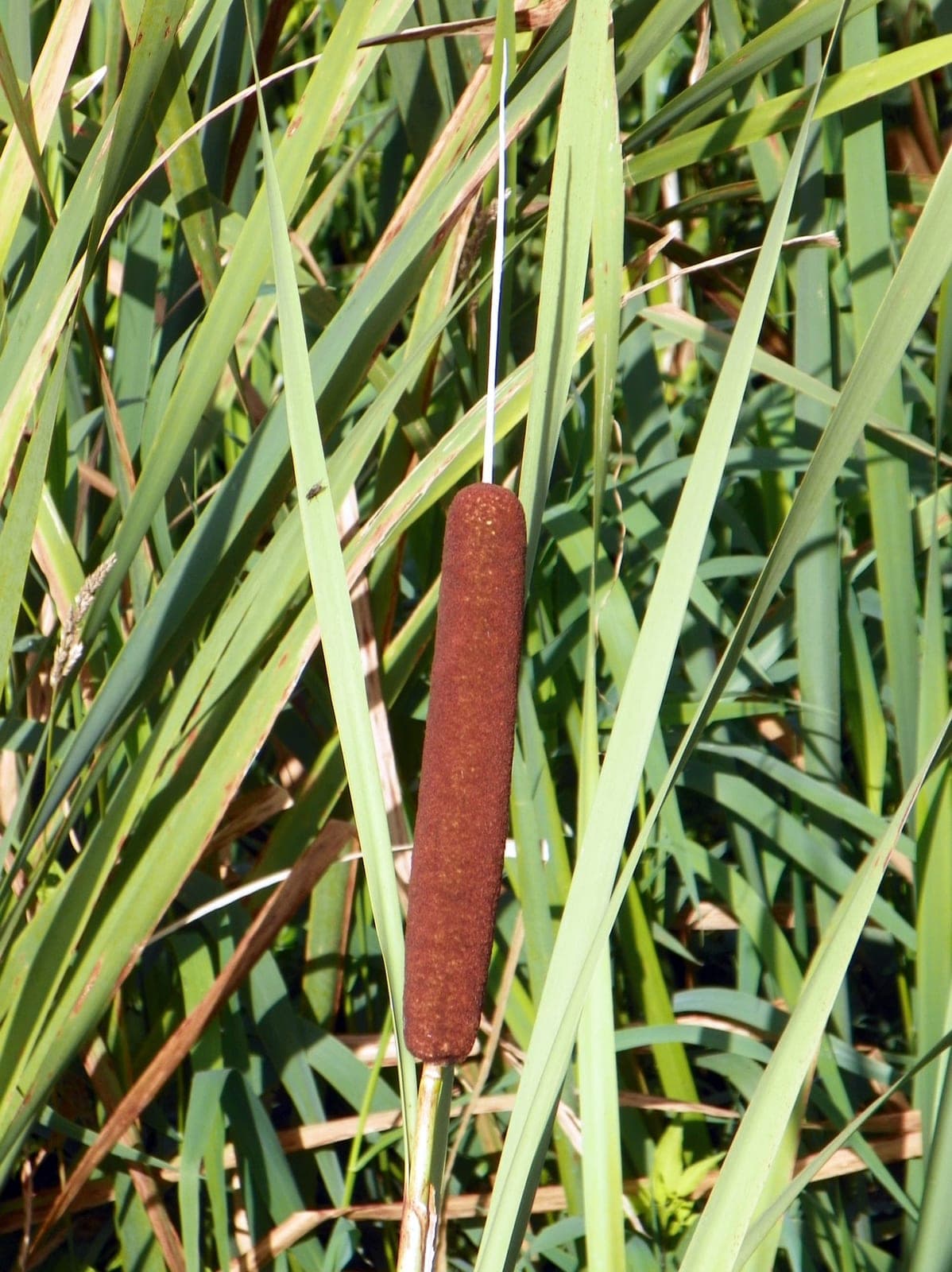
Broadleaf cattail is a native emergent wetland perennial forming dense colonies along pond edges, marshes, lake margins, and drainage ditches. Its cylindrical brown seed heads persist through winter and provide strong vertical structure in water gardens, rain gardens, and naturalized wetland plantings.
Typha latifolia spreads aggressively by rhizomes and produces thousands of wind-dispersed seeds. In managed settings, root barriers or annual division are necessary to limit spread. It grows in standing water up to 12 inches deep or in saturated soil at the water's edge and tolerates a wide pH and fertility range. Its root system filters excess nutrients and stabilizes banks, making it a functional choice for bioswales and constructed wetlands.
All parts carry documented edible uses: young spring shoots are eaten raw or cooked; the male pollen spike in early summer serves as a high-protein flour supplement; immature green seed heads can be boiled; and rhizomes yield starchy flour after processing. Rhizome poultices have a traditional application to burns and wounds, and cattail pollen is used in Traditional Chinese Medicine to support hemostasis.
Ecoregions:Northern ForestsNorthwestern Forested MountainsMarine West Coast ForestEastern Temperate ForestsGreat PlainsNorth American DesertsMediterranean California
Fungal leaf spot
Brown or purplish spots on the leaves, often ringed with a yellow halo, that spread and merge in warm, humid, or wet weather; heavily spotted leaves yellow and drop early.
Pick off spotted leaves and clear fallen debris to remove overwintering spores. Improve air circulation by thinning, and water at the base so foliage dries quickly. If it persists, apply a copper- or sulfur-based fungicide at the first sign.
Root rot
Plants wilt, yellow, and stunt even in moist soil; lower stems and roots turn brown, soft, and mushy and the plant may collapse. Most common in heavy, wet, or poorly drained ground.
Improve drainage and stop overwatering, and never plant too deep. Lift and destroy badly affected plants along with the soil around the roots. Grow in raised or free-draining beds to prevent it returning.