
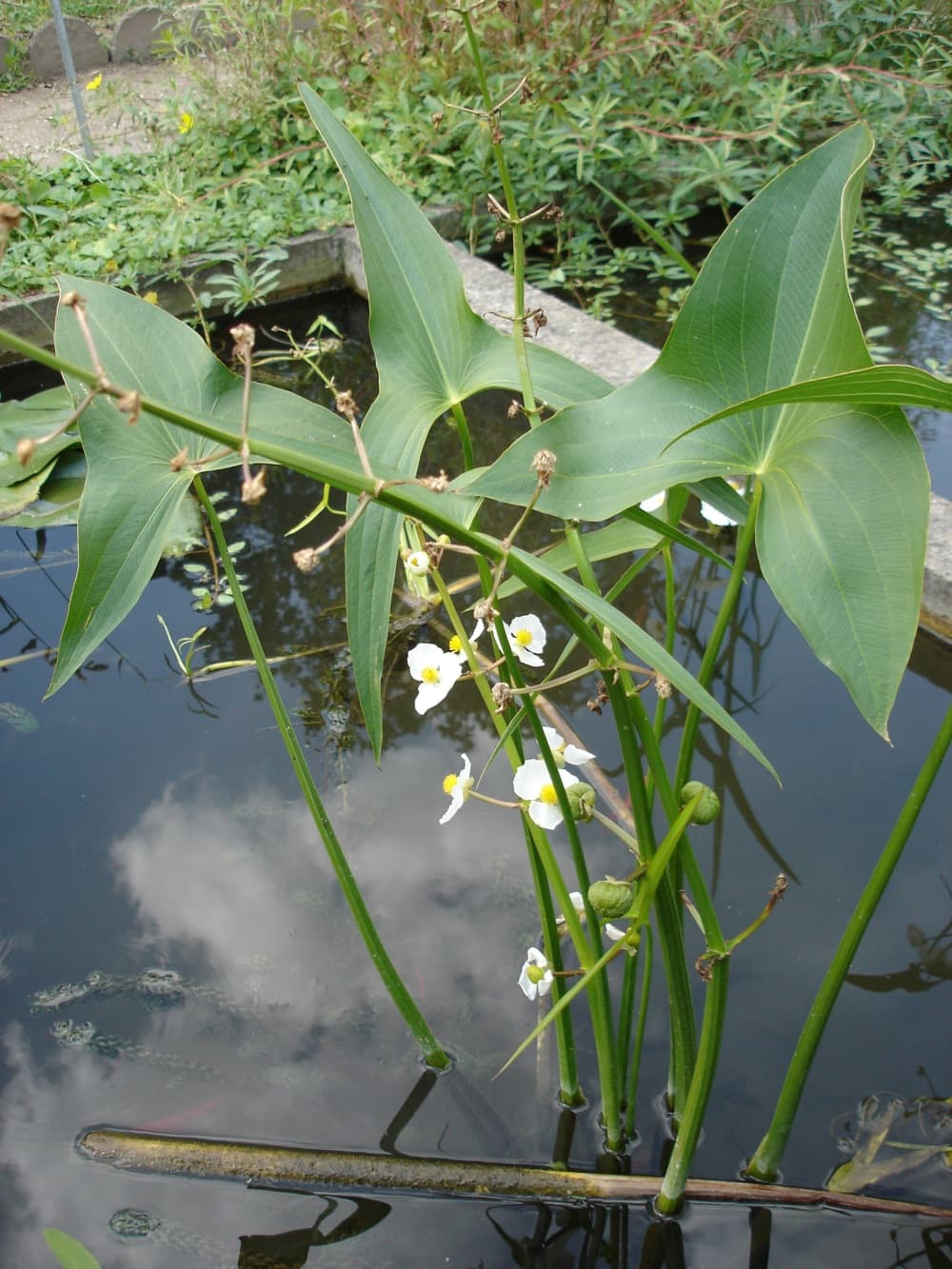
Sagittaria latifolia is a native North American aquatic perennial found in marshes, pond margins, and slow-moving water from southern Canada to northern South America. Arrow-shaped leaves rise on stiff stalks above the waterline, and white three-petaled flowers open in summer on tall erect stems. It handles conditions where most ornamentals fail and is a reliable structural plant for rain gardens, bioswales, and naturalized pond edges.
The plant spreads by stolons that produce starchy round tubers in late summer and fall, building loose colonies in shallow water or permanently saturated soil. It grows best in 4–18 inches of standing water but tolerates fluctuating water levels and returns reliably from tubers after hard winters. In contained water gardens, planting in submerged mesh baskets controls lateral spread. Grows well in a wide range of water depths; deeper water tends to suppress excessive colonization.
The tubers-historically called wapato-were a dietary staple for many Indigenous peoples across North America, eaten boiled, roasted, or dried, with a flavor and texture similar to potato. Waterfowl and muskrats consume the tubers in large quantities, giving rise to the common name duck-potato and making this plant a high-value component of managed wetlands and wildlife ponds.
Ecoregions:Northern ForestsMarine West Coast ForestEastern Temperate ForestsGreat Plains
Fungal leaf spot
Brown or purplish spots on the leaves, often ringed with a yellow halo, that spread and merge in warm, humid, or wet weather; heavily spotted leaves yellow and drop early.
Pick off spotted leaves and clear fallen debris to remove overwintering spores. Improve air circulation by thinning, and water at the base so foliage dries quickly. If it persists, apply a copper- or sulfur-based fungicide at the first sign.
Root rot
Plants wilt, yellow, and stunt even in moist soil; lower stems and roots turn brown, soft, and mushy and the plant may collapse. Most common in heavy, wet, or poorly drained ground.
Improve drainage and stop overwatering, and never plant too deep. Lift and destroy badly affected plants along with the soil around the roots. Grow in raised or free-draining beds to prevent it returning.