
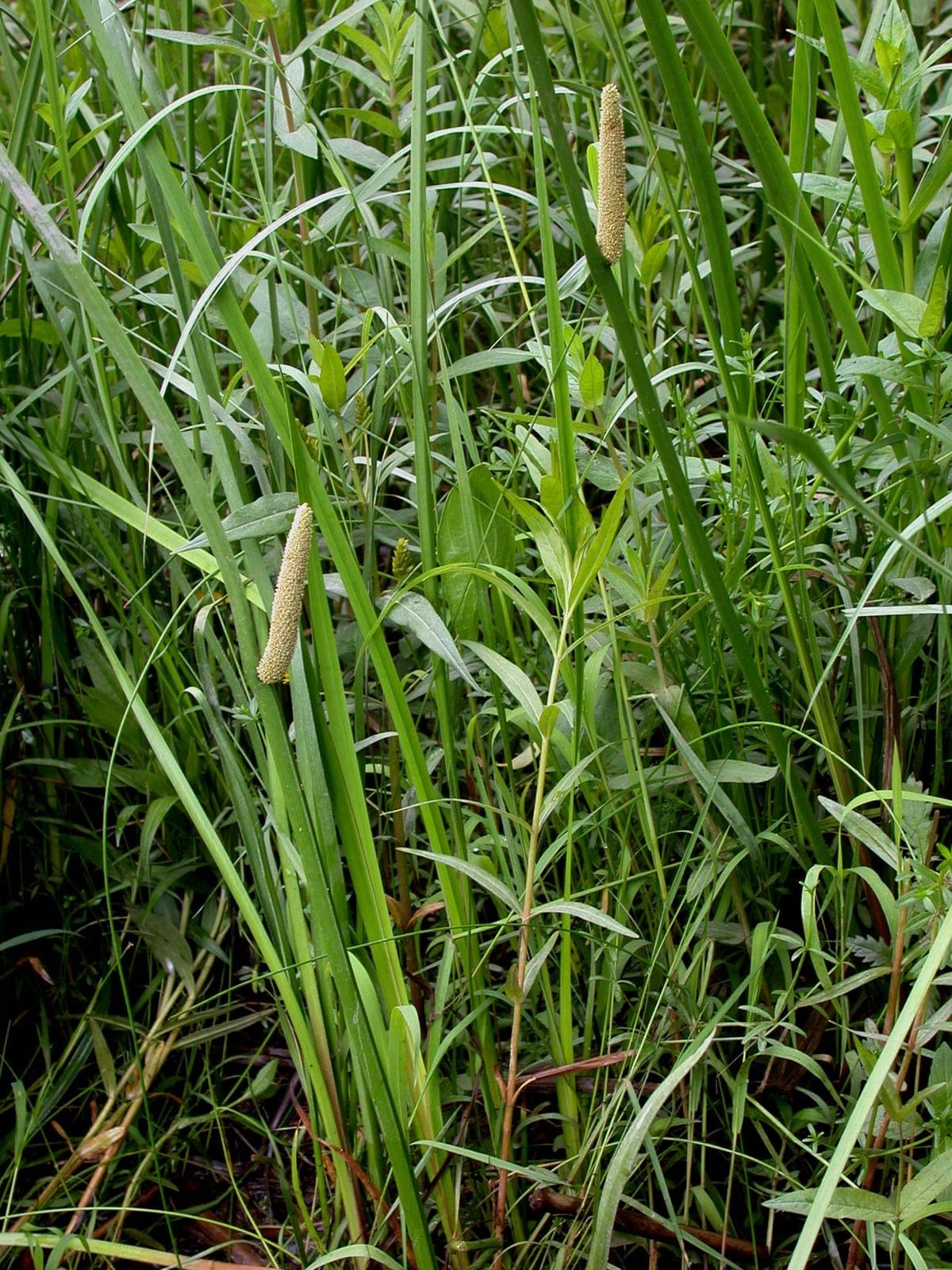
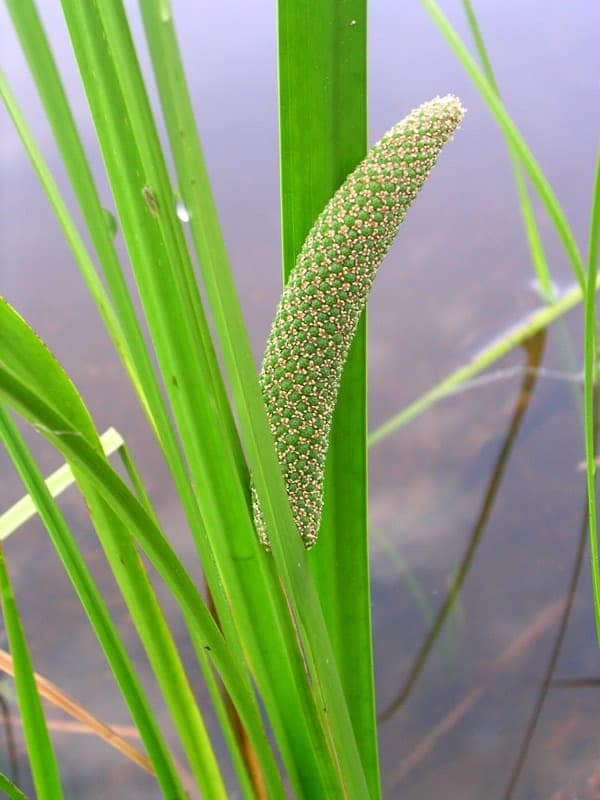
Acorus americanus is a native North American emergent wetland perennial with bright green, blade-shaped leaves that emit a citrus-spice scent when bruised. It is the diploid wild species distinct from the widely sold Acorus calamus, an introduced Eurasian plant. Gardeners value it for pond margins, rain gardens, and naturalized wetland edges, where its aromatic, grass-like foliage provides consistent texture through the growing season.
The plant spreads by horizontal rhizomes to form dense colonies in shallow standing water or saturated soil. It tolerates water a few inches deep and is highly cold-tolerant through its northern range. Rhizomes planted at or just below the waterline establish readily. Clumps benefit from division every few years in early spring to manage spread. It is listed as state-endangered in Pennsylvania, making it a meaningful choice for native wetland restoration projects.
Native communities throughout its range used the aromatic rhizomes for fever, colds, toothache, and digestive complaints. The leaves can be used to flavor beer following traditional practice, and the rhizomes have served as a spice and flavoring agent in traditional foodways.
Ecoregions:Northern ForestsNorthwestern Forested MountainsEastern Temperate ForestsGreat Plains
Fungal leaf spot
Brown or purplish spots on the leaves, often ringed with a yellow halo, that spread and merge in warm, humid, or wet weather; heavily spotted leaves yellow and drop early.
Pick off spotted leaves and clear fallen debris to remove overwintering spores. Improve air circulation by thinning, and water at the base so foliage dries quickly. If it persists, apply a copper- or sulfur-based fungicide at the first sign.
Root rot
Plants wilt, yellow, and stunt even in moist soil; lower stems and roots turn brown, soft, and mushy and the plant may collapse. Most common in heavy, wet, or poorly drained ground.
Improve drainage and stop overwatering, and never plant too deep. Lift and destroy badly affected plants along with the soil around the roots. Grow in raised or free-draining beds to prevent it returning.
Crown Rot
Lower leaves yellow and wilt; the base of the rosette turns brown and soft, sometimes with white fungal threads at the soil line. Plants collapse in wet conditions.
Remove and destroy affected plants. Improve drainage and avoid overhead watering. Do not mulch directly against the crown. Space plants for airflow and avoid replanting in the same wet spot.