
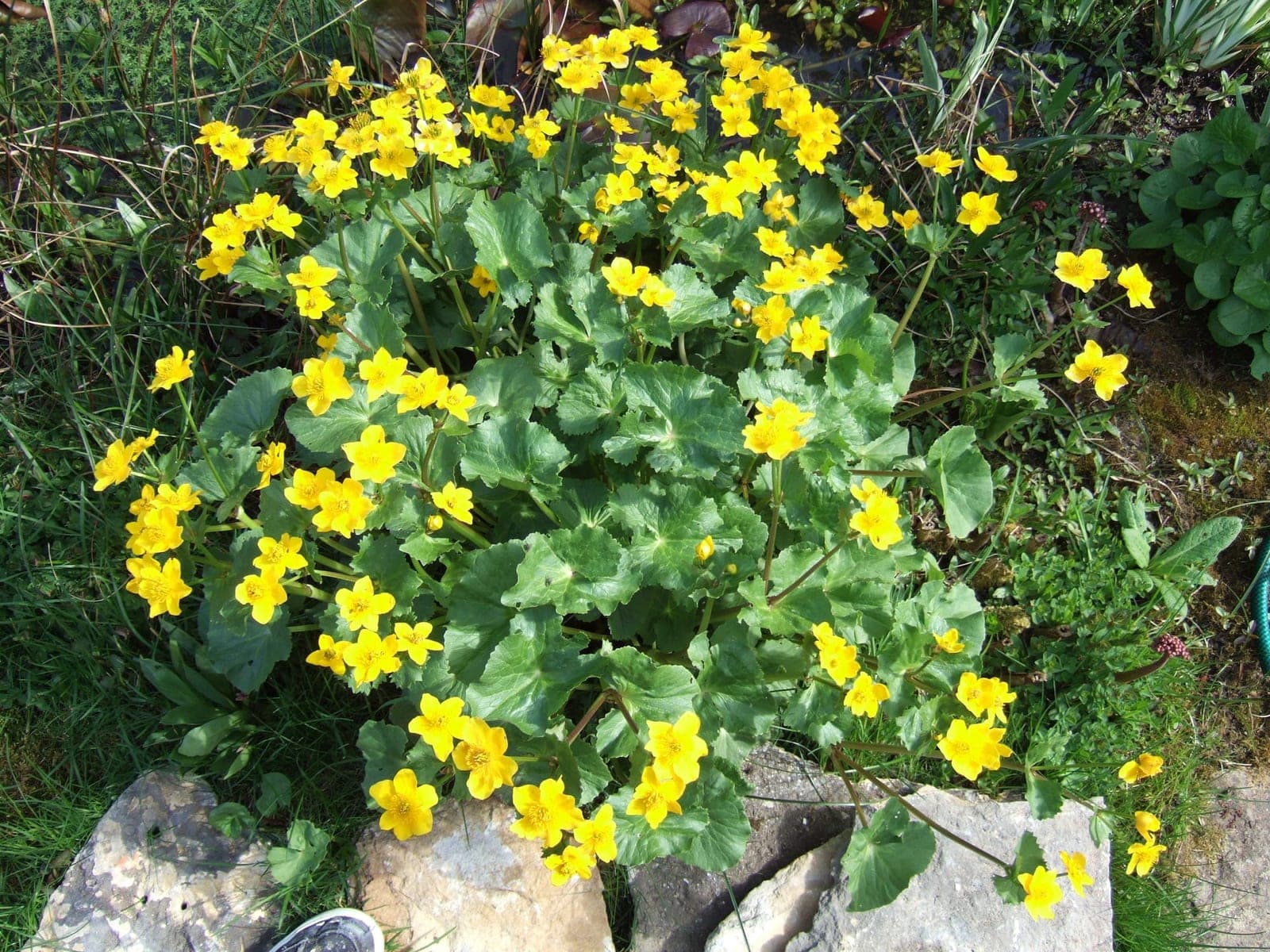
Caltha palustris, also called kingcup, is a native perennial of the buttercup family found in marshes, fens, pond edges, and wet woodland across temperate North America, Europe, and Asia. It produces bright, waxy yellow flowers in early to mid-spring - among the first of the season - making it one of the few true ornamentals suited to persistently wet or boggy garden sites.
Growth is compact, forming clumps of dark, rounded leaves on hollow stems. The plant spreads by rhizome and self-seeds freely in saturated ground. Foliage typically dies back in midsummer heat; pairing it with taller emergent plants helps fill that gap. It tolerates brief standing water at the crown and prefers neutral to slightly acidic, humus-rich soil. In cooler climates it may stay green through summer. Divide crowded clumps every few years immediately after flowering.
Flower buds have historically been pickled as a caper substitute, though all parts of the raw plant are toxic - they contain protoanemonin, an irritant compound destroyed by cooking. The early flowers are among the first spring nectar sources available to emerging bees and other pollinators.
Ecoregions:TundraNorthern ForestsMarine West Coast ForestEastern Temperate ForestsGreat Plains
Crown Rot
Lower leaves yellow and wilt; the base of the rosette turns brown and soft, sometimes with white fungal threads at the soil line. Plants collapse in wet conditions.
Remove and destroy affected plants. Improve drainage and avoid overhead watering. Do not mulch directly against the crown. Space plants for airflow and avoid replanting in the same wet spot.
Fungal leaf spot
Brown or purplish spots on the leaves, often ringed with a yellow halo, that spread and merge in warm, humid, or wet weather; heavily spotted leaves yellow and drop early.
Pick off spotted leaves and clear fallen debris to remove overwintering spores. Improve air circulation by thinning, and water at the base so foliage dries quickly. If it persists, apply a copper- or sulfur-based fungicide at the first sign.
Botrytis (grey mould)
Grey fuzzy mould on petals and stems, worst in cool wet conditions.
Remove affected parts immediately. Improve air circulation. Avoid overhead watering. Apply copper fungicide if severe.