
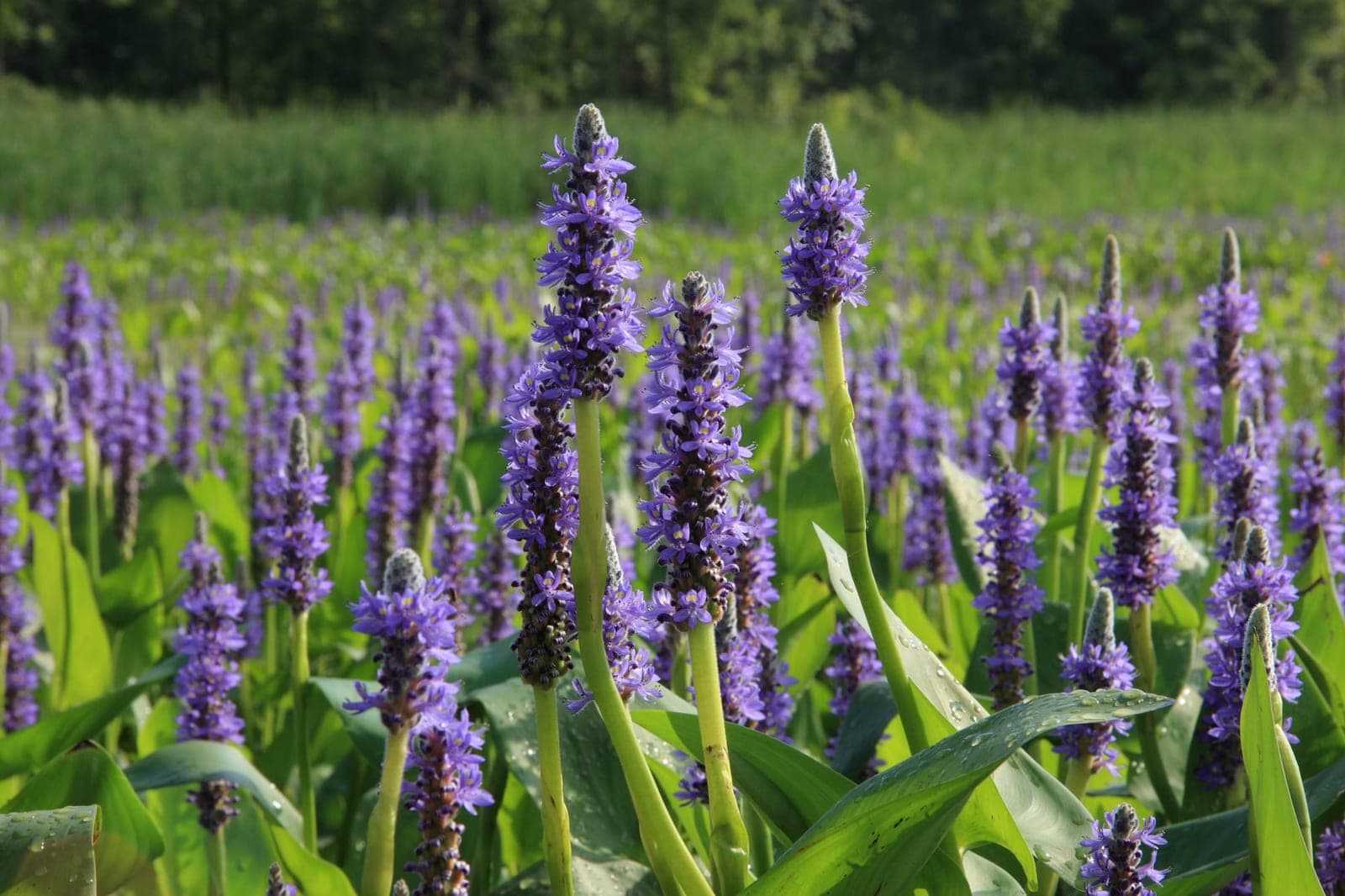
Pickerelweed is a native North American aquatic perennial that colonizes shallow pond and lake margins, streams, and marshes from eastern Canada south to Argentina. It produces glossy, heart- to lance-shaped leaves and dense upright spikes of violet-blue flowers from late spring through fall. It is among the most practical plants for naturalized water features, bioswales, and rain gardens across a wide geographic range.
Plants grow from thick rhizomes anchored in mud, typically in water 1–12 inches deep, and tolerate occasional flooding to 18 inches. Rhizomes persist through winter under ice in cold climates without protection. Clumps spread steadily by rhizome and by self-seeding; divide every two to three years to manage spread. Establish plants by setting bare rhizomes in aquatic containers or directly into marginal mud in spring once water temperatures climb above 50°F. Neutral to slightly acidic, organically rich substrate produces the strongest growth.
The seeds are edible raw or cooked and serve as a grain substitute - ground into flour or prepared similarly to wild rice. Young leaf stalks are also edible. Ecologically, pickerelweed provides spawning and foraging cover for fish (including pickerel, the source of the common name), seeds for waterfowl, and abundant nectar and pollen for native bees and butterflies.
Ecoregions:Northern ForestsEastern Temperate ForestsGreat PlainsTropical Wet Forests
Fungal leaf spot
Brown or purplish spots on the leaves, often ringed with a yellow halo, that spread and merge in warm, humid, or wet weather; heavily spotted leaves yellow and drop early.
Pick off spotted leaves and clear fallen debris to remove overwintering spores. Improve air circulation by thinning, and water at the base so foliage dries quickly. If it persists, apply a copper- or sulfur-based fungicide at the first sign.
Crown Rot
Lower leaves yellow and wilt; the base of the rosette turns brown and soft, sometimes with white fungal threads at the soil line. Plants collapse in wet conditions.
Remove and destroy affected plants. Improve drainage and avoid overhead watering. Do not mulch directly against the crown. Space plants for airflow and avoid replanting in the same wet spot.