
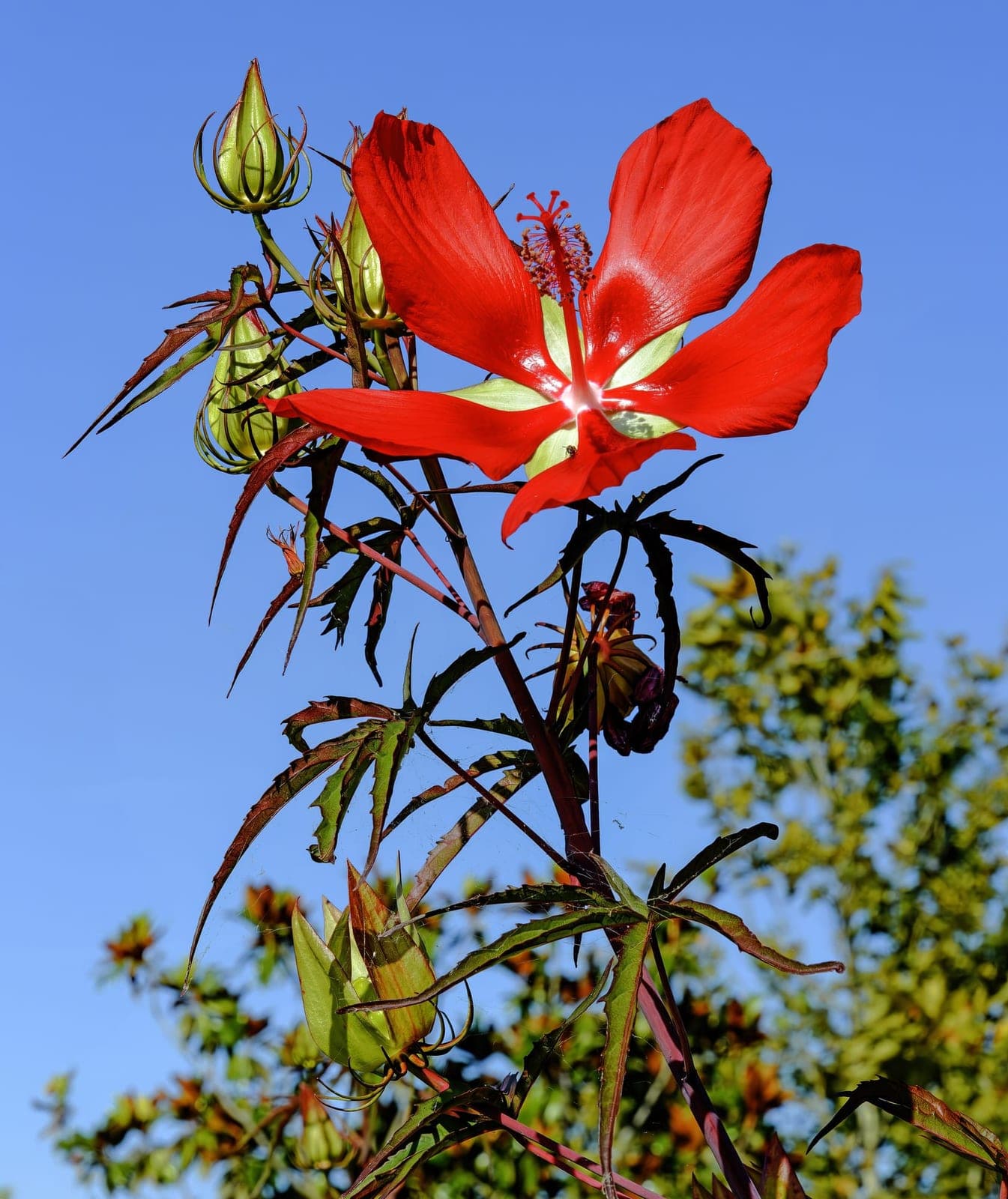
Scarlet rosemallow is a native perennial of southeastern U.S. marshes, streambanks, and swamp margins. It produces large, brilliant red blooms from midsummer through early fall and carries deeply divided, palmate leaves that closely resemble cannabis foliage - a reliable identification feature. The species was reclassified as Muenchhusia coccinea in 2025 but is still widely sold under its former name.
In the garden it works best at pond edges, in rain gardens, and along consistently wet borders. It dies completely to the ground each winter and is among the latest perennials to re-emerge - often showing no growth until late May or early June in zone 6 - so mark its crown before the season to avoid accidental damage. Once established, plants can reach 5–8 feet in a single season from the root. Slightly acidic to neutral soil and full sun produce the strongest growth; the plant tolerates brief flooding and self-seeds moderately in favorable conditions.
The blooms are a primary nectar source for ruby-throated hummingbirds and attract native bees and swallowtail butterflies throughout summer and fall. It integrates well into bioretention plantings, constructed wetlands, and naturalized pond margins.
Powdery mildew
White or grey powdery coating on leaves - usually starting on older growth in humid conditions or when nights cool.
Improve air circulation by thinning plants. Apply neem oil or potassium bicarbonate spray at first sign. Avoid overhead watering.
Fungal leaf spot
Brown or purplish spots on the leaves, often ringed with a yellow halo, that spread and merge in warm, humid, or wet weather; heavily spotted leaves yellow and drop early.
Pick off spotted leaves and clear fallen debris to remove overwintering spores. Improve air circulation by thinning, and water at the base so foliage dries quickly. If it persists, apply a copper- or sulfur-based fungicide at the first sign.
Rust
Orange to brown raised pustules on the undersides of leaves, with yellow spotting on the upper surface. Heavy infections cause leaves to yellow and drop.
Remove and destroy infected leaves. Avoid overhead watering and improve air circulation. Apply a sulfur or copper-based fungicide if it spreads. Clear plant debris in fall.
Botrytis (grey mould)
Grey fuzzy mould on petals and stems, worst in cool wet conditions.
Remove affected parts immediately. Improve air circulation. Avoid overhead watering. Apply copper fungicide if severe.
Phytophthora Root Rot
Wilting despite moist soil, yellowing leaves, stunted growth, and dark, decayed roots and crown tissue. Vines may collapse during hot weather.
Plant in well-draining soil and avoid waterlogging. Remove and destroy affected vines. Improve drainage with raised beds or amended soil and avoid overwatering.