
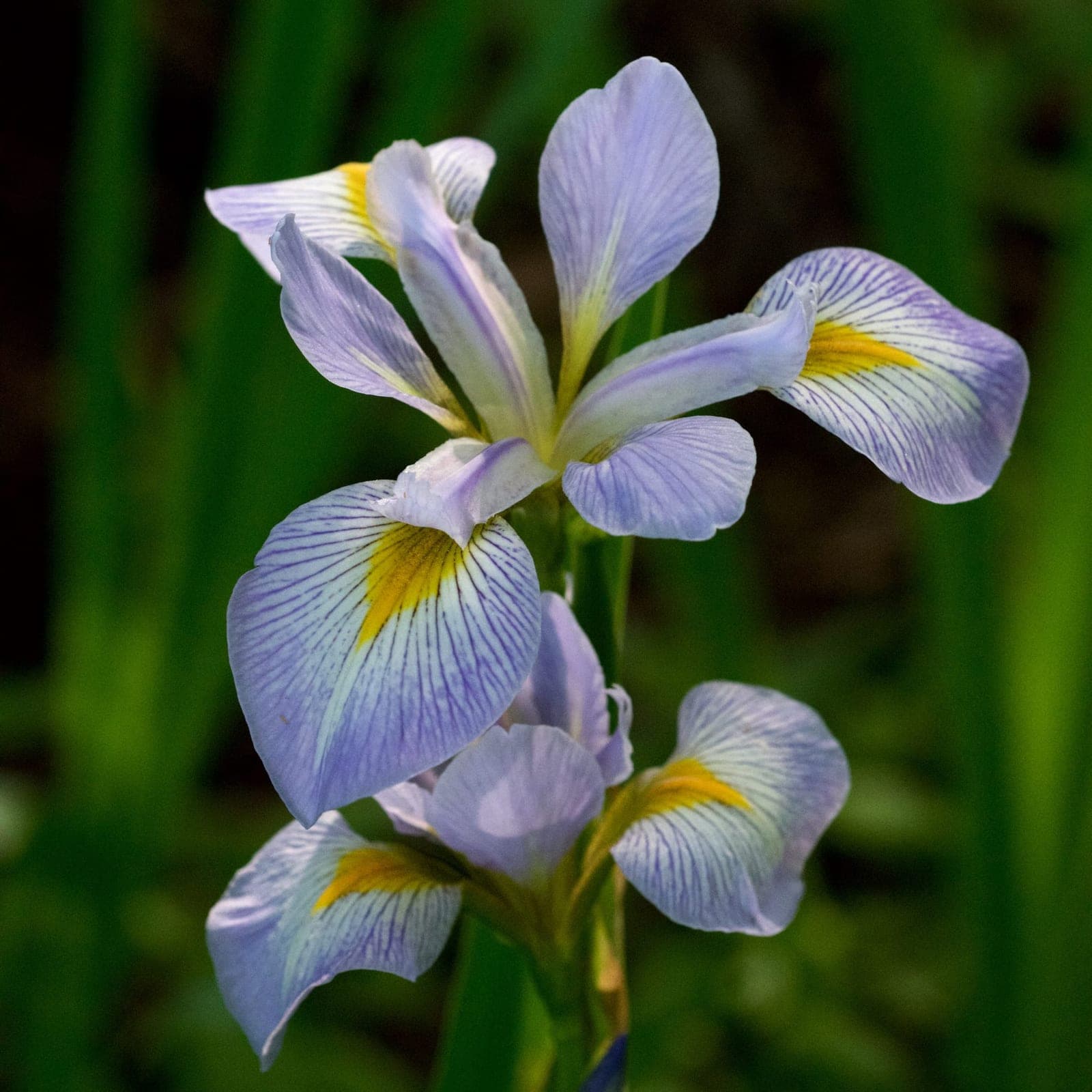
Virginia iris (Iris virginica) is a native perennial of wetlands, marshes, and stream banks across central and eastern North America. It produces blue-violet flowers in late spring on stems 2–3 feet tall and is well suited to pond edges, rain gardens, bog plantings, and naturalized wet areas where few ornamentals perform.
This species spreads by rhizomes and forms dense clumps over time. It tolerates saturated soils and shallow standing water but also grows in consistently moist garden beds. Slightly acidic to neutral pH is preferred. Divide clumps every 3–4 years in late summer to prevent crowding and maintain vigor. Full sun produces the strongest growth; part shade is tolerated in warmer parts of its range.
Cherokee and other eastern peoples applied the rhizome externally to treat skin sores. All parts of the plant are toxic if ingested; rhizomes contain irisin and related glycosides that cause gastrointestinal irritation in humans and livestock.
Ecoregions:Northern ForestsEastern Temperate ForestsGreat Plains
Bacterial Soft Rot
Rhizomes turn mushy and foul-smelling; foliage yellows and pulls away easily at the base. Often follows borer damage or overly wet soil.
Cut away all soft tissue back to firm rhizome, let it dry, and dust the cut with sulfur. Improve drainage and avoid burying rhizomes. Destroy badly infected plants.
Fungal leaf spot
Brown or purplish spots on the leaves, often ringed with a yellow halo, that spread and merge in warm, humid, or wet weather; heavily spotted leaves yellow and drop early.
Pick off spotted leaves and clear fallen debris to remove overwintering spores. Improve air circulation by thinning, and water at the base so foliage dries quickly. If it persists, apply a copper- or sulfur-based fungicide at the first sign.
Rust
Orange to brown raised pustules on the undersides of leaves, with yellow spotting on the upper surface. Heavy infections cause leaves to yellow and drop.
Remove and destroy infected leaves. Avoid overhead watering and improve air circulation. Apply a sulfur or copper-based fungicide if it spreads. Clear plant debris in fall.
Crown Rot
Lower leaves yellow and wilt; the base of the rosette turns brown and soft, sometimes with white fungal threads at the soil line. Plants collapse in wet conditions.
Remove and destroy affected plants. Improve drainage and avoid overhead watering. Do not mulch directly against the crown. Space plants for airflow and avoid replanting in the same wet spot.