
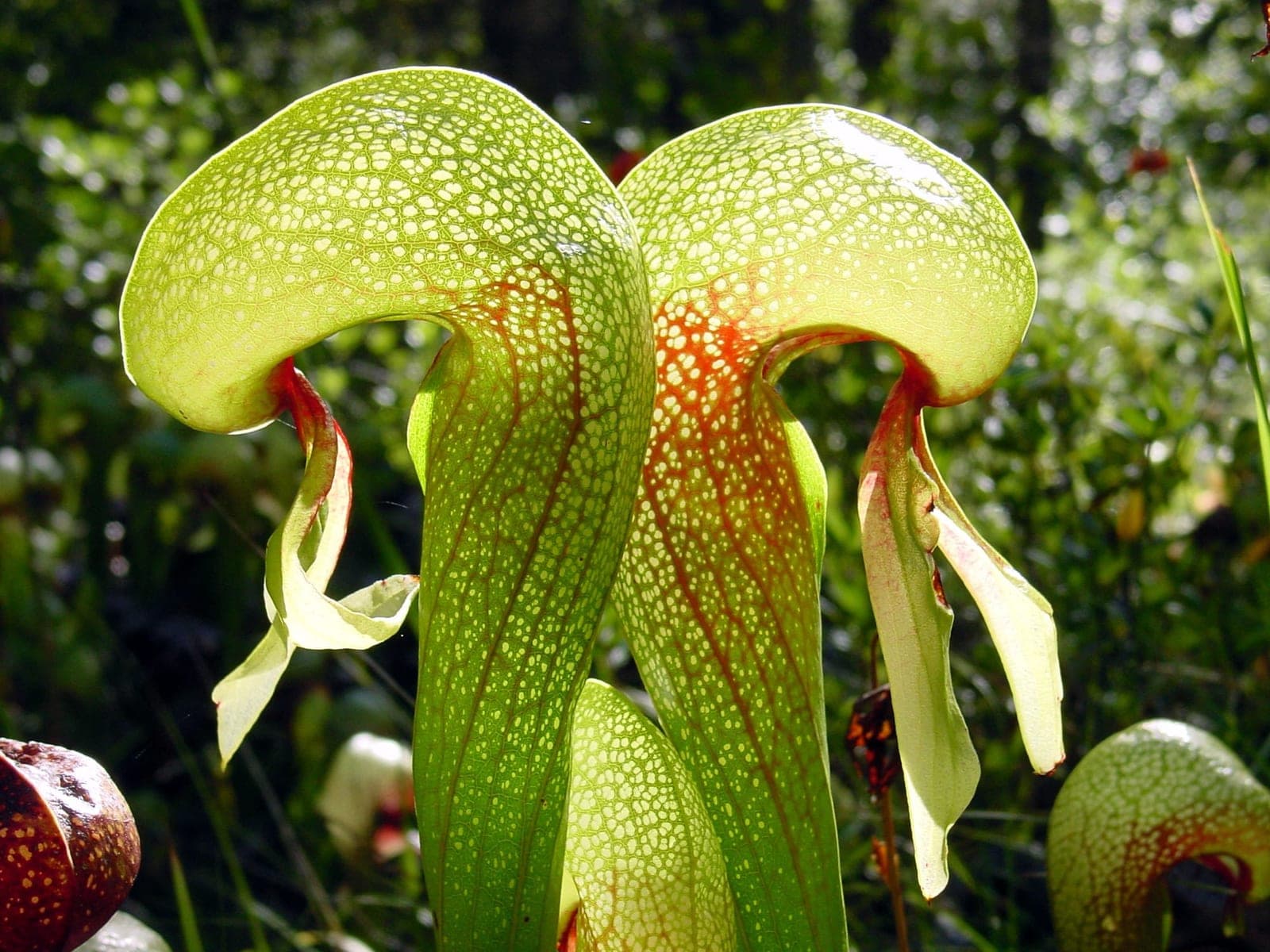
Darlingtonia californica, the California pitcher plant or cobra lily, is the sole species in its genus and the only pitcher plant native to the Pacific coast - a Sarraceniaceae relative that arrived at the same rolled-leaf pitfall as Sarracenia independently, in cold serpentine seeps and mountain bogs of northern California and southern Oregon rather than the warm Southeastern bogs the rest of the family calls home. Its hooded, forked pitcher resembles a rearing cobra, and the resemblance is more than decorative: translucent patches on the dome let light through to confuse trapped insects searching for an exit, while the two fishtail appendages hanging below the mouth secrete a nectar trail that leads them away from the real way out. Unlike Sarracenia, Darlingtonia produces none of its own digestive enzymes - captured insects are broken down by a resident community of bacteria, mites, and midge larvae living inside the pitcher, with the plant absorbing the nutrients that community releases. The genus name honors the botanist William Darlington, but the trap itself is a case study in convergent evolution rather than inheritance; how and why carnivory evolved.
Cultivation hinges on one requirement almost no other houseplant carnivore shares: cool roots. In the wild the plant sits in serpentine seeps fed by cold, moving groundwater even through summer heat, and root temperatures above roughly 70°F bring on decline regardless of how much sun the pitchers get. The standard workaround is to stand the growing pot inside a larger, shaded outer container of water, topping it up with cold rain or distilled water rather than letting it sit warm and still. Full sun suits the foliage as long as the roots stay cool; part shade helps in hot-summer climates where the technique above isn't enough on its own. Media is the same acidic, nutrient-free peat-and-sand or living-sphagnum mix used for Sarracenia, and the same rule against fertilizer and tap water applies. A cool winter dormancy is required for long-term vigor.
Ecoregions:Northwestern Forested MountainsMarine West Coast Forest
Botrytis (grey mould)
Grey fuzzy mould on petals and stems, worst in cool wet conditions.
Remove affected parts immediately. Improve air circulation. Avoid overhead watering. Apply copper fungicide if severe.
Root rot
Plants wilt, yellow, and stunt even in moist soil; lower stems and roots turn brown, soft, and mushy and the plant may collapse. Most common in heavy, wet, or poorly drained ground.
Improve drainage and stop overwatering, and never plant too deep. Lift and destroy badly affected plants along with the soil around the roots. Grow in raised or free-draining beds to prevent it returning.