
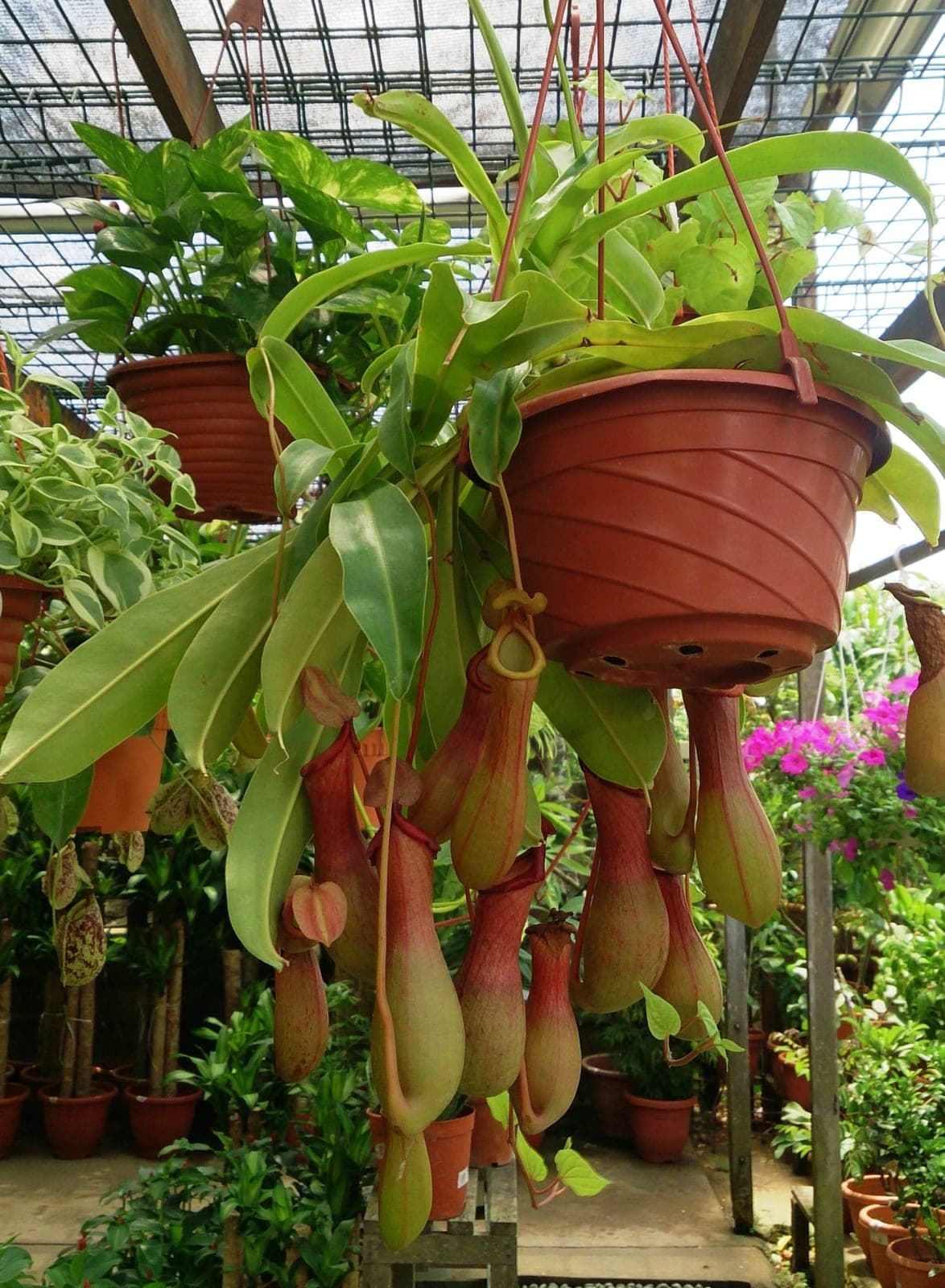
Nepenthes is the genus most people actually picture at the words "pitcher plant," and it belongs to a different family entirely than the American Sarracenia it resembles - a pitfall trap invented from scratch a second time, on the other side of the planet. Wild Nepenthes climb through the rainforest canopy of Borneo, Sumatra, the Philippines, and Madagascar, dangling pitchers from tendrils at the tip of each leaf. Rainwater collects in the bottom of the pitcher along with the plant's own digestive fluid, a viscoelastic liquid that behaves like a thin gel rather than water - it lets insects sink but resists letting their wings pull free, holding trapped prey the way water alone could not. Nepenthes × ventrata, the hybrid grown here, is the pitcher plant of the houseplant trade: hardier and easier to flower and pitcher than either straight species behind it, but with the same trap; how and why carnivory evolved.
Outside the tropics this is a container and greenhouse plant, full stop - it wants warmth and humidity year-round and has no winter dormancy to speak of, unlike the temperate carnivores in this catalogue. Bright, indirect light suits it better than harsh direct sun, which scorches the pitchers. Pot in an airy, mineral-free mix of orchid bark, sphagnum, and perlite, water with rain or distilled water, and never fertilize the soil - feed the pitchers themselves, sparingly, if at all. Consistent humidity above 50 percent keeps new growth pitchering; dry indoor air is the most common reason a Nepenthes stops making pitchers and reverts to bare vine.
Botrytis (grey mould)
Grey fuzzy mould on petals and stems, worst in cool wet conditions.
Remove affected parts immediately. Improve air circulation. Avoid overhead watering. Apply copper fungicide if severe.
Root rot
Plants wilt, yellow, and stunt even in moist soil; lower stems and roots turn brown, soft, and mushy and the plant may collapse. Most common in heavy, wet, or poorly drained ground.
Improve drainage and stop overwatering, and never plant too deep. Lift and destroy badly affected plants along with the soil around the roots. Grow in raised or free-draining beds to prevent it returning.