
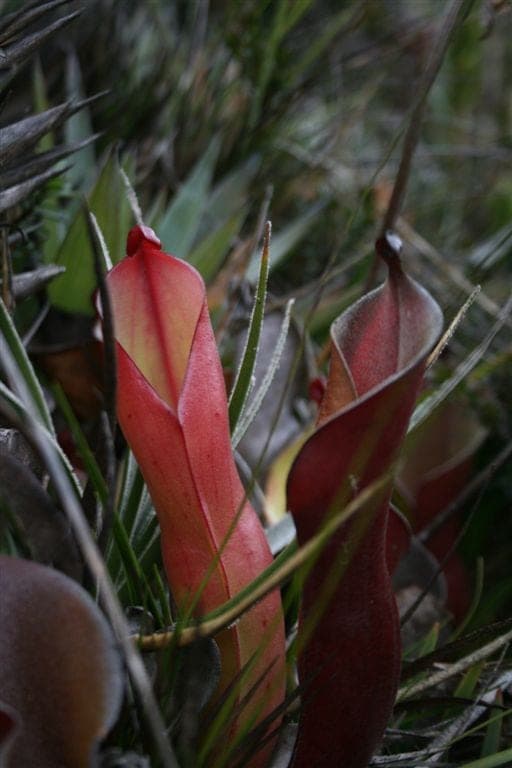
Heliamphora is stranded on the tepuis - the isolated, flat-topped sandstone plateaus of Venezuela and Guyana that rise straight out of the surrounding rainforest, each one effectively its own island in the sky. Cut off from relatives for millions of years, the genus built a pitcher independently of every other pitcher plant on this list, and an incomplete one at that: a small "spoon" at the back of the pitcher's lid, rather than a sealed lid, so rain gets in as often as it gets kept out. Heliamphora has no digestive enzymes of its own, relying like Darlingtonia on bacteria in the pitcher fluid to break prey down, and Heliamphora nutans, the most commonly grown species, forms clumping rosettes of upright pitchers in the near-constant cool mist of its home plateau; how and why carnivory evolved.
That cloud-forest climate is the whole challenge in cultivation: cool nights, mild days, high humidity, and constant moisture year-round with nothing like the hot summers or hard winter dormancy the North American carnivores in this catalogue expect. Grow it in bright, indirect light in an acidic peat, sphagnum, and perlite mix that never dries out, ideally in a terrarium or greenhouse where humidity and cool temperatures can be held steady. It resents both scorching sun and hot, stagnant air, and it is not a plant to leave outdoors through a summer heatwave.
Botrytis (grey mould)
Grey fuzzy mould on petals and stems, worst in cool wet conditions.
Remove affected parts immediately. Improve air circulation. Avoid overhead watering. Apply copper fungicide if severe.
Root rot
Plants wilt, yellow, and stunt even in moist soil; lower stems and roots turn brown, soft, and mushy and the plant may collapse. Most common in heavy, wet, or poorly drained ground.
Improve drainage and stop overwatering, and never plant too deep. Lift and destroy badly affected plants along with the soil around the roots. Grow in raised or free-draining beds to prevent it returning.