
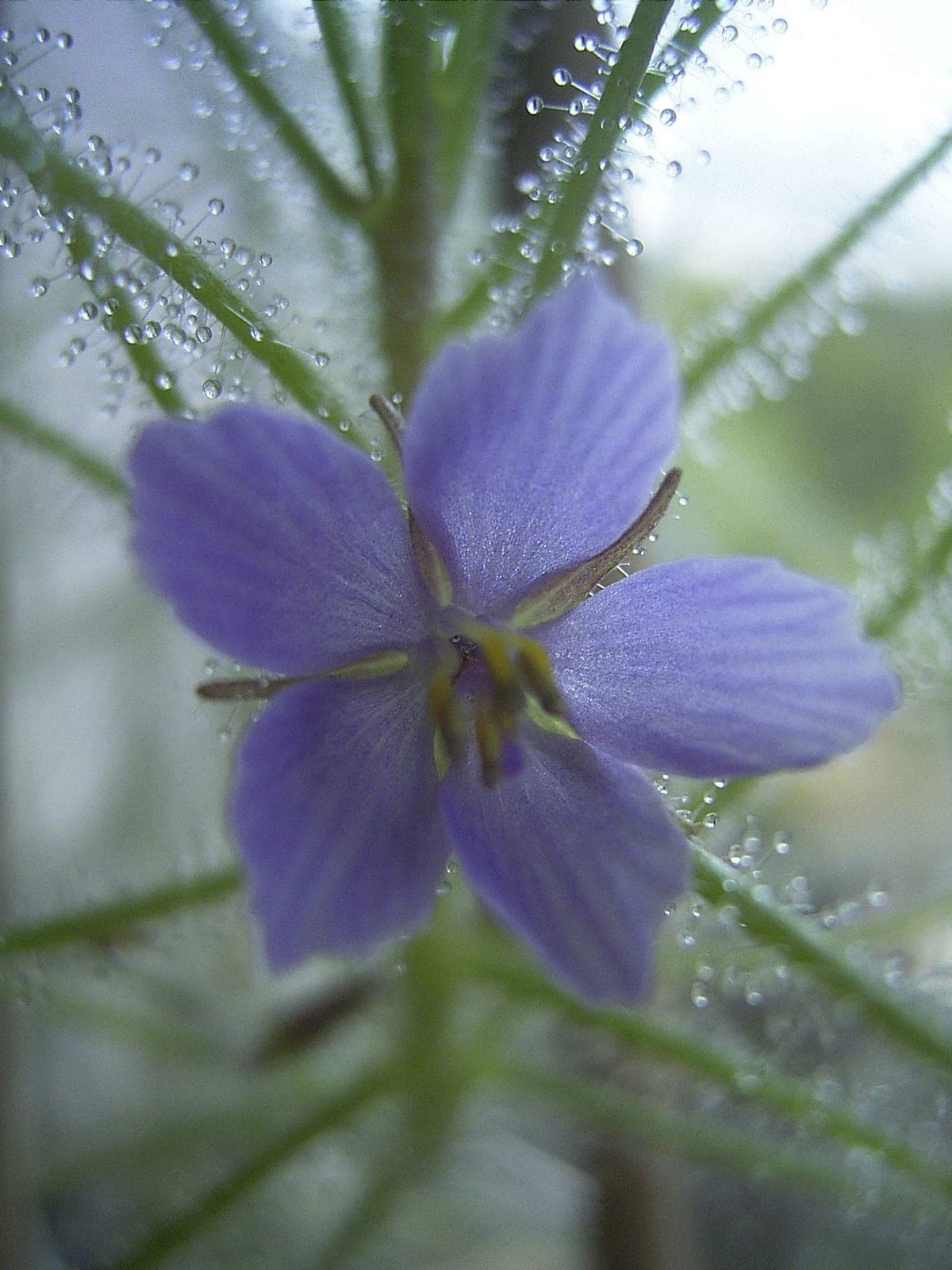
Byblis catches the light the way a sundew does and traps prey the same flypaper way, but it isn't a Drosera at all - a separate family, native to tropical northern Australia and New Guinea, that arrived at sticky, dew-covered leaves entirely on its own. The common name comes from exactly that resemblance: on a sunny morning the mucilage droplets along each round, threadlike leaf refract light into tiny points of color, a rainbow effect a flat-leaved sundew doesn't produce quite the same way. Unlike Drosera's leaves, Byblis foliage is round in cross-section rather than flattened, and it has no visible movement at all - insects stick and are digested in place, with nothing curling or closing around them; how and why carnivory evolved.
Byblis liniflora is grown as a warm-season annual outside the tropics, typically raised from seed each year rather than overwintered. Full sun and constant moisture suit it best, in an acidic peat and sand mix kept wet through the growing season; it flowers and sets seed readily within a single warm season, and letting a few seed pods mature and drop is usually enough to keep a planting going year to year in a warm greenhouse or terrarium.
Damping Off
Seedlings collapse at the soil line with thin, water-soaked stems; seeds may fail to emerge or rot before sprouting.
Sow in well-draining mix, avoid overwatering, and ensure good airflow. Remove affected seedlings and let the surface dry between waterings.