
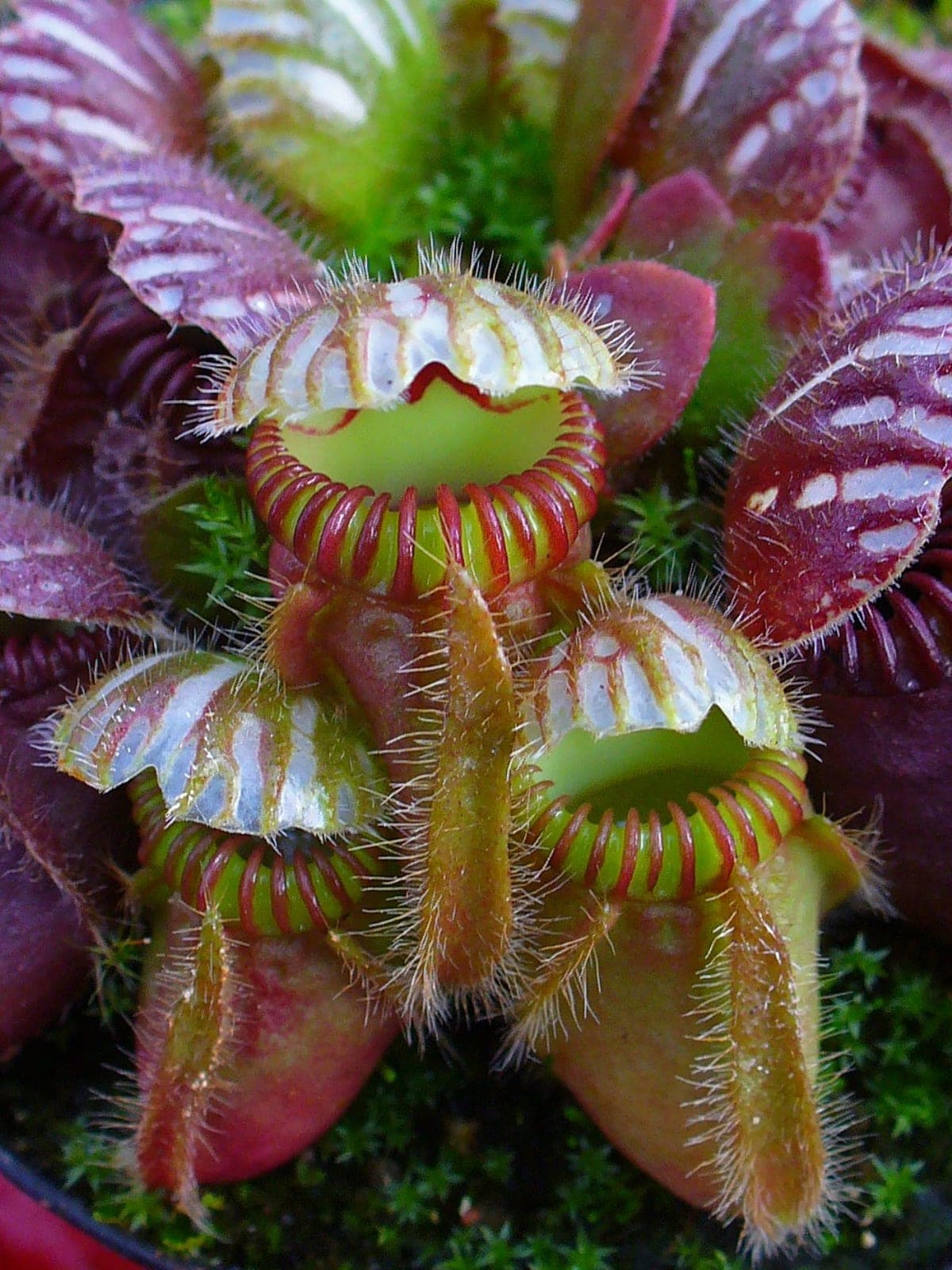
Cephalotus follicularis is the sole species in its genus and its family, found in the wild nowhere but a narrow strip of swampy ground around Albany, in the far southwestern corner of Australia - a range so restricted the whole species could be lost to a single bad wildfire season. Its small, squat pitchers are an unrelated invention from the American and Asian pitcher plants they resemble, another case of the same pitfall shape arrived at from scratch; ribbed "teeth" line the mouth to keep climbing insects from escaping, and a waxy overhang inside does the rest. Alongside its low pitchers the plant also grows ordinary flat leaves, photosynthesizing normally the rest of the time and only investing in traps when it needs the extra nitrogen its swampy, nutrient-poor soil can't supply; how and why carnivory evolved.
It is slow-growing and specialist rather than a beginner's carnivore, best suited to a terrarium or a cool greenhouse rather than an open bog garden. Give it bright, indirect light or a few hours of gentle direct sun, an acidic and nutrient-free peat, sand, and perlite mix, and constant moisture without ever letting the pot sit in stagnant standing water the way a Sarracenia tray would. Water and humidity matter more than temperature extremes; it tolerates a cool winter rest but not a hard freeze.
Botrytis (grey mould)
Grey fuzzy mould on petals and stems, worst in cool wet conditions.
Remove affected parts immediately. Improve air circulation. Avoid overhead watering. Apply copper fungicide if severe.
Root rot
Plants wilt, yellow, and stunt even in moist soil; lower stems and roots turn brown, soft, and mushy and the plant may collapse. Most common in heavy, wet, or poorly drained ground.
Improve drainage and stop overwatering, and never plant too deep. Lift and destroy badly affected plants along with the soil around the roots. Grow in raised or free-draining beds to prevent it returning.