
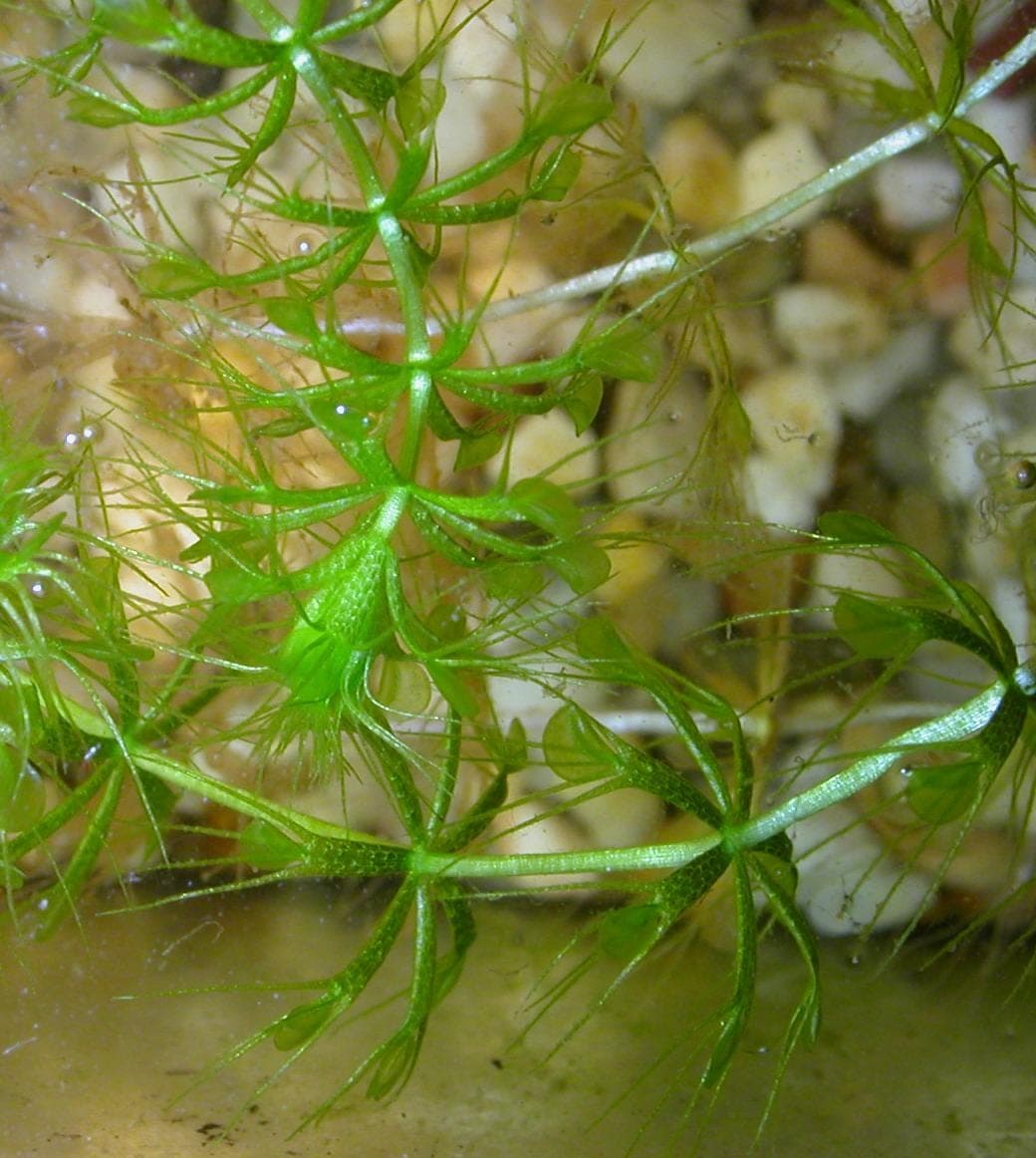
Aldrovanda vesiculosa is the closest living relative the Venus flytrap has, and it runs the same snap-trap mechanism entirely underwater: whorls of tiny hinged traps, a few millimeters across, ring the stem and snap shut on water fleas and other small aquatic prey in under a tenth of a second, the same trigger-hair-and-two-touch system Dionaea uses on land. The whole plant is rootless, drifting just below the surface of still, warm, mineral-poor water and growing continuously from one end while the older end dies back - a genus that never stopped moving, in effect. It once ranged across warm wetlands in Europe, Asia, Africa, and Australia, but drainage and water pollution have erased it from most of that range; it survives today in a scattering of protected sites and in cultivation, and was never part of the North American flora to begin with; how and why carnivory evolved.
It is grown the way common bladderwort is, floating free in a still, sunny pond or tub, but it is fussier about water chemistry - genuinely nutrient-free water starves it, and it does better in the mildly mineral-richer, mesotrophic water that would be too rich for most of the other aquatics here. Warmth and full sun through the growing season keep it dividing; it overwinters as a turion, sinking to the bottom in a tight dormant bud before rising again in spring.