
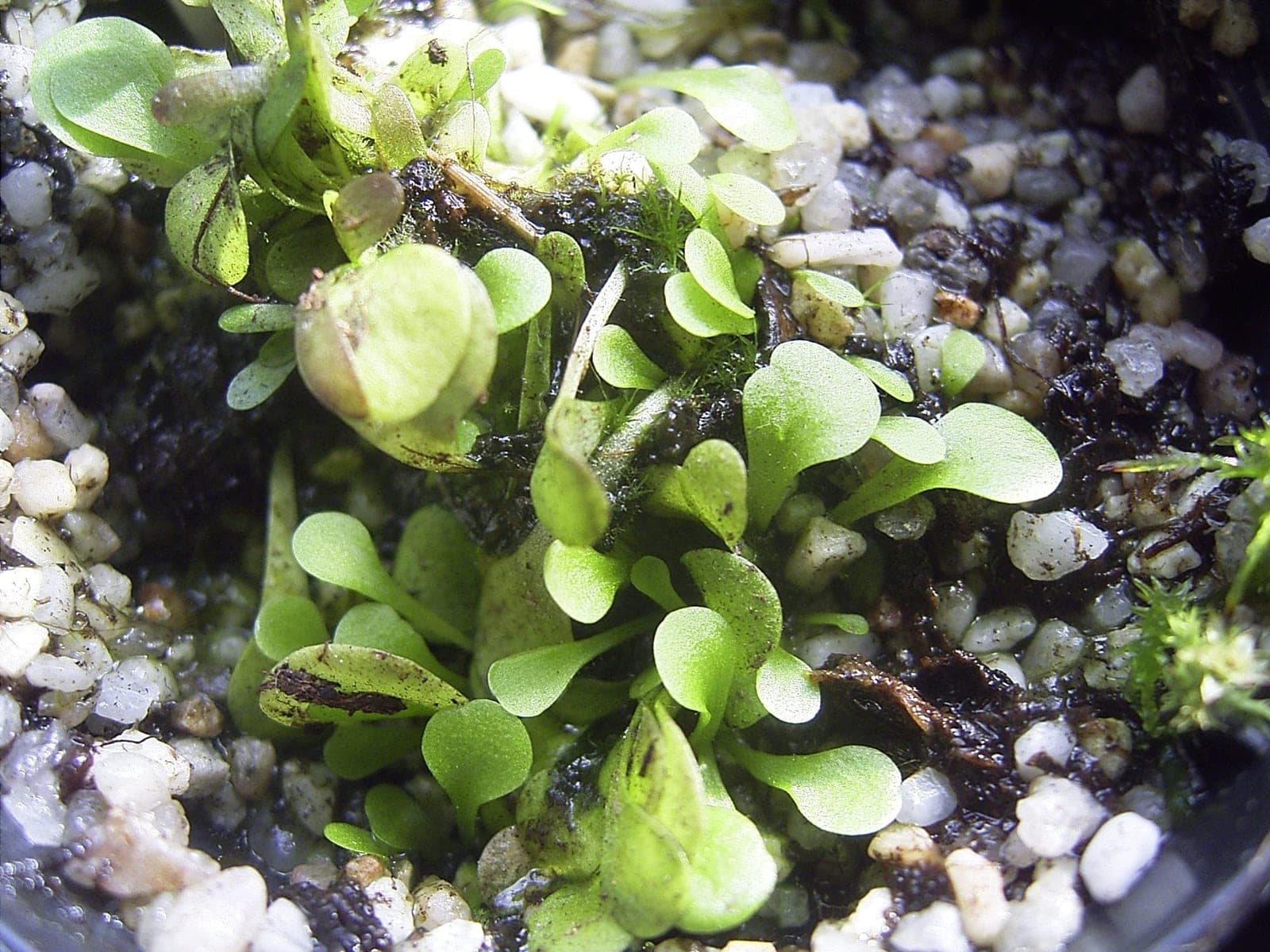
Above ground, Genlisea looks like almost nothing - a small rosette of ordinary photosynthetic leaves, easy to mistake for a seedling of something else. The trap is entirely out of sight: modified underground leaves shaped like a hollow, spiraling Y, lined inside with inward-pointing hairs that let tiny soil organisms swim in but not back out, a one-way corkscrew funnel rather than a snap or a pitfall - botanists call it a lobster-pot trap for exactly that reason. Water and soil protozoa are drawn in past the entrance and steadily guided deeper along the spiral until they reach the digestive zone, with no moving parts anywhere in the mechanism. Genlisea violacea and its relatives grow across damp, nutrient-poor ground in South America and parts of Africa, an independent answer to the same soil problem as everything else in this catalogue, solved entirely below the surface where nobody sees it; how and why carnivory evolved.
It is a terrarium and greenhouse plant outside the tropics, wanting the same acidic, nutrient-free peat, sand, and perlite mix as a sundew, kept constantly wet, in bright indirect light or gentle direct sun. Warmth and humidity matter more than any dormancy period - this is a plant that keeps growing year-round given the right conditions, rather than one that needs a cold rest.
Root rot
Plants wilt, yellow, and stunt even in moist soil; lower stems and roots turn brown, soft, and mushy and the plant may collapse. Most common in heavy, wet, or poorly drained ground.
Improve drainage and stop overwatering, and never plant too deep. Lift and destroy badly affected plants along with the soil around the roots. Grow in raised or free-draining beds to prevent it returning.
Damping Off
Seedlings collapse at the soil line with thin, water-soaked stems; seeds may fail to emerge or rot before sprouting.
Sow in well-draining mix, avoid overwatering, and ensure good airflow. Remove affected seedlings and let the surface dry between waterings.