How plants learned to hunt
Carnivory shows up at least a dozen separate times across the plant family tree, and every time it's the same problem, solved by a different trap.
A carnivorous plant is not a plant that has given up on photosynthesis. It still runs on sunlight the way anything green does. What it has given up on is the soil. Every one of these plants grows somewhere the ground itself is close to inert - a bog, a fen, a nutrient-leached seep - with nitrogen and phosphorus so scarce that an ordinary root system starves no matter how much light falls on the leaves above it. Carnivory is a workaround for that one problem, and the striking thing is how many separate times plants have arrived at it. This isn't one lineage's trick copied by its relatives; it's independent invention, over and over, by plants that in most cases aren't otherwise related to each other at all. Molecular work over the last two decades has traced at least ten separate origins of plant carnivory, each one built from ordinary leaf tissue repurposed toward the same end by a different route.
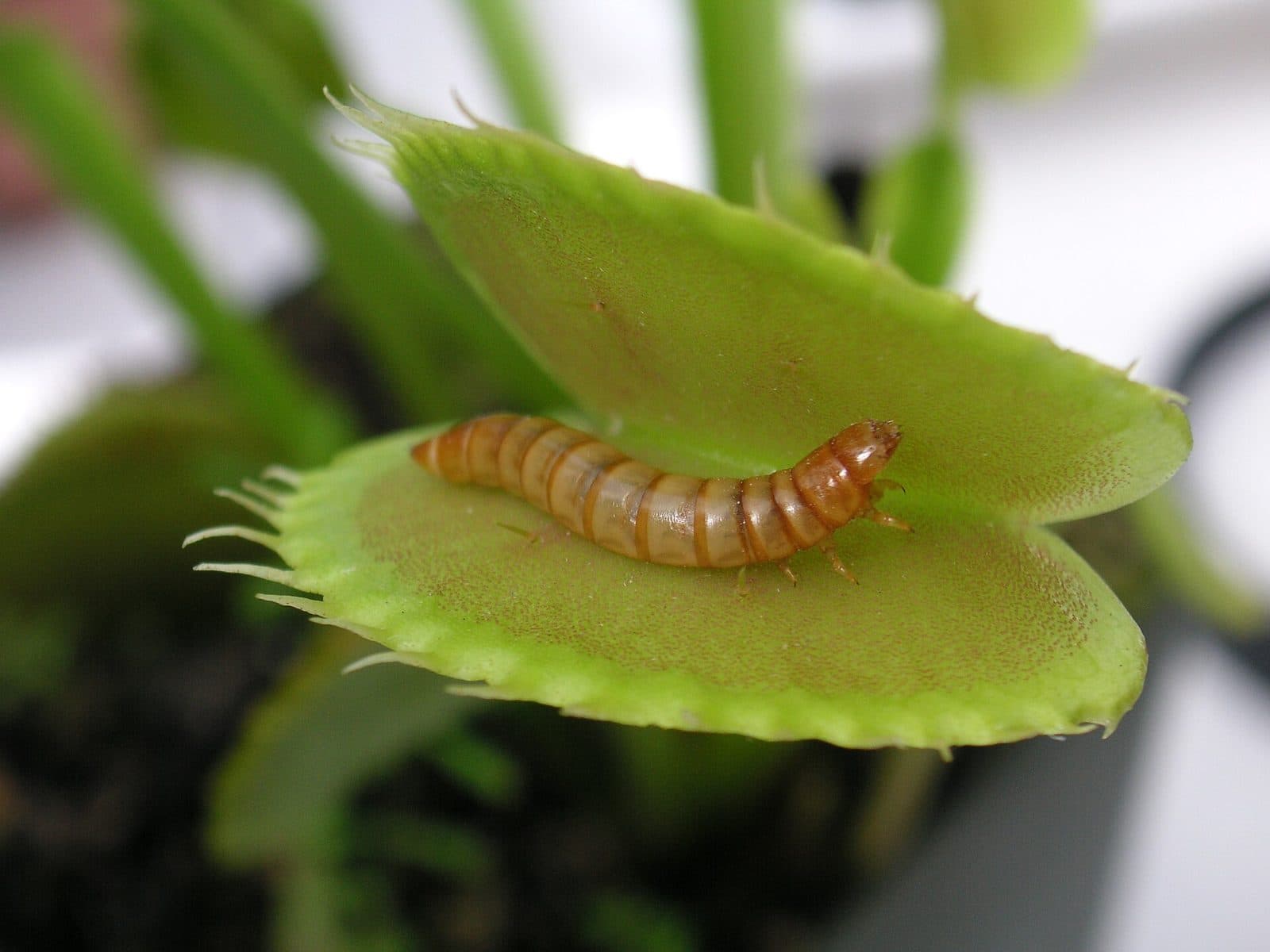
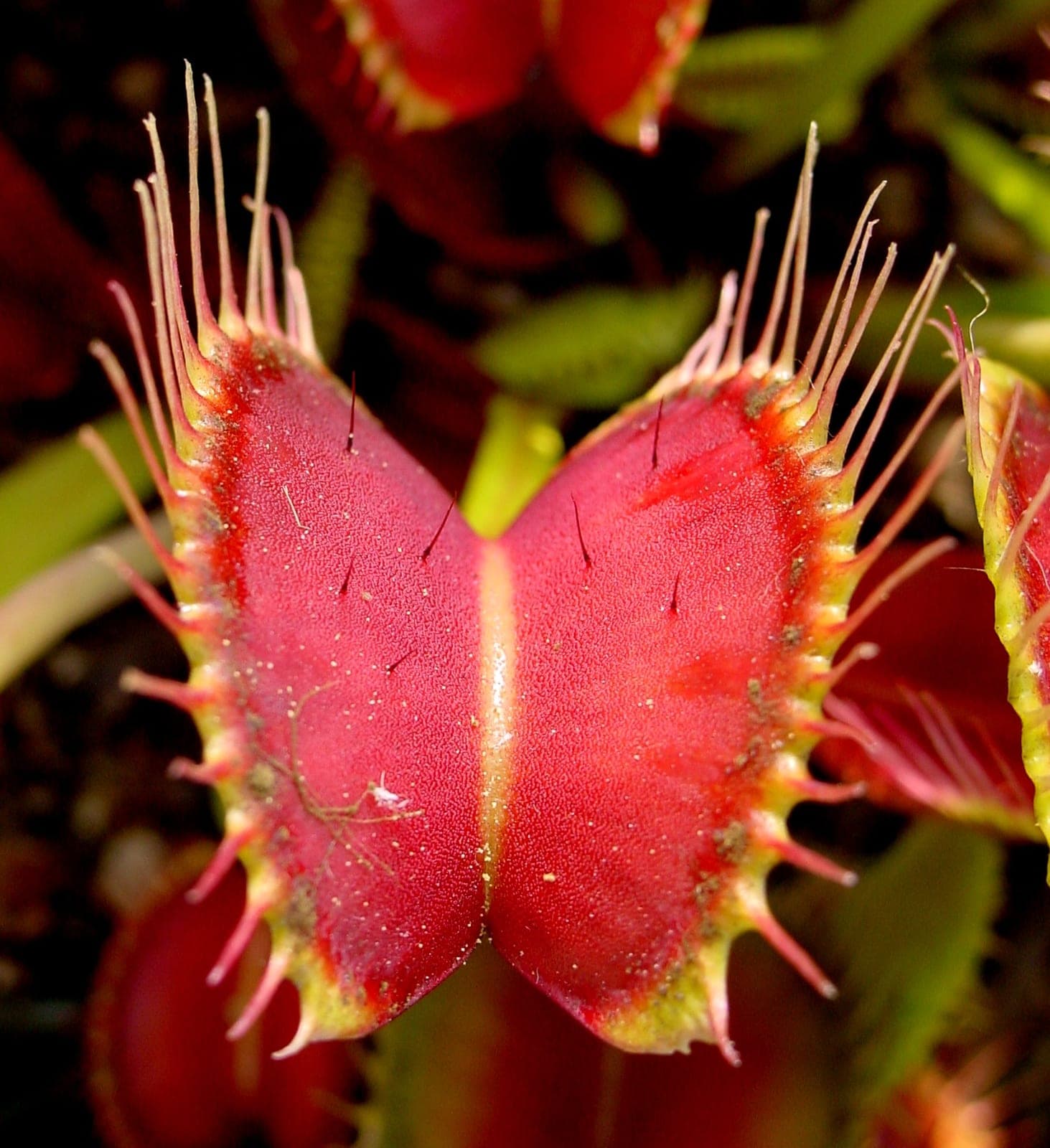
The Venus flytrap is the one everybody already has an opinion about, and it's the most mechanically elaborate solution on offer: a hinged leaf that snaps shut in under a second. It doesn't fire on a single touch - a trap needs two contacts on its trigger hairs within about twenty seconds, a crude form of counting that filters out raindrops and windblown debris so the plant isn't wasting a closure, and therefore energy, on nothing. It's also a one-trick leaf in the most literal sense: each trap can close and digest only a handful of times before it blackens and the plant sheds it. And for all its reputation, Dionaea muscipula is a single species, found wild nowhere on Earth except a narrow band of coastal-plain bog within about a hundred miles of Wilmington, North Carolina - a solution this specific evolved in one very particular place.
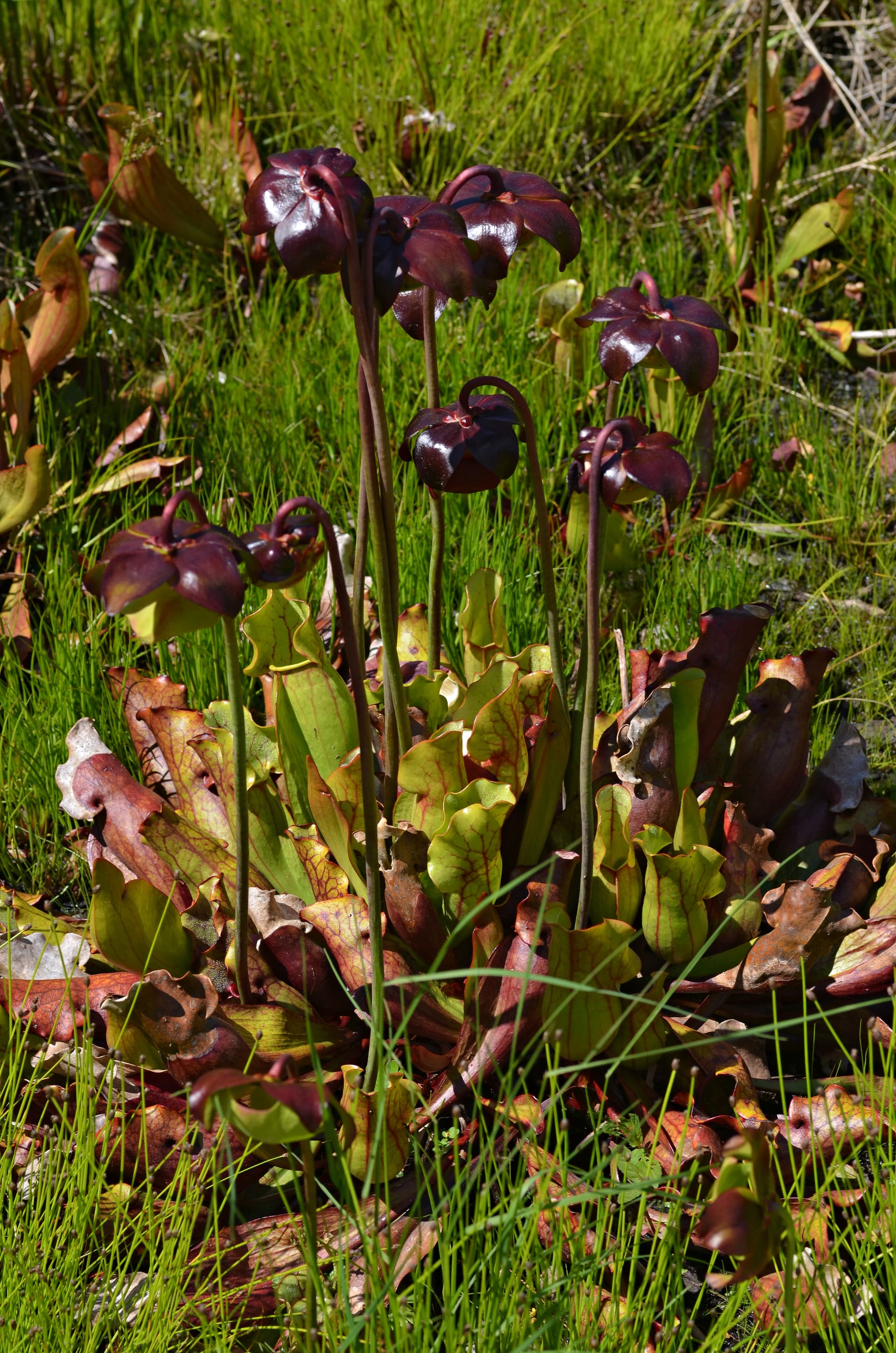
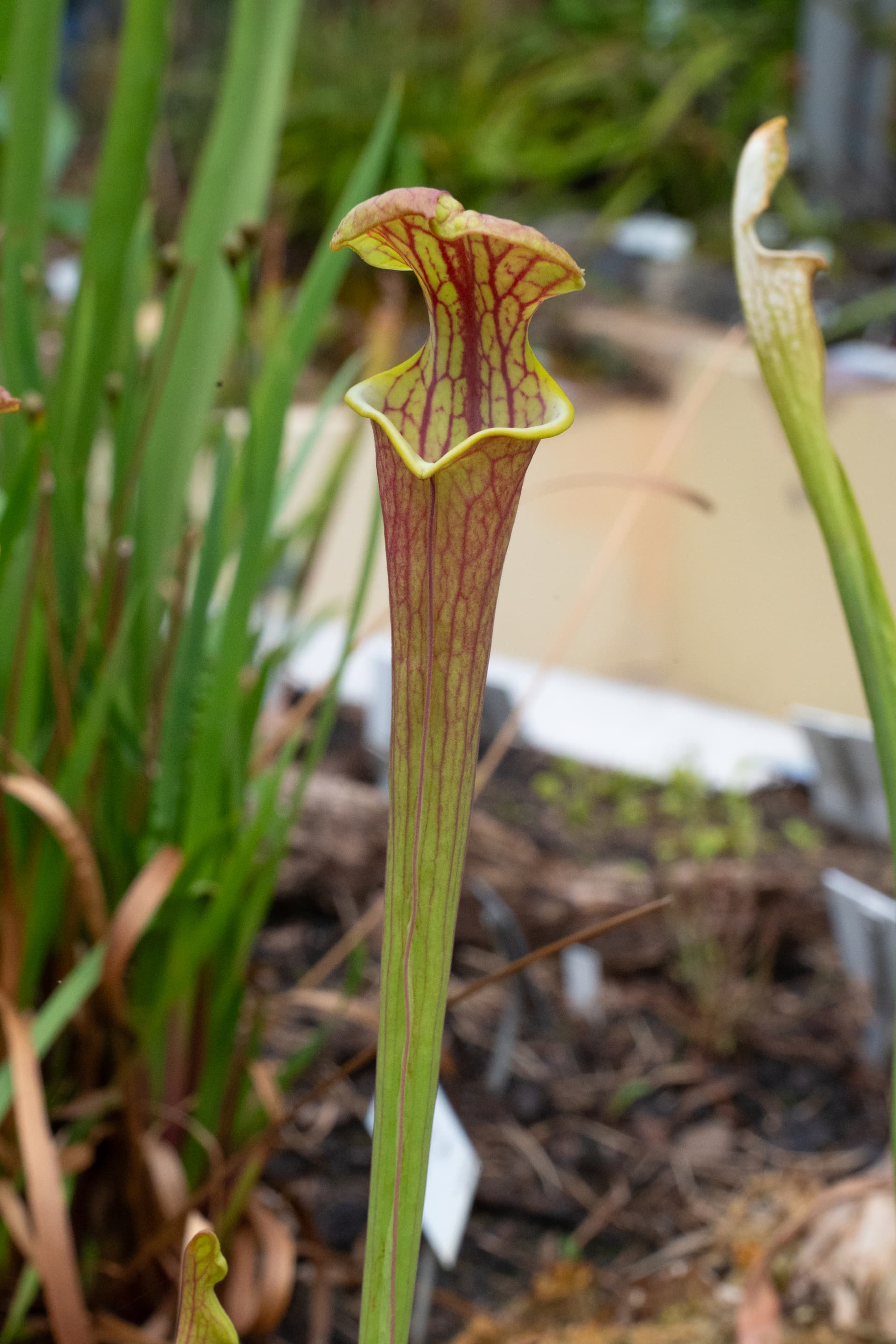
The pitcher plants take the opposite approach: no moving parts at all, just a leaf rolled into a tube and left to fill with rainwater. Purple pitcher plant and yellow pitcher plant are both Sarracenia, and both work as a pitfall - downward-pointing hairs and a slick, waxy interior wall mean that whatever falls in, usually drawn by nectar glands ringing the mouth, can't climb back out. The yellow pitcher plant pushes the design further than almost anything else in the genus, with pitchers up to forty inches tall, and flowers on a separate stalk timed to bloom before the traps are fully open, so the plant isn't eating the very insects it needs for pollination. Both species depend on the same disturbance regime to keep their bogs open: periodic fire. Without it, ordinary shrubby growth shades a pitcher-plant bog out within a few years, which is as much a description of what carnivorous plants need from a landscape as anything about how they trap.
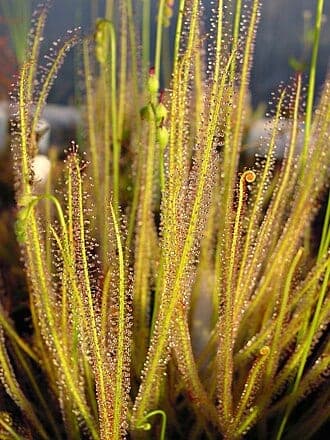
The sundew solves it with glue instead of a snap or a pitfall. Its threadlike leaves are lined with stalked glands, each tipped with a bead of mucilage that looks like morning dew and functions like flypaper - an insect that lands is stuck first and slowly enclosed second, as the leaf curls in around it over minutes or hours. There's a fourth mechanism in the bladderworts: Utricularia holds a vacuum in tiny underwater bladders, triggered open in under a millisecond to suck in anything that brushes past - the fastest trap of any plant here, flytrap included.
Every trap here has its own home address, and the map is a good deal wider than these plants suggest. The flytrap and both pitcher plants are creatures of the American Southeast specifically - coastal-plain bogs from the Carolinas down through the Gulf states. The Pacific Northwest has its own, unrelated pitcher plant in Darlingtonia californica, standing in cold mountain seeps in northern California and southern Oregon where the Southeast has warm bogs. Pinguicula, the butterworts, run the length of the Northern Hemisphere's cold edge and down into the Mexican highlands, sticky rather than snapping or drowning. Drosera, the sundew genus, is the exception to nearly everything: over 190 species, found on every continent except Antarctica, from Florida's panhandle to the sandplains of southwestern Australia. Utricularia is wider still - the single most widely distributed carnivorous genus on Earth, rooted in ponds and wet soil on every continent but Antarctica. Further afield are the ones we don't grow here: Nepenthes, the tropical pitcher vines of Borneo, Sumatra, and Madagascar, which arrived at the same rainwater-trap shape as Sarracenia from a completely unrelated family on the other side of the planet - the clearest single case of convergent evolution in the whole group; Cephalotus, a pitcher plant found nowhere but a sliver of southwestern Australia; Heliamphora, stranded on the isolated tepui plateaus of Venezuela and Guyana; and Drosophyllum, a sundew relative from Portugal, Spain, and Morocco that traps in bone-dry scrubland rather than a bog, the odd one out in a family defined by wet ground.
Snap-trap, pitfall, flypaper, vacuum - four completely different pieces of engineering, and not one of them borrowed from the others. That's the part worth sitting with: evolution keeps finding its way back to carnivory whenever a plant is stuck in soil too poor to make a living any other way, and it never solves it the same way twice.