
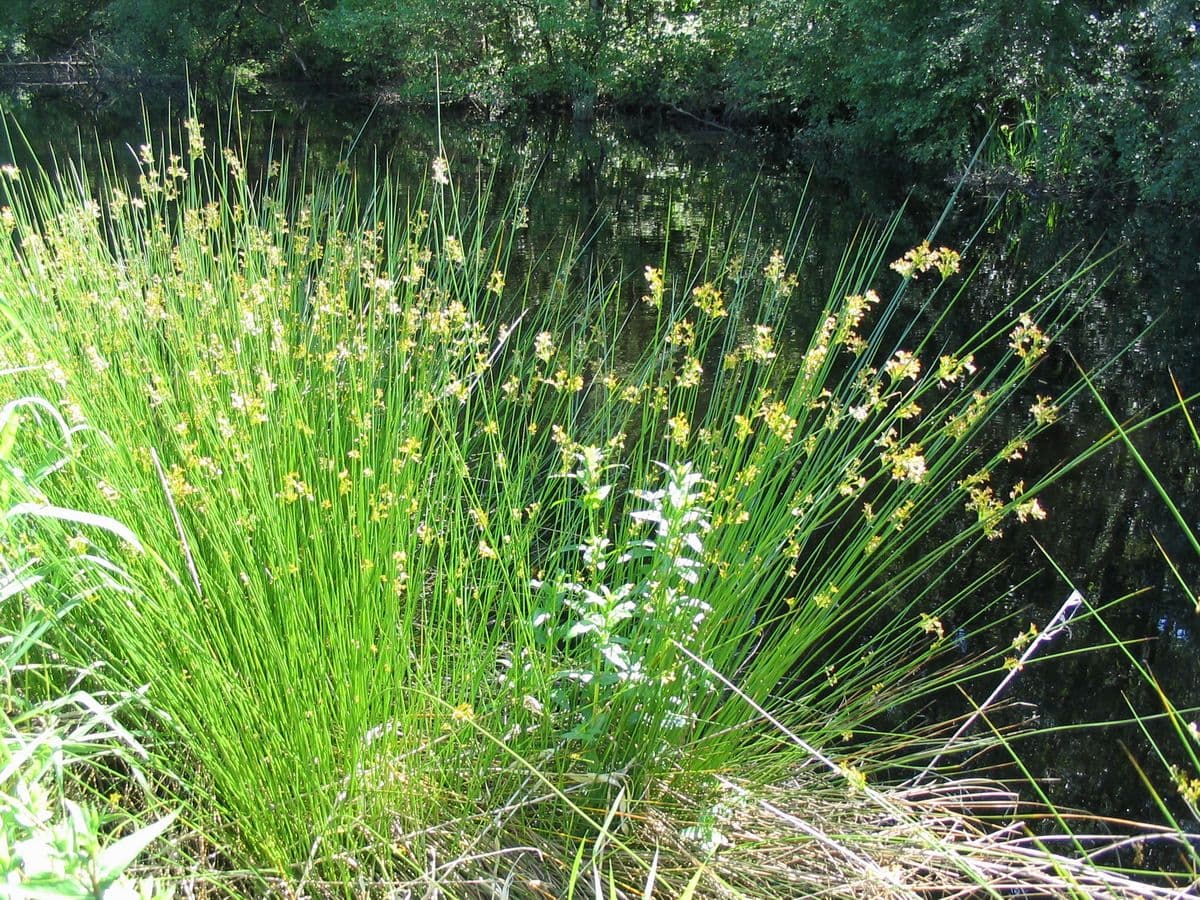
Juncus effusus is a clump-forming perennial rush native to wetlands, pond margins, stream banks, and ditches across the Northern Hemisphere. Its cylindrical, unbranched green stems hold their form through fall, making it a structural anchor in water gardens, rain gardens, and bioswales while stabilizing soil at water edges and filtering surface runoff.
The plant spreads by rhizome and self-seeds freely in consistently wet ground. It tolerates shallow standing water, heavy clay, and seasonal flooding, placing it among the most reliable choices for constructed wetland plantings and low-lying areas. Slightly acid to neutral pH suits it best. Divide clumps every three to four years to prevent center dieback and maintain density. Cold-hardy to zone 4a and performs through zone 9b with adequate moisture.
In traditional Chinese medicine the dried pith, known as Deng Xin Cao, has a long record of use as a mild diuretic and calming agent for anxiety and insomnia. Ecologically, dense clumps shelter aquatic invertebrates, seeds are taken by waterfowl, and stems are harvested by nesting marsh birds. The species has been studied in phytoremediation systems for removing excess nutrients from wastewater.
Ecoregions:Northern ForestsNorthwestern Forested MountainsMarine West Coast ForestEastern Temperate ForestsGreat PlainsNorth American DesertsMediterranean California
Rust
Orange to brown raised pustules on the undersides of leaves, with yellow spotting on the upper surface. Heavy infections cause leaves to yellow and drop.
Remove and destroy infected leaves. Avoid overhead watering and improve air circulation. Apply a sulfur or copper-based fungicide if it spreads. Clear plant debris in fall.
Fungal leaf spot
Brown or purplish spots on the leaves, often ringed with a yellow halo, that spread and merge in warm, humid, or wet weather; heavily spotted leaves yellow and drop early.
Pick off spotted leaves and clear fallen debris to remove overwintering spores. Improve air circulation by thinning, and water at the base so foliage dries quickly. If it persists, apply a copper- or sulfur-based fungicide at the first sign.