
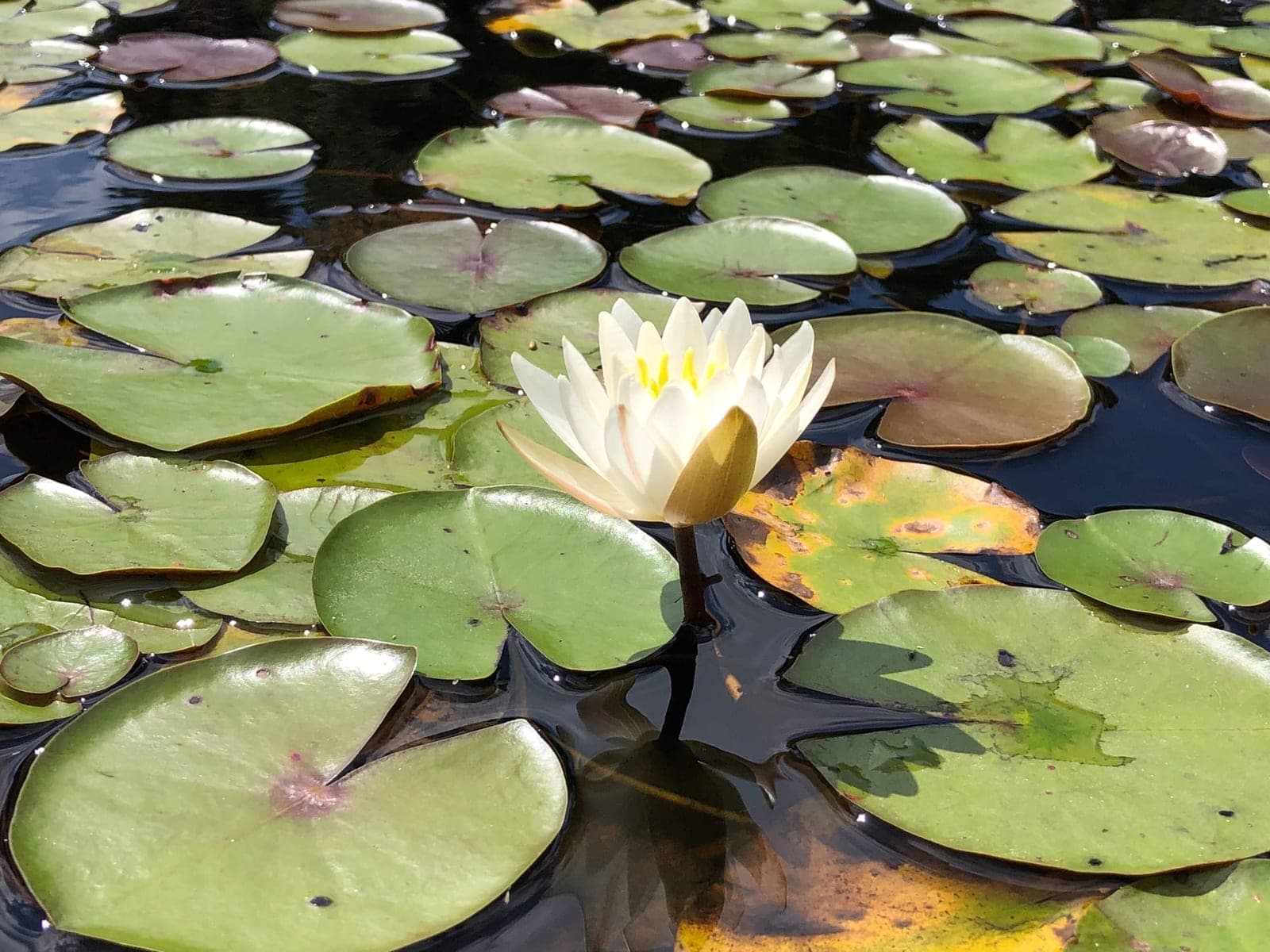
Nymphaea odorata is a native North American aquatic plant with large floating leaf pads and fragrant white flowers that open in morning and close by midday. It grows naturally in ponds, shallow lakes, and slow-moving water from Canada to Central America and is among the continent's most ecologically significant aquatic plants. In garden ponds it shades the water column, suppresses algae growth, and supports an unusually broad range of wildlife.
Plants grow from thick fleshy rhizomes anchored in bottom sediment. In garden ponds, contain rhizomes in wide, shallow baskets of heavy loam submerged so 1–3 ft of water covers the crown; this prevents aggressive lateral spread across the pond floor. Prefers slightly acidic to neutral pH and full sun for reliable surface coverage. Each flower lasts roughly three days before sinking to release seeds below the surface.
Native peoples across North America used starchy rhizomes as food - eaten raw, boiled, or dried and ground into flour - and consumed seeds and young leaves as well. Roots were applied traditionally for mouth sores, sore throat, diarrhea, and wound healing, functioning as an astringent. Dense leaf cover provides habitat for fish, frogs, dragonflies, and waterfowl; beavers feed heavily on the rhizomes, accounting for the common name 'beaver root.'
Ecoregions:Northern ForestsMarine West Coast ForestEastern Temperate ForestsGreat PlainsTropical Wet Forests
Fungal leaf spot
Brown or purplish spots on the leaves, often ringed with a yellow halo, that spread and merge in warm, humid, or wet weather; heavily spotted leaves yellow and drop early.
Pick off spotted leaves and clear fallen debris to remove overwintering spores. Improve air circulation by thinning, and water at the base so foliage dries quickly. If it persists, apply a copper- or sulfur-based fungicide at the first sign.
Crown Rot
Lower leaves yellow and wilt; the base of the rosette turns brown and soft, sometimes with white fungal threads at the soil line. Plants collapse in wet conditions.
Remove and destroy affected plants. Improve drainage and avoid overhead watering. Do not mulch directly against the crown. Space plants for airflow and avoid replanting in the same wet spot.
Root rot
Plants wilt, yellow, and stunt even in moist soil; lower stems and roots turn brown, soft, and mushy and the plant may collapse. Most common in heavy, wet, or poorly drained ground.
Improve drainage and stop overwatering, and never plant too deep. Lift and destroy badly affected plants along with the soil around the roots. Grow in raised or free-draining beds to prevent it returning.