
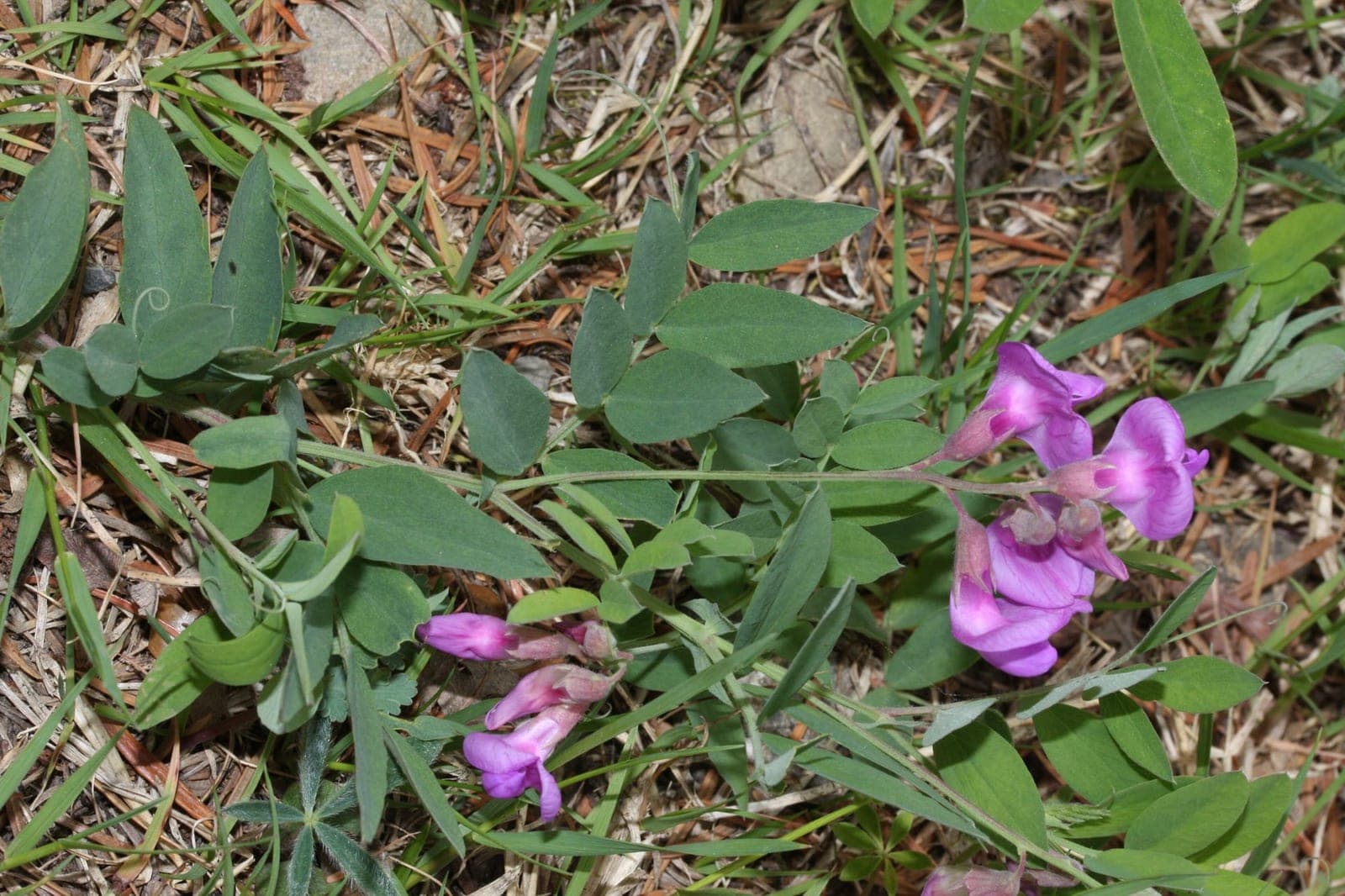
American vetch is a native perennial vine in the legume family, widespread across North America from Alaska to northern Mexico. It climbs by tendrils through meadows, open woodlands, roadsides, and prairie margins, reaching 2 to 5 feet with support. Purple to violet pea-family flowers appear in late spring and early summer, followed by slender seed pods that split and scatter seed when ripe.
As a legume, it fixes atmospheric nitrogen through root nodules with Rhizobium bacteria, gradually enriching lean soils without added fertilizer. Rich fertility reduces nitrogen fixation and pushes the plant toward rank, tangled growth-average to lean soil produces better results. Provide a trellis, fence, or neighboring shrub as climbing support. In prairie restorations and native meadow mixes, plants are commonly seeded without a dedicated structure, weaving naturally through neighboring grasses and forbs. Cold-hardy to zone 3a, stems die back to the root in winter and re-emerge reliably each spring.
American vetch is a documented host plant for several native bumble bee species and provides nectar for long-tongued bees. Seeds are eaten by upland birds and small mammals; deer and rabbits browse the foliage. The species is used in range restoration and erosion-control seedings across the Great Plains and Intermountain West, where it establishes readily after soil disturbance.
Ecoregions:Northern ForestsNorthwestern Forested MountainsMarine West Coast ForestEastern Temperate ForestsGreat PlainsNorth American DesertsMediterranean CaliforniaSouthern Semi-Arid HighlandsTemperate Sierras
Powdery mildew
White or grey powdery coating on leaves - usually starting on older growth in humid conditions or when nights cool.
Improve air circulation by thinning plants. Apply neem oil or potassium bicarbonate spray at first sign. Avoid overhead watering.
Rust
Orange to brown raised pustules on the undersides of leaves, with yellow spotting on the upper surface. Heavy infections cause leaves to yellow and drop.
Remove and destroy infected leaves. Avoid overhead watering and improve air circulation. Apply a sulfur or copper-based fungicide if it spreads. Clear plant debris in fall.
Root rot
Plants wilt, yellow, and stunt even in moist soil; lower stems and roots turn brown, soft, and mushy and the plant may collapse. Most common in heavy, wet, or poorly drained ground.
Improve drainage and stop overwatering, and never plant too deep. Lift and destroy badly affected plants along with the soil around the roots. Grow in raised or free-draining beds to prevent it returning.
Mosaic virus
Yellowing, mottled, or distorted leaves. No cure - spread by aphids.
Remove and destroy infected plants. Control aphid populations to prevent spread. Do not propagate from infected tubers.