
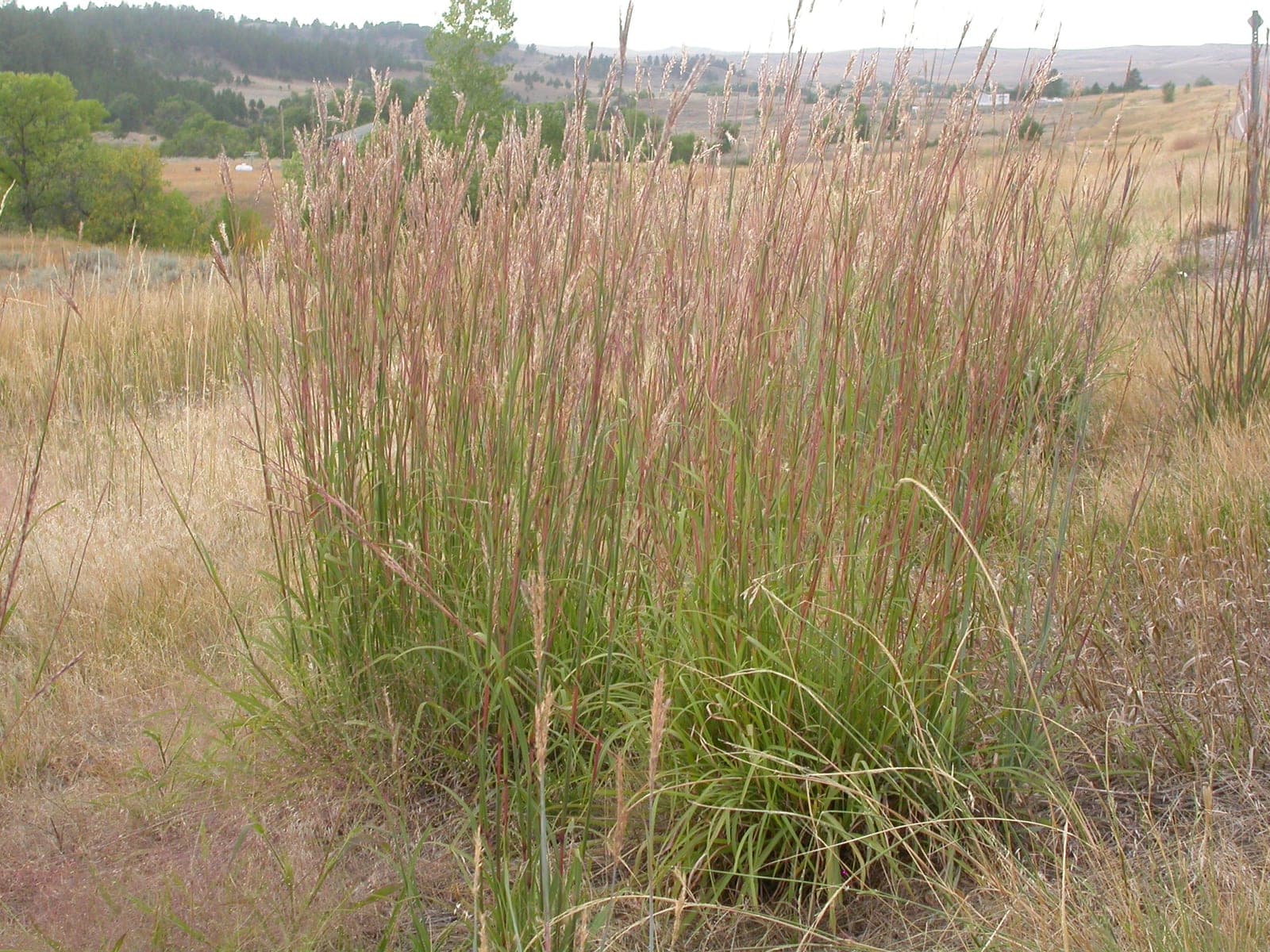
Big bluestem is a warm-season perennial grass native to the tallgrass prairie of central and eastern North America, where it was historically the dominant grass of the Great Plains. Its three-branched seed head resembles a turkey's foot - the origin of the common name turkeyfoot. Mature clumps reach 4–8 feet and turn copper to bronze-orange in fall, holding structural interest well into winter.
As a warm-season grass, big bluestem stays dormant until soil warms in late spring, then grows rapidly through summer. Its root system can extend more than 10 feet deep, giving established plants strong drought tolerance. It spreads slowly by short rhizomes and reseeds in open sites. Rich or heavily amended soil produces floppy stems; low to medium fertility is preferred. Cut stems to 4–6 inches in late winter before new growth begins. Mulching is unnecessary and can promote crown rot. Soil pH between 6.0 and 7.5 suits it, and it tolerates clay and sandy loam equally well.
Big bluestem is a keystone species for grassland wildlife. It provides nesting cover and winter seed for multiple grassland bird species and serves as a larval host for several skipper butterflies. Its deep roots sequester significant carbon and resist erosion, making it a functional anchor for prairie restorations, dry meadow plantings, and low-maintenance slope stabilization.
Ecoregions:Northern ForestsNorthwestern Forested MountainsEastern Temperate ForestsGreat Plains
Rust
Orange to brown raised pustules on the undersides of leaves, with yellow spotting on the upper surface. Heavy infections cause leaves to yellow and drop.
Remove and destroy infected leaves. Avoid overhead watering and improve air circulation. Apply a sulfur or copper-based fungicide if it spreads. Clear plant debris in fall.
Southern Anthracnose
Dark sunken lesions on stems and petioles, often girdling and blackening the crown; plants wilt and collapse in patches during warm, wet weather.
Plant resistant varieties, ensure good drainage, and avoid dense overcrowded stands. Remove infected plants and rotate to non-legume cover for a season.
Helminthosporium Leaf Spot
Small oval to elongated tan or brown lesions with reddish-purple borders appear on leaf blades and sheaths. In severe cases, blades yellow and die back from the tip downward.
Remove and dispose of heavily infected foliage. Avoid overhead irrigation and improve air circulation by thinning dense plantings. Fungicide applications are rarely warranted on established native grasses; correcting site conditions - spacing, drainage, and fertility - is the primary control.