
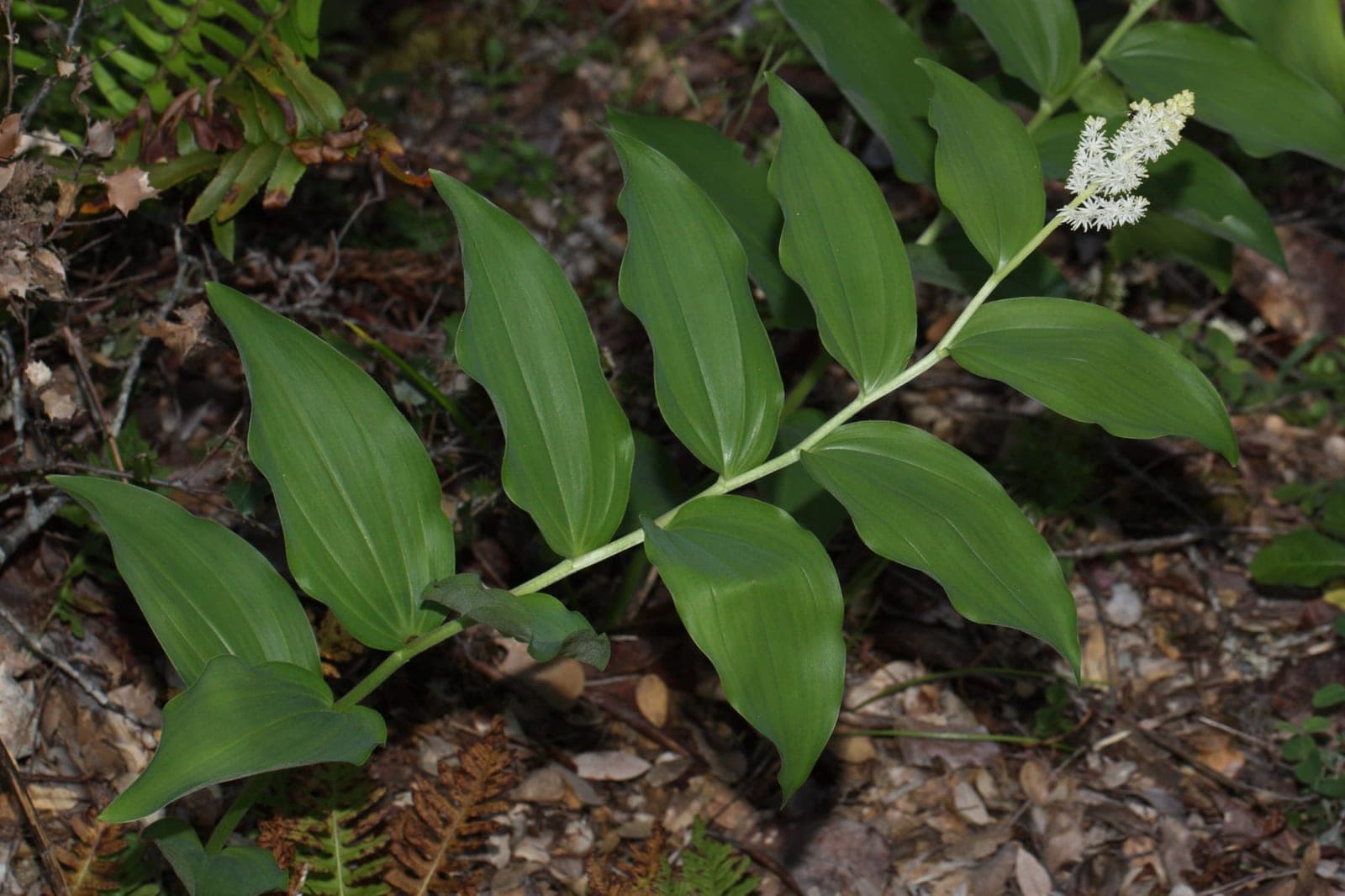
Maianthemum racemosum is a native North American woodland perennial with arching stems lined with broadly lance-shaped leaves and terminal clusters of small, fragrant cream-white flowers in late spring, followed by clusters of red berries in late summer and fall. It grows continent-wide from coast to coast and suits shade gardens, woodland edges, and naturalistic plantings under deciduous canopy.
The plant spreads slowly by rhizome to form loose colonies and tolerates deep shade, making it useful under established trees where few other perennials perform well. It prefers humus-rich, slightly acidic soil that stays consistently moist; drought causes leaf scorch and early dieback. A deep mulch of leaf litter replicates its native forest floor conditions. The plant goes fully dormant in winter and is cold-hardy to zone 3a. Allowing it to naturalize with minimal disturbance produces the most stable, spreading colonies.
Young shoots were consumed by various Native American peoples, prepared similarly to asparagus. The ripe berries are edible in small amounts but act as a laxative in larger quantities. Root preparations have documented traditional use for coughs, kidney complaints, rheumatism, and constipation. The berries are a valued fall food source for thrushes and other woodland birds.
Ecoregions:Northern ForestsNorthwestern Forested MountainsMarine West Coast ForestEastern Temperate ForestsGreat PlainsNorth American DesertsMediterranean CaliforniaTemperate Sierras
Fungal leaf spot
Brown or purplish spots on the leaves, often ringed with a yellow halo, that spread and merge in warm, humid, or wet weather; heavily spotted leaves yellow and drop early.
Pick off spotted leaves and clear fallen debris to remove overwintering spores. Improve air circulation by thinning, and water at the base so foliage dries quickly. If it persists, apply a copper- or sulfur-based fungicide at the first sign.
Root rot
Plants wilt, yellow, and stunt even in moist soil; lower stems and roots turn brown, soft, and mushy and the plant may collapse. Most common in heavy, wet, or poorly drained ground.
Improve drainage and stop overwatering, and never plant too deep. Lift and destroy badly affected plants along with the soil around the roots. Grow in raised or free-draining beds to prevent it returning.