
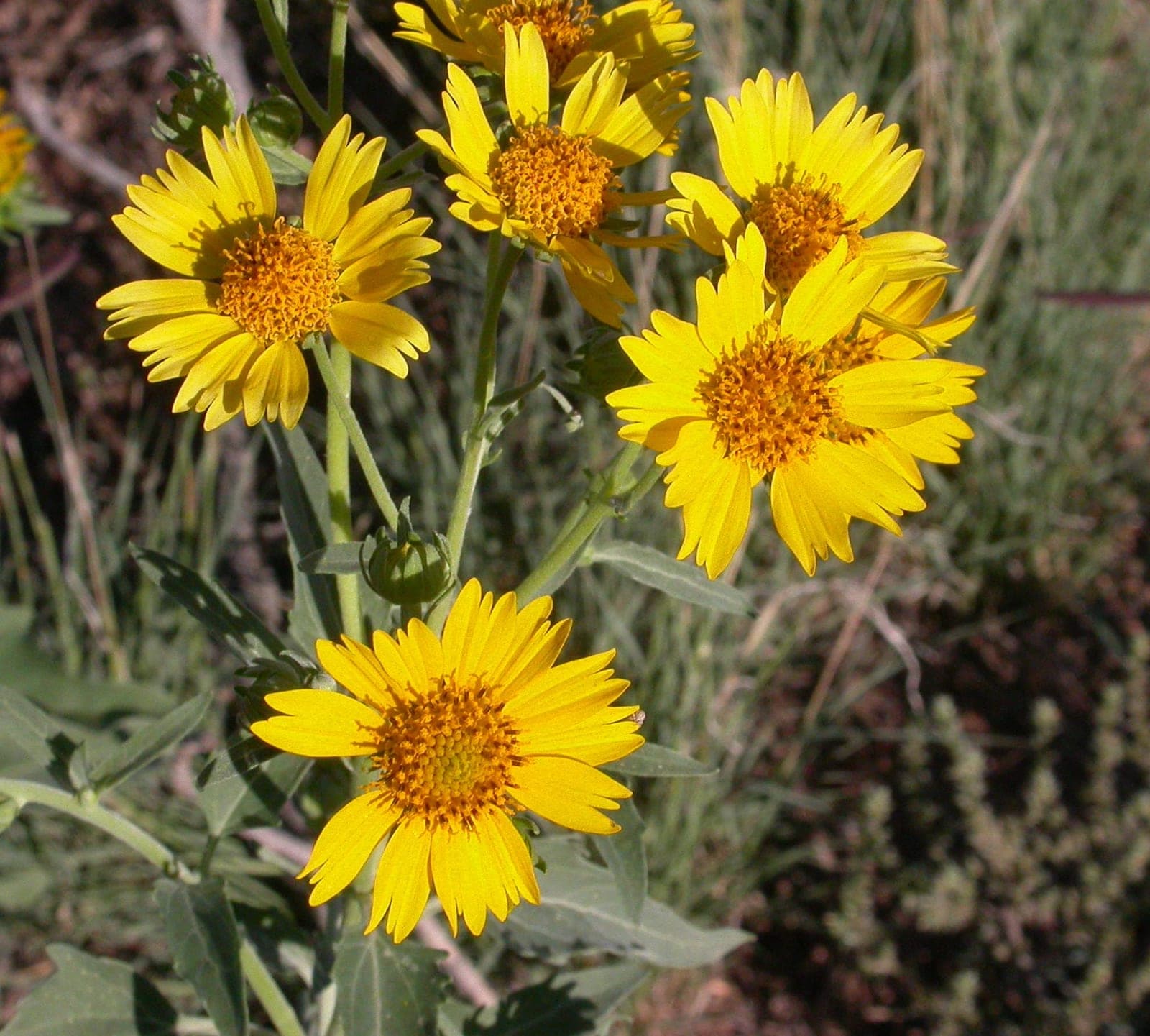
Verbesina encelioides is a fast-growing warm-season annual in the daisy family, native to the southwestern United States and Mexico and now naturalized across much of North America. It produces bright yellow ray florets around a dense central disc over a long season, reliably drawing bees and butterflies. The plant is forgiving of poor conditions and delivers consistent performance on dry, difficult sites where more demanding species struggle.
Cowpen daisy self-seeds prolifically and colonizes bare or disturbed ground quickly - the common name reflects its historic association with overgrazed corrals and disturbed pastures. Performance is better in lean, well-drained soil than in rich ground, which pushes excessive leafy growth at the expense of flowering. The plant is documented to be allelopathic, releasing root exudates that suppress germination of neighboring species, so position it with robust companions or give it its own space. In zones 9–10 it may persist as a short-lived perennial or return so reliably from shed seed that it appears perennial.
Known in Mexican folk tradition as Añil del Muerto, the plant has a history of topical application for wound care and skin conditions. Laboratory studies have identified sesquiterpene lactones, including xanthatin, with measurable antimicrobial and anti-inflammatory activity.
Ecoregions:Northwestern Forested MountainsEastern Temperate ForestsGreat PlainsNorth American DesertsMediterranean CaliforniaSouthern Semi-Arid HighlandsTemperate Sierras
Powdery mildew
White or grey powdery coating on leaves - usually starting on older growth in humid conditions or when nights cool.
Improve air circulation by thinning plants. Apply neem oil or potassium bicarbonate spray at first sign. Avoid overhead watering.
Fungal leaf spot
Brown or purplish spots on the leaves, often ringed with a yellow halo, that spread and merge in warm, humid, or wet weather; heavily spotted leaves yellow and drop early.
Pick off spotted leaves and clear fallen debris to remove overwintering spores. Improve air circulation by thinning, and water at the base so foliage dries quickly. If it persists, apply a copper- or sulfur-based fungicide at the first sign.
Aster Yellows
Deformed, greenish flowers, stunted growth, and yellowed foliage. Flower centers may produce tufts of leafy growth instead of normal petals.
No cure. Remove and destroy infected plants immediately to stop spread. Control leafhoppers, which transmit the disease, and remove nearby weed hosts.
Damping Off
Seedlings collapse at the soil line with thin, water-soaked stems; seeds may fail to emerge or rot before sprouting.
Sow in well-draining mix, avoid overwatering, and ensure good airflow. Remove affected seedlings and let the surface dry between waterings.
Root rot
Plants wilt, yellow, and stunt even in moist soil; lower stems and roots turn brown, soft, and mushy and the plant may collapse. Most common in heavy, wet, or poorly drained ground.
Improve drainage and stop overwatering, and never plant too deep. Lift and destroy badly affected plants along with the soil around the roots. Grow in raised or free-draining beds to prevent it returning.