
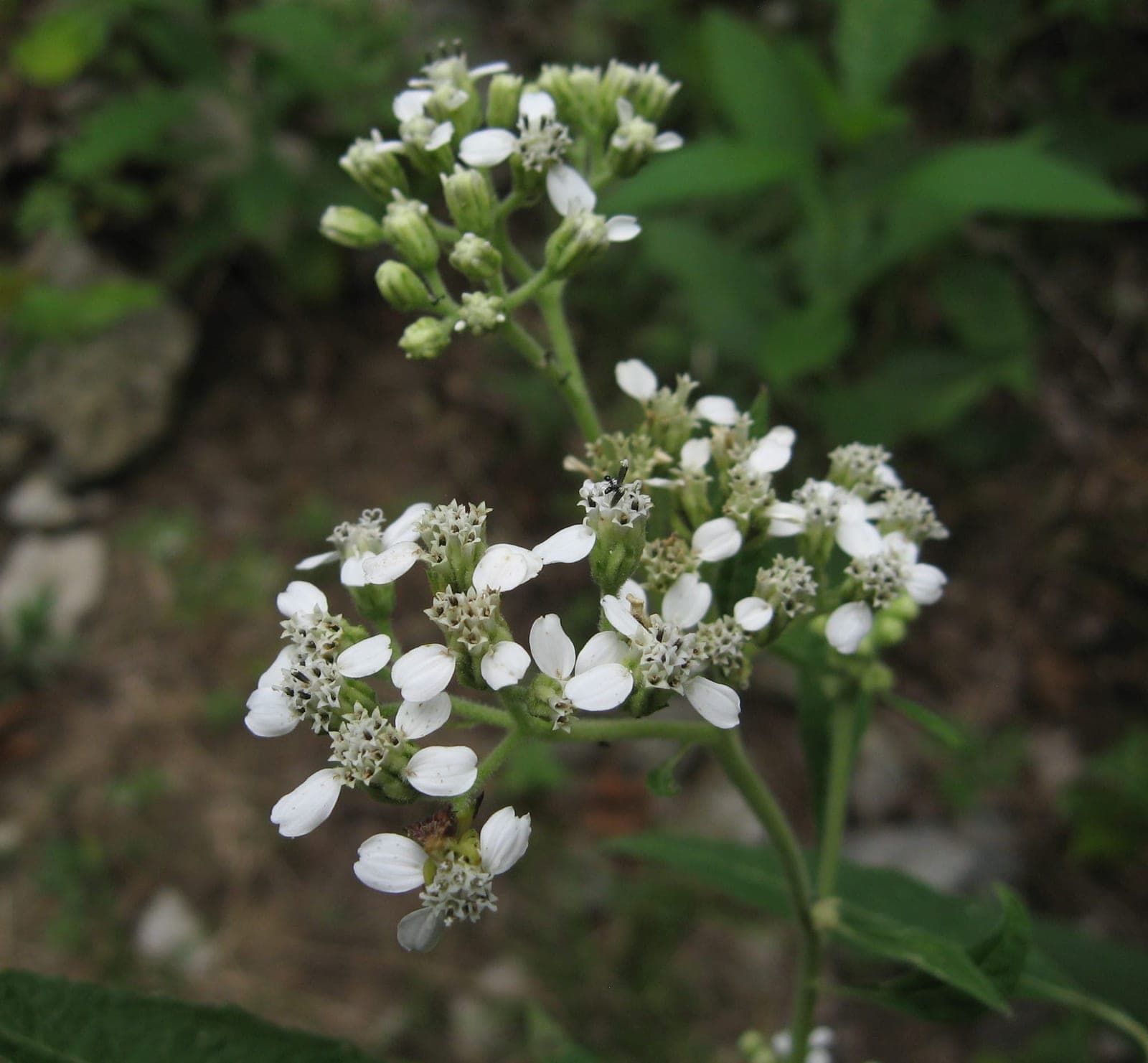
Frostweed (Verbesina virginica) is a coarse-textured native perennial of the southeastern United States that reaches 4–7 feet and produces flat-topped clusters of small white flowers from late summer into fall. It is a high-value late-season plant for bees, wasps, and butterflies, and its seeds feed songbirds into winter.
It grows naturally in calcareous soils along bottomland thickets and woodland edges and tolerates considerable shade, though flowering is heavier with more sun. In garden settings the plant spreads by self-seeding and rhizomes and can naturalize aggressively in ideal conditions; pull seedlings while small to manage spread. Winged stems are a reliable identification feature. The namesake spectacle occurs at the first hard freeze: sap forced through cracks in the outer stem bark freezes into delicate curling ribbons and rosettes of ice at the base of the plant. Stems must remain standing and undisturbed through late fall for this to occur.
Cherokee peoples used root decoctions for fever and rheumatism, as documented in ethnobotanical literature.
In the Northeast and Midwest, plant wingstem instead; on drier ground in the Southwest, cowpen daisy.
Ecoregions:Eastern Temperate ForestsGreat PlainsTropical Wet Forests
Powdery mildew
White or grey powdery coating on leaves - usually starting on older growth in humid conditions or when nights cool.
Improve air circulation by thinning plants. Apply neem oil or potassium bicarbonate spray at first sign. Avoid overhead watering.
Fungal leaf spot
Brown or purplish spots on the leaves, often ringed with a yellow halo, that spread and merge in warm, humid, or wet weather; heavily spotted leaves yellow and drop early.
Pick off spotted leaves and clear fallen debris to remove overwintering spores. Improve air circulation by thinning, and water at the base so foliage dries quickly. If it persists, apply a copper- or sulfur-based fungicide at the first sign.
Root rot
Plants wilt, yellow, and stunt even in moist soil; lower stems and roots turn brown, soft, and mushy and the plant may collapse. Most common in heavy, wet, or poorly drained ground.
Improve drainage and stop overwatering, and never plant too deep. Lift and destroy badly affected plants along with the soil around the roots. Grow in raised or free-draining beds to prevent it returning.