
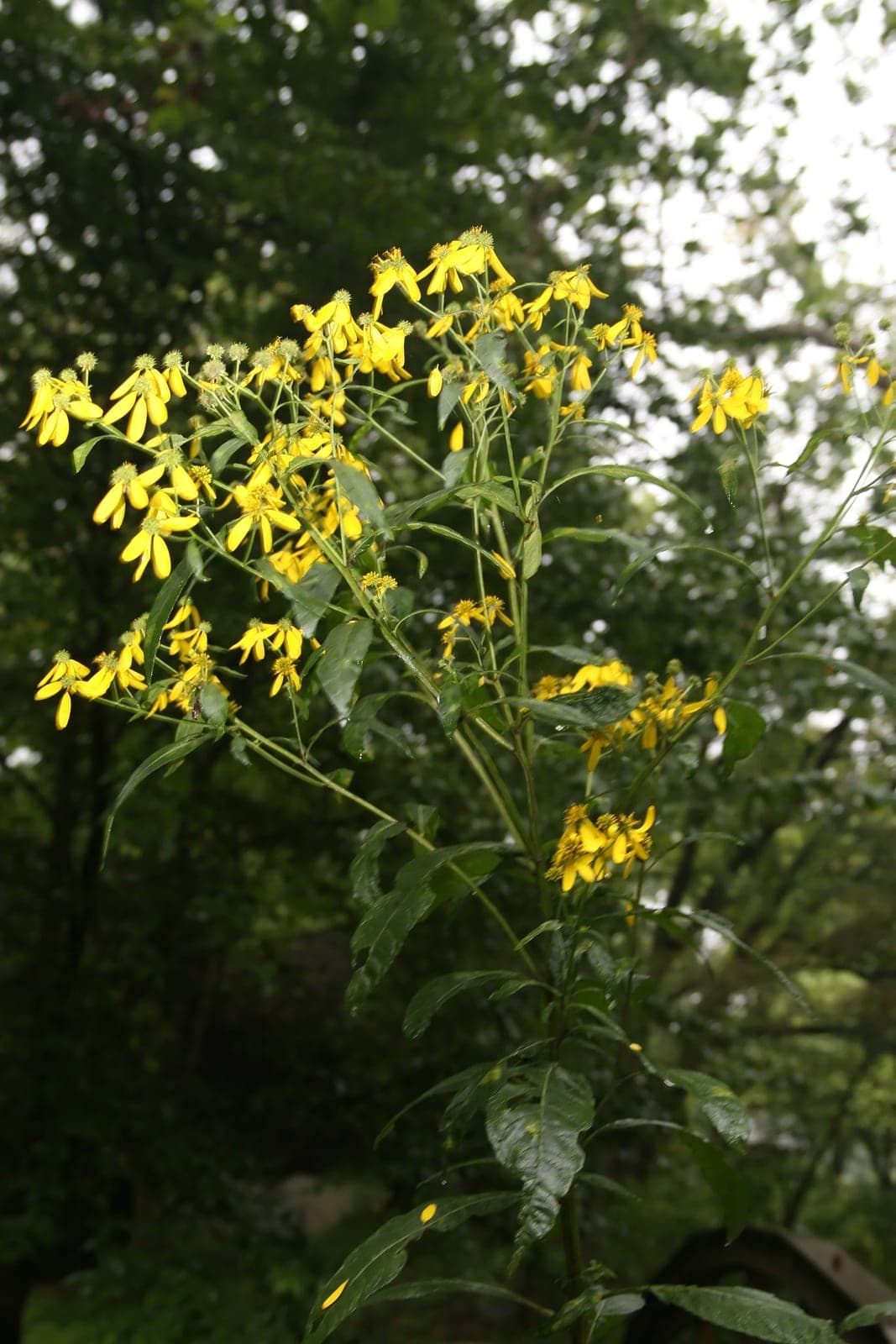
Wingstem is a tall native perennial of eastern North America, immediately recognizable by the fibrous wings that run down its stems from each leaf base - the origin of both its common name and its species epithet. It grows naturally along stream banks, floodplain edges, and moist woodland margins, often forming dense colonies. It is sometimes called yellow ironweed, though it is not a true ironweed (Vernonia).
It blooms from late summer into fall, when few other natives are in flower, making it a significant late-season nectar source for bees, wasps, beetles, and butterflies. Goldfinches and sparrows harvest the seeds well into winter. The plant spreads by rhizomes and self-seeds readily; it performs best in naturalistic plantings, rain gardens, or bioswales where colonizing is acceptable. It tolerates seasonal flooding and grows in average garden soils with consistent moisture, but moist, fertile soil produces the strongest stands. Mature clumps benefit from division every three to four years to prevent overcrowding.
Wingstem supports a broad community of native bees and specialist insects during a late-season window when competing nectar sources are scarce. Standing hollow stems left through winter provide overwintering habitat for stem-nesting native bees.
Farther south and west, frostweed and cowpen daisy are the native Verbesina to plant.
Ecoregions:Eastern Temperate ForestsGreat Plains
Powdery mildew
White or grey powdery coating on leaves - usually starting on older growth in humid conditions or when nights cool.
Improve air circulation by thinning plants. Apply neem oil or potassium bicarbonate spray at first sign. Avoid overhead watering.
Fungal leaf spot
Brown or purplish spots on the leaves, often ringed with a yellow halo, that spread and merge in warm, humid, or wet weather; heavily spotted leaves yellow and drop early.
Pick off spotted leaves and clear fallen debris to remove overwintering spores. Improve air circulation by thinning, and water at the base so foliage dries quickly. If it persists, apply a copper- or sulfur-based fungicide at the first sign.
Aster Yellows
Deformed, greenish flowers, stunted growth, and yellowed foliage. Flower centers may produce tufts of leafy growth instead of normal petals.
No cure. Remove and destroy infected plants immediately to stop spread. Control leafhoppers, which transmit the disease, and remove nearby weed hosts.