
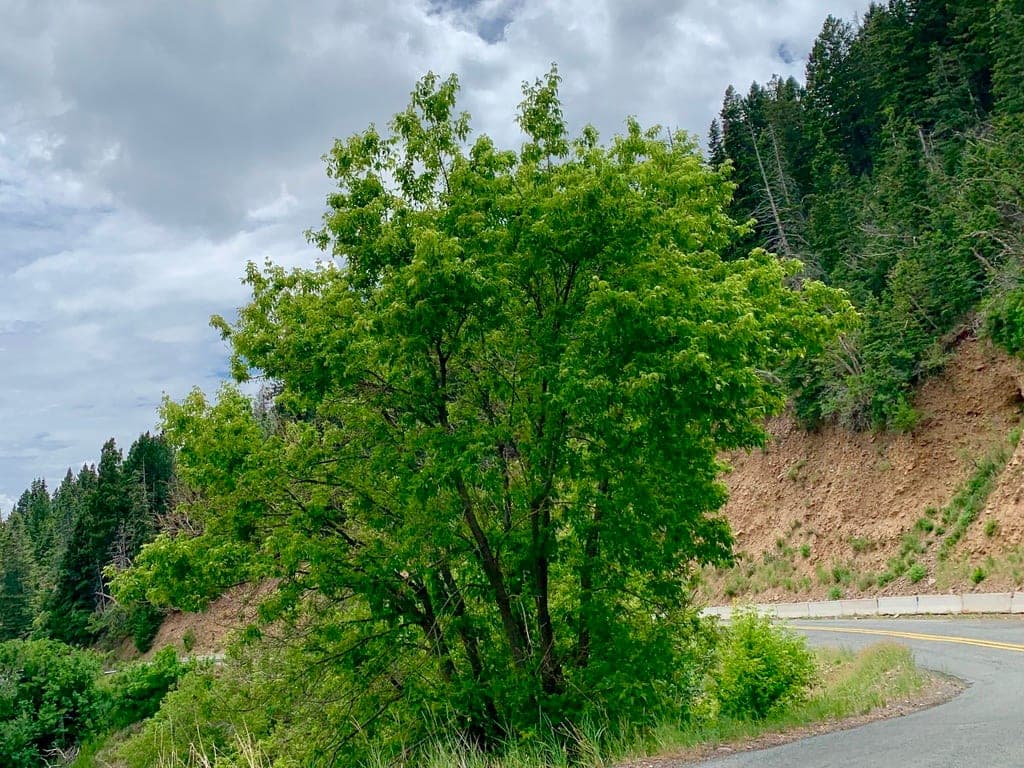
Boxelder is a native North American maple found from southern Canada to Honduras. Unlike other maples, it bears pinnately compound leaves with three to five leaflets, closely resembling ash foliage. It is the fastest-growing maple in North America and among the most cold-tolerant, establishing readily on riverbanks, floodplains, and disturbed ground.
Highly adaptable, boxelder tolerates wet, dry, compacted, and nutrient-poor soils, making it viable on difficult sites where other trees fail. It is dioecious-male and female flowers occur on separate trees-and female trees produce heavy crops of samaras that persist through winter and self-sow aggressively. The wood is brittle and branches break readily under ice and wind loads. Trees sucker freely from the base and roots; remove suckers promptly to prevent thicket formation. Prune in late summer rather than early spring to limit sap loss. Best suited to naturalistic, riparian, or bank-stabilization plantings rather than formal landscapes. Can become weedy in disturbed areas outside its native range.
Sap can be tapped in late winter for syrup production, though sugar content is considerably lower than sugar maple, requiring much larger volumes of sap per unit of syrup. Female trees are a significant winter food source for evening grosbeaks and other finches that feed on persistent samaras.
Ecoregions:Northern ForestsNorthwestern Forested MountainsMarine West Coast ForestEastern Temperate ForestsGreat PlainsNorth American DesertsMediterranean CaliforniaSouthern Semi-Arid HighlandsTemperate Sierras
Maple Anthracnose
Irregular brown or tan spots that follow and spread between leaf veins, giving leaves a scorched or blighted appearance. Severe infections cause premature leaf drop. In wet springs, small cankers may appear on young shoots.
Rake and remove fallen leaves each autumn to reduce overwintering fungal spores. Avoid overhead irrigation. Apply a copper-based fungicide at bud break during wet spring conditions. Prune selectively to improve canopy airflow.
Verticillium Wilt
Lower leaves yellow and wilt, often on one side of the plant, with brown streaking in the stem and crown tissue when cut open. Plants are stunted and decline over the season.
Remove and destroy affected plants. Avoid planting in soil that has grown infected tomatoes, peppers, or other susceptible crops. Rotate beds and improve drainage; there is no cure once a plant is infected.
Eutypella Canker
Large, target-shaped cankers on the trunk and major limbs, with concentric rings of callus tissue surrounding sunken, dead bark. Infected wood shows orange-brown discoloration in cross section. Cankers expand over multiple years and can girdle and kill major limbs or the entire tree.
No effective chemical control exists. Remove infected branches with at least 6 in margin into healthy wood and destroy the debris. Trunk cankers may be surgically excised by a certified arborist if the canker has not girdled the stem. Remove trees with girdling trunk cankers. Prevent bark wounds during mowing and maintenance. Maintain tree vigor through mulching and adequate soil moisture to slow canker expansion.
Fungal leaf spot
Brown or purplish spots on the leaves, often ringed with a yellow halo, that spread and merge in warm, humid, or wet weather; heavily spotted leaves yellow and drop early.
Pick off spotted leaves and clear fallen debris to remove overwintering spores. Improve air circulation by thinning, and water at the base so foliage dries quickly. If it persists, apply a copper- or sulfur-based fungicide at the first sign.