
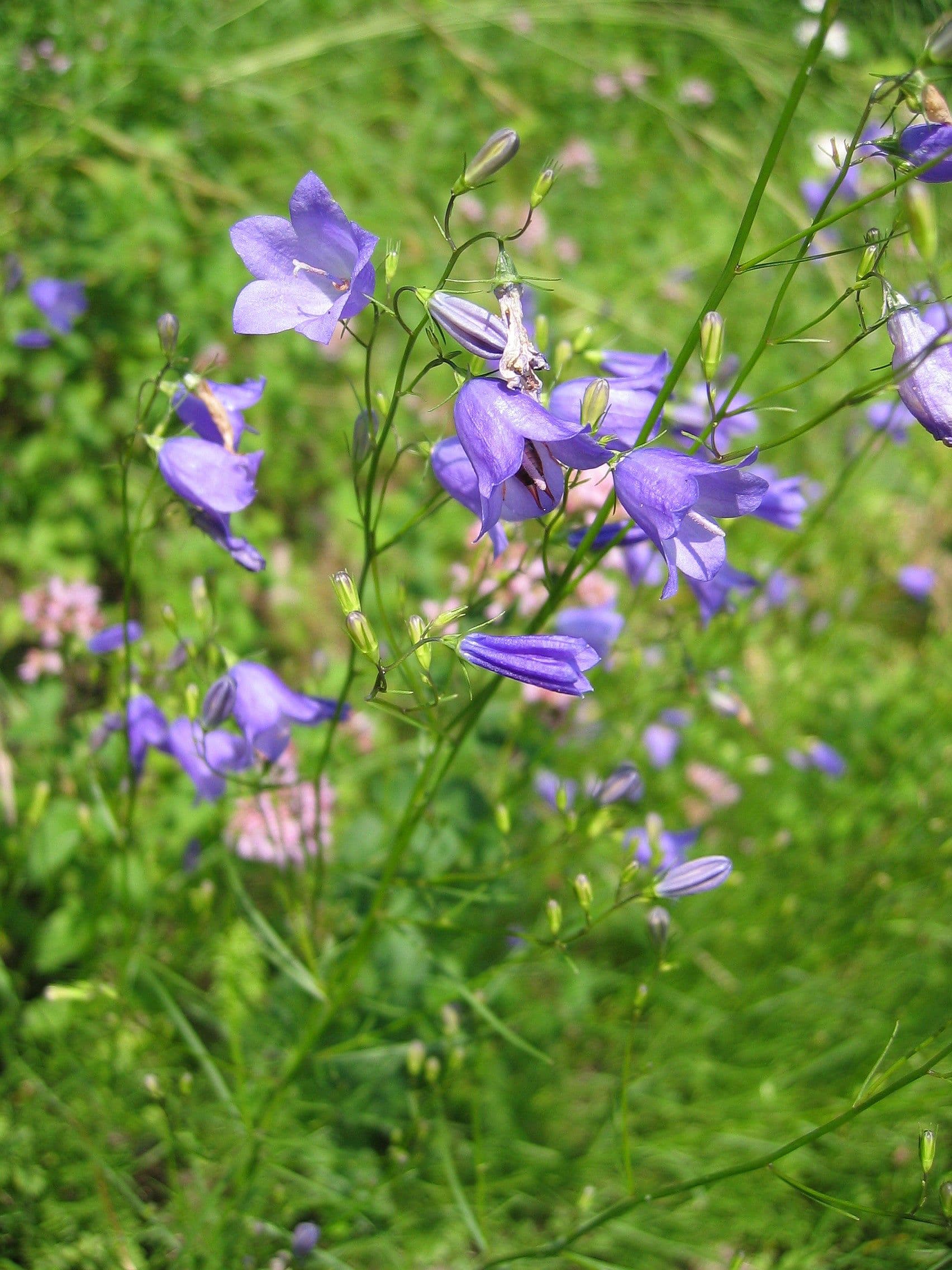
Campanula rotundifolia is a slender-stemmed herbaceous perennial native across temperate regions of the Northern Hemisphere, from rocky outcrops and cliff ledges to open grasslands and dry meadow edges. Its violet-blue, nodding bell-shaped flowers appear from midsummer into early fall, making it one of the later-blooming wildflowers in its range. It is the floral emblem of Sweden and is commonly known as bluebell in Scotland.
Harebell thrives in lean, sharply drained soils and tolerates thin, rocky, or sandy ground where richer competitors cannot establish. Fertile soil encourages floppy stems and reduced flowering; avoid amending planting sites with compost. It spreads by short rhizomes and self-seeds at a modest rate, building a small colony over a few seasons without becoming invasive. It is well-suited to rock gardens, dry meadow plantings, and naturalized bank edges. Cold hardiness is exceptional for a herbaceous perennial.
Young basal leaves and flowers are edible; leaves can be eaten raw in salads and flowers used as a garnish.
Ecoregions:TundraTaigaNorthern ForestsNorthwestern Forested MountainsMarine West Coast ForestEastern Temperate ForestsGreat PlainsNorth American DesertsTemperate Sierras
Powdery mildew
White or grey powdery coating on leaves - usually starting on older growth in humid conditions or when nights cool.
Improve air circulation by thinning plants. Apply neem oil or potassium bicarbonate spray at first sign. Avoid overhead watering.
Botrytis (grey mould)
Grey fuzzy mould on petals and stems, worst in cool wet conditions.
Remove affected parts immediately. Improve air circulation. Avoid overhead watering. Apply copper fungicide if severe.
Fungal leaf spot
Brown or purplish spots on the leaves, often ringed with a yellow halo, that spread and merge in warm, humid, or wet weather; heavily spotted leaves yellow and drop early.
Pick off spotted leaves and clear fallen debris to remove overwintering spores. Improve air circulation by thinning, and water at the base so foliage dries quickly. If it persists, apply a copper- or sulfur-based fungicide at the first sign.