
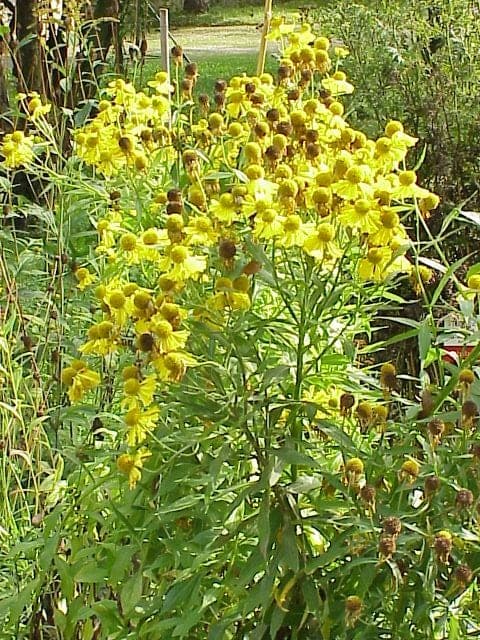
Helenium autumnale is a native North American perennial in the daisy family that produces masses of yellow, orange, and burnished-red flowers from late summer into fall. It fills a gap few other perennials cover, drawing butterflies, native bees, and other pollinators precisely when most of the garden is winding down.
Naturally found along stream banks, floodplains, and wet meadows, it performs best in full sun with consistently moist soil. Clumps tend to open up and thin at the center after three to four years; dividing them in early spring restores vigor. Pinching stems back by several inches in late spring delays the display by a week or two but produces shorter, self-supporting plants. Mulching helps retain soil moisture through summer.
The common name traces to the practice of crumbling dried flowers and leaves into snuff to provoke sneezing, a remedy several Native American tribes applied to colds and headaches. The plant contains sesquiterpene lactones, including helenalin, which have shown anti-inflammatory activity in laboratory studies. These same compounds make the plant toxic to livestock in quantity.
Ecoregions:Northern ForestsNorthwestern Forested MountainsMarine West Coast ForestEastern Temperate ForestsGreat PlainsNorth American Deserts
Powdery mildew
White or grey powdery coating on leaves - usually starting on older growth in humid conditions or when nights cool.
Improve air circulation by thinning plants. Apply neem oil or potassium bicarbonate spray at first sign. Avoid overhead watering.
Aster Yellows
Deformed, greenish flowers, stunted growth, and yellowed foliage. Flower centers may produce tufts of leafy growth instead of normal petals.
No cure. Remove and destroy infected plants immediately to stop spread. Control leafhoppers, which transmit the disease, and remove nearby weed hosts.
Fungal leaf spot
Brown or purplish spots on the leaves, often ringed with a yellow halo, that spread and merge in warm, humid, or wet weather; heavily spotted leaves yellow and drop early.
Pick off spotted leaves and clear fallen debris to remove overwintering spores. Improve air circulation by thinning, and water at the base so foliage dries quickly. If it persists, apply a copper- or sulfur-based fungicide at the first sign.