
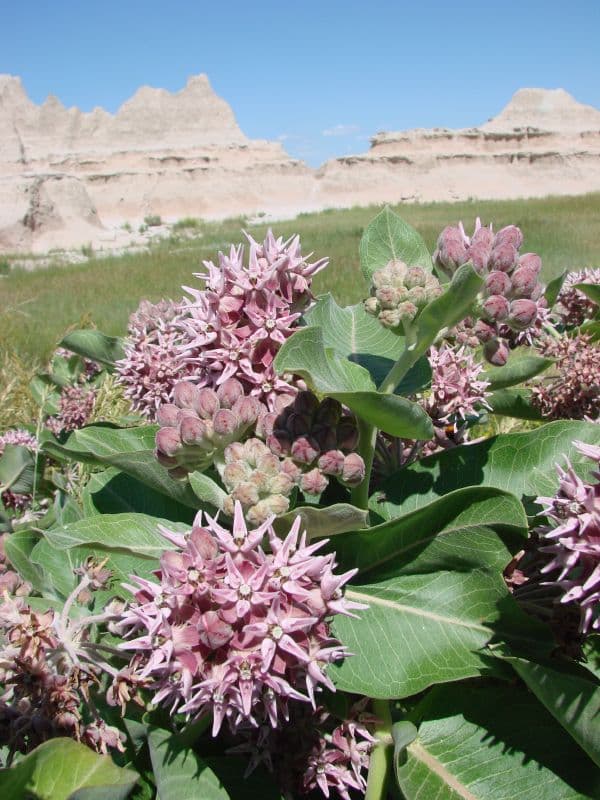
Showy milkweed is a rhizomatous native perennial found across the western half of North America, from the Great Plains to the Pacific Coast. It is one of the most ecologically significant host plants for monarch butterflies and provides nectar for native bees, hummingbirds, and dozens of other insect species. The large pink-purple flower clusters and broad gray-green foliage give it strong structural presence in naturalistic and wildlife gardens.
The plant spreads by both seed and deep rhizomes, forming loose colonies over several years. It emerges late in spring - often weeks after other perennials - so mark planting locations to avoid accidental disturbance. In lean, well-drained soils it remains well-behaved and long-lived; in rich, moist soils rhizome spread can be aggressive. A gravel mulch layer at the crown helps prevent rot in humid regions. pH tolerance is broad, roughly 5.5–7.5, and the root system survives deep freezes in zone 3a where stems die back completely each winter.
Multiple Indigenous peoples of western North America ate young shoots and flower buds as cooked vegetables and extracted stem fiber for cordage. Latex sap was applied topically to warts and skin sores. The cardenolide compounds in the plant's tissues are absorbed by monarch caterpillars during feeding, rendering adult butterflies unpalatable to bird predators - a key mechanism in the monarch–milkweed ecological relationship.
Ecoregions:Northwestern Forested MountainsMarine West Coast ForestGreat PlainsNorth American DesertsMediterranean California
Powdery mildew
White or grey powdery coating on leaves - usually starting on older growth in humid conditions or when nights cool.
Improve air circulation by thinning plants. Apply neem oil or potassium bicarbonate spray at first sign. Avoid overhead watering.
Cercospora Leaf Spot
Small round spots with tan or gray centers and reddish-purple borders on leaves. Spots merge in severe cases, causing leaves to brown and die back.
Remove infected leaves and avoid overhead watering. Space plants for airflow and rotate crops. Apply a copper-based fungicide if the infection spreads.
Aster Yellows
Deformed, greenish flowers, stunted growth, and yellowed foliage. Flower centers may produce tufts of leafy growth instead of normal petals.
No cure. Remove and destroy infected plants immediately to stop spread. Control leafhoppers, which transmit the disease, and remove nearby weed hosts.
Milkweed and the spotted lanternfly - an emerging pest, an ancient plant
A pest that arrived from Asia is reshaping the gardens of North America, but the plant that may help control it has been healing wounds for centuries and feeding monarch butterflies for many times longer.
Garden design for attracting butterflies
A butterfly garden needs two things, nectar for the adults and the right host plant for the caterpillars, and the design is mostly deciding where each one goes.