Milkweed and the spotted lanternfly — an emerging pest, an ancient plant
A pest that arrived from Asia is reshaping the gardens of North America, but the plant that may help control it has been healing wounds for centuries and feeding monarch butterflies for many times longer.
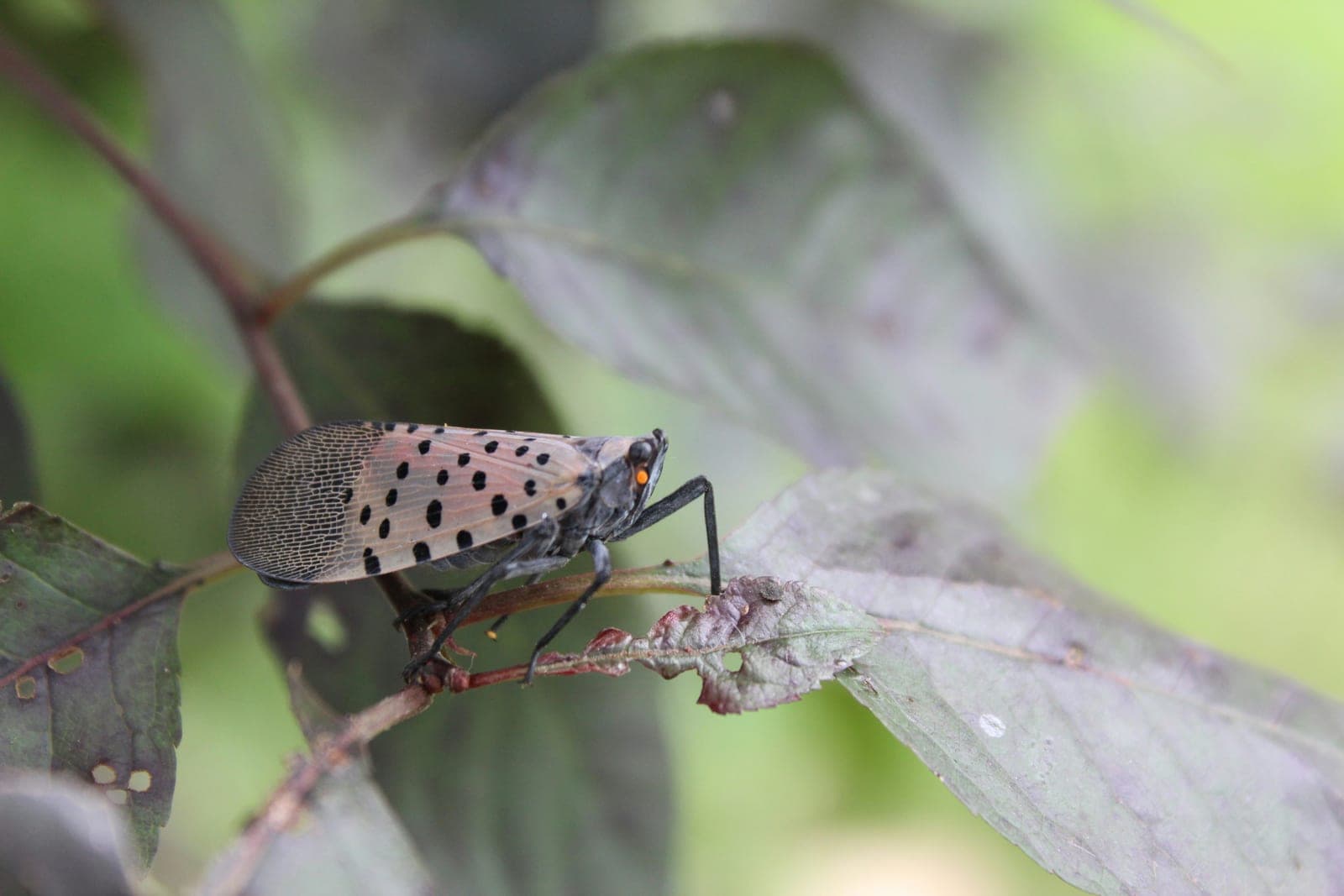
The spotted lanternfly, Lycorma delicatula, is a relatively recent arrival to North America - first documented in Pennsylvania in 2014 - but in less than fifteen years it has become one of the most destructive invasive insects in the eastern United States. It feeds on over three hundred species of plants, from crop staples like grapes and apples to ornamentals and native trees; it pierces the stems and trunks of its hosts and drinks the sap, weakening them over time and leaving behind a sticky residue called honeydew that promotes sooty mould and attracts other pests. A single female can lay hundreds of eggs, which overwinter in flat, grey-brown masses tucked under bark, in crevices, and on garden structures. They hatch in spring and cycle through five nymphal stages before reaching adulthood by late summer, when the red-underwing adults emerge to feed voraciously and lay eggs for the next generation. The nymphs are more damaging than the adults - they feed indiscriminately, and a large population can denude a plant or tree in weeks.
What makes the lanternfly particularly difficult to manage is that it thrives in the landscape we have built. It has no natural North American predators; birds largely refuse to eat it (though signs point that may be changing thankfully), perhaps because like many highly patterned insects it carries a signal: eat me and you'll regret it. It overwinters in the egg stage, so traditional insect controls that target adults or developing stages in warmer climates do not work. Pesticides kill it, but they are indiscriminate and will kill the monarch caterpillars and native pollinators that share the same plants. The search for a more targeted approach - one that might break the pest's cycle or render it toxic to predators the way the monarch has done - has circled back to a plant native to North America: milkweed.
Milkweed has been studied intensively since the 1980s as a repository of cardiac glycosides*, alkaloid compounds that make the plant bitter and toxic to most herbivores. A monarch butterfly caterpillar can eat milkweed with impunity, sequestering those toxins into its own tissues and becoming, as an adult, distasteful to bird predators. The plant uses these same compounds to defend itself against most insects that would feed on it. Recent research suggests that when spotted lanternfly nymphs consume milkweed sap, the cardiac glycosides accumulate in their bodies, and early trials show mortality rates of sixty to eighty percent within twenty-four hours of feeding on the plant. The mechanism is not yet fully understood - whether the lanternfly is unable to process the toxins the way a monarch is, or whether it is simply overwhelmed by the dose, remains an open question. But the possibility that a native plant might offer both an ecological control and a restoration to the landscape is compelling enough that researchers are now investigating which milkweed species are most toxic to lanternflies and which might be easiest to deploy in agricultural and ornamental settings.
Milkweed in North America. The genus Asclepias is North American in origin, with over a hundred species native to the continent. They are herbaceous perennials (with a few exceptions) that grow in nearly every habitat, from wet swamps to dry prairies, from coastal marshes to alpine meadows. They range from species barely a foot tall to plants that tower six feet or more. Most are late emergers in spring - they push up from deep root systems weeks after other plants have leafed out - and they produce their flowers in tight clusters, umbels, that are magnets for monarchs, swallowtails, native bees, and a host of specialist insects. The flowers are intricate: a tiny corona and hood structure that traps a pollinator's foot in a thin slit, forcing it to wrench free and in doing so picking up the plant's pollen packet, the pollinium, attached to a specialized structure. It is pollination by mugging. The seed pods that follow are equally strange - fat, warty vessels that split when ripe and release hundreds of seeds riding on silky, hair-like floss, wind-dispersed across the landscape.
Native peoples used milkweed extensively. Cooked young shoots and flower buds of common milkweed were a seasonal food; the roots were processed into remedies for digestive complaints and rheumatism; the milky latex was applied to warts and used to treat respiratory conditions. The silky seed floss was gathered and carded for tinder, and during World War II it was harvested in large quantities as a kapok substitute for filling life vests. The fibres of the stems were processed into cordage. The plant was ubiquitous enough in the old landscape that many European field guides include it, though they tend to treat it as a weed rather than a resource - a difference of perspective, not biology.
Preset bed plan, using native milkweeds
Adjust milkweed species to your own state's native milkweed species by entering your zip code.
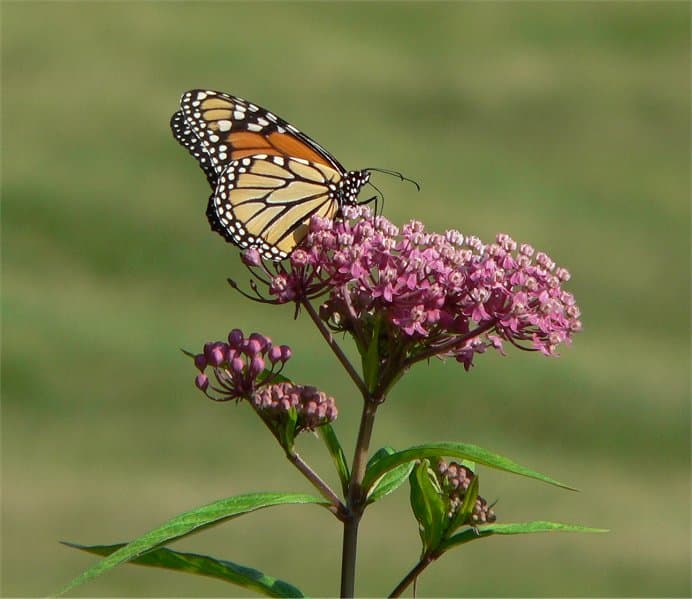
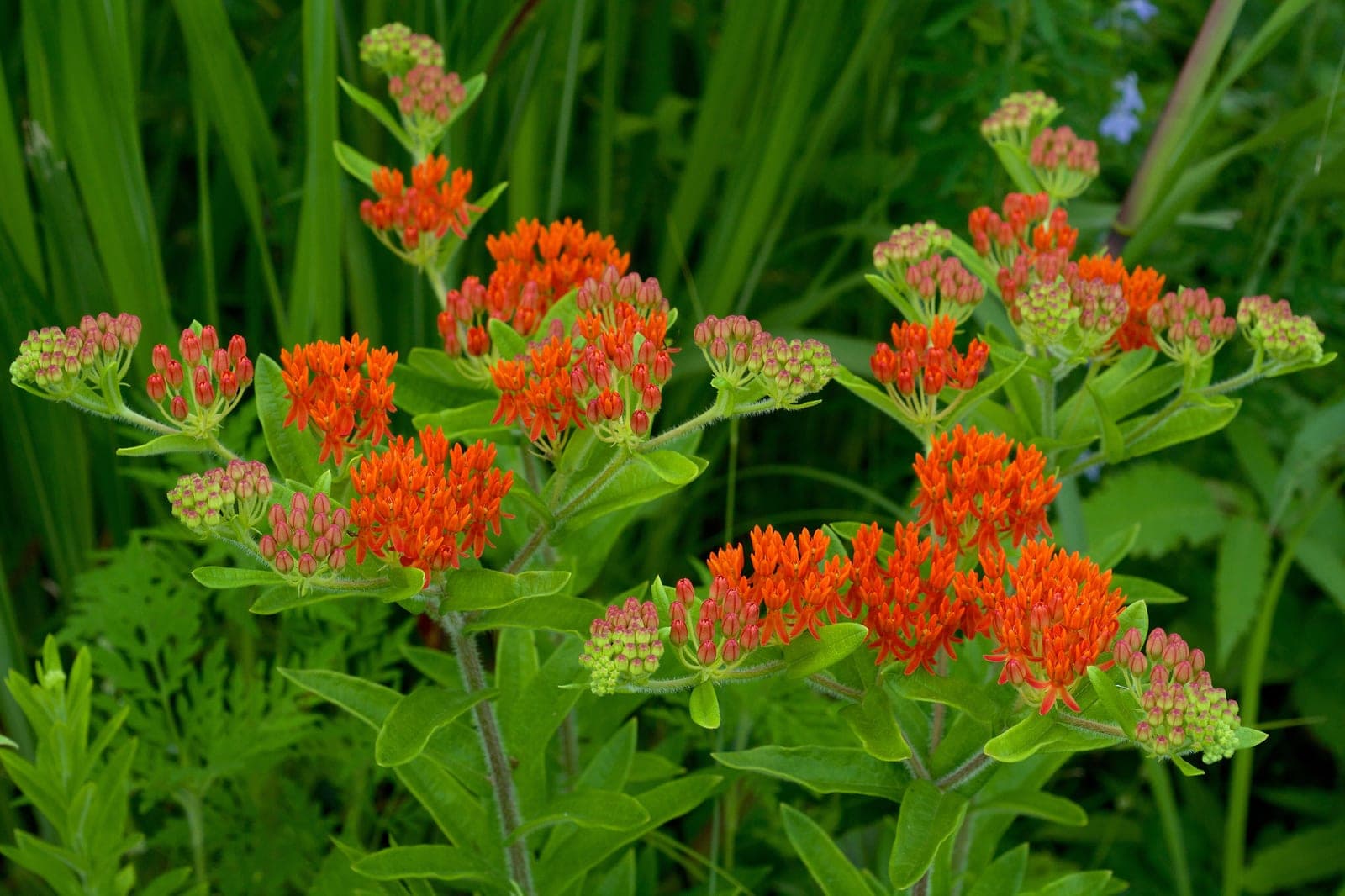
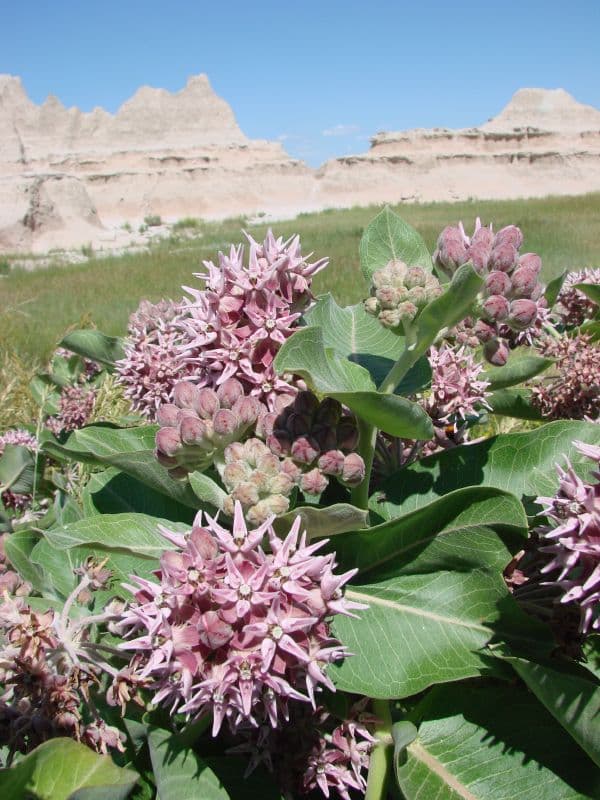
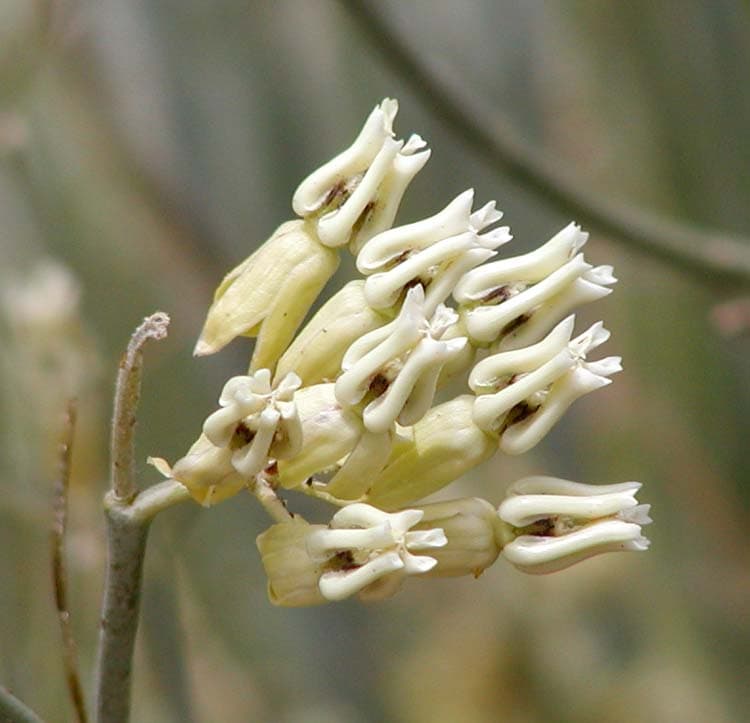
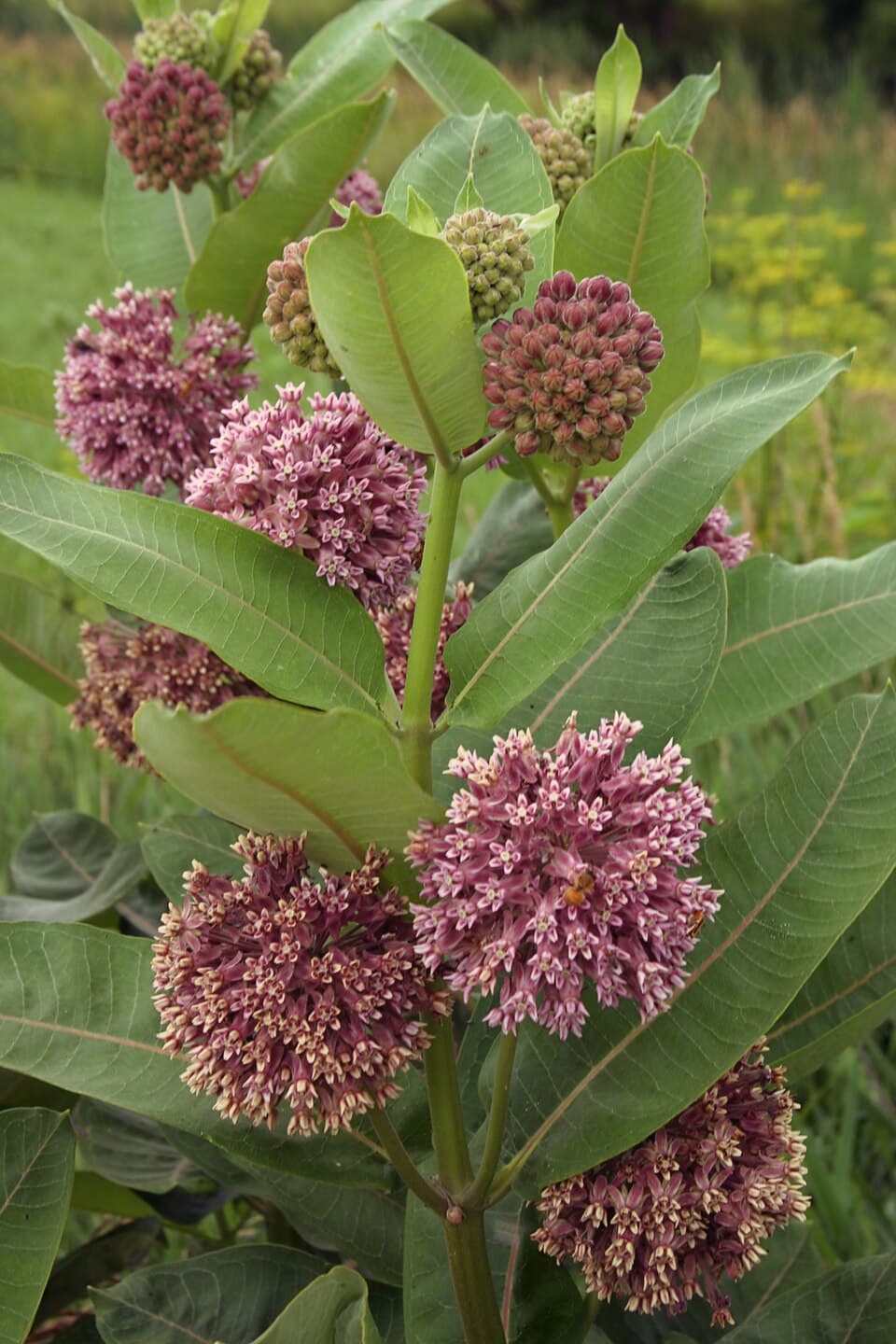
Five milkweeds for your garden. The diversity of the genus means there is a milkweed for nearly every garden condition. Swamp milkweed (Asclepias incarnata) is the most garden-friendly of all, forming a clump rather than spreading by rhizomes, and thriving in consistently moist to wet soils where many gardens struggle. The dense clusters of deep pink flowers bloom from midsummer through fall. Butterfly weed (Asclepias tuberosa) is the opposite: a drought-tolerant species with a deep taproot and bright orange flowers that appear earlier in the season, from late spring into midsummer. Unlike other milkweeds, its sap is clear rather than milky. In the Southwest and prairie regions, desert milkweed (Asclepias subulata) and showy milkweed (Asclepias speciosa) thrive in dry, lean soils where they anchor the landscape with their deep root systems. Common milkweed (Asclepias syriaca) is the historical one - aggressive, spreading by both rhizomes and seed, and the primary larval host of the monarch butterfly in the eastern United States. Its fragrant pink-purple flowers bloom in midsummer and set enormous seed pods. Narrow-leaf milkweed (Asclepias verticillata) is a delicate, wiry species of open prairies and rocky slopes, with thin leaves arranged in neat whorls around slender stems and tiny white flowers. All of them support over four hundred and fifty insect species, from specialist bees to hover flies to the butterflies they are named for.
All milkweeds share one essential requirement: cold stratification to germinate. Sow them outdoors in the fall where they will experience winter, or stratify seeds indoors in the refrigerator for thirty days before spring sowing. Once established, they need little: a place in full sun and soil that is appropriate to their native habitat. Do not deadhead unless you want to limit self-seeding; let the seed pods open and disperse. Mark the crowns in fall so you do not accidentally disturb them during early spring cultivation - many emerge so late you might assume they have not survived the winter.
Why now, why milkweed. The lanternfly crisis has brought milkweed back into the conversation as a practical plant, not merely an historical one or a native plant to support monarchs. For gardeners in the affected regions - Pennsylvania, New Jersey, New York, and spreading into Connecticut, Massachusetts, and beyond - planting milkweed is no longer a marginal choice; it is becoming a strategic one. The lanternfly is not going to be eradicated. Containment and management are the realistic goals, and every tool matters: the tree wrapping, the vacuum collection in the egg stage, the sticky bands that catch the nymphs as they climb, and yes, the plant itself. Milkweed will not kill all the lanternflies, and it is not a replacement for other management strategies. But there is something compelling about fighting an invader with a plant that was here before any of us were, that has been feeding monarchs and healing people for centuries, that asks almost nothing of the gardener except to let it grow.
It is also a reminder that native plants are not merely beautiful or nostalgic; they carry in their tissues the legacy of their own evolution in this place, the defences and adaptations they developed against the insects and conditions they faced. That history, accumulated over millennia, may turn out to be relevant to the crises we face now. Plant what belongs here, the advice goes. In the case of milkweed and lanternflies, that ancient advice has become something closer to urgent counsel.
* The body uses Calcium and Magnesium to expand and contract muscles in the body. This is why we take Magnesium at night to help us sleep since it relaxes our muscles. Cardiac glycosides encourage the sequestration of calcium inside the muscle to force it to contract more forcefully. Other plants contain cardiac glycosides, such as Oleander and Digitalis. This is why we often advise caution in handling foxgloves from seed to flower.