
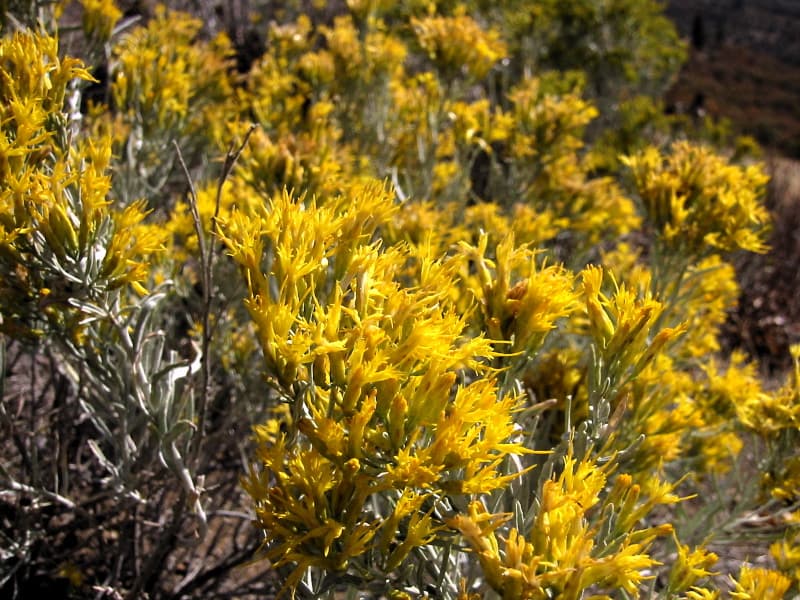
Rubber rabbitbrush (Ericameria nauseosa) is a native shrub of western North America's arid steppes, ranging from the Great Basin east into the Great Plains and south into Mexico. It produces dense clusters of small golden-yellow flower heads in late summer and fall, a period when few other shrubs are in active interest, making it one of the most valuable late-season nectar sources for native bees, monarchs, and painted lady butterflies in its range.
It thrives in full sun on dry, alkaline, and often disturbed soils - roadsides, sagebrush flats, and sandy washes. The gray-green foliage is coated in fine woolly hairs that reflect heat and reduce moisture loss. In garden settings, a hard cutback by one-third in early spring keeps growth compact and prevents a leggy habit. Sharp drainage is essential; the shrub does not tolerate wet feet or heavy clay. It is moderately cold-hardy and handles temperature swings typical of high-desert climates. pH of 7.0–8.5 is well tolerated.
Numerous Native American nations used stems and leaves for coughs, colds, and headaches, and chewed the latex-rich stems as gum. The flowers yield a yellow dye. Stems contain trace amounts of natural rubber, which gave the species its common name and attracted commercial extraction interest during World War II. The seed heads persist through winter and are eaten by juncos, goldfinches, and other small birds.
Ecoregions:Northwestern Forested MountainsGreat PlainsNorth American DesertsMediterranean CaliforniaTemperate Sierras
Powdery mildew
White or grey powdery coating on leaves - usually starting on older growth in humid conditions or when nights cool.
Improve air circulation by thinning plants. Apply neem oil or potassium bicarbonate spray at first sign. Avoid overhead watering.
Phytophthora Root Rot
Wilting despite moist soil, yellowing leaves, stunted growth, and dark, decayed roots and crown tissue. Vines may collapse during hot weather.
Plant in well-draining soil and avoid waterlogging. Remove and destroy affected vines. Improve drainage with raised beds or amended soil and avoid overwatering.
Texas Root Rot
Sudden wilting of branches or the entire canopy, often following a wet period. White cottony fungal mats develop on infected roots. Wood at the crown appears dark and water-soaked. Decline can progress to tree death within weeks.
No effective chemical cure exists. Ensure excellent drainage and avoid overwatering. Remove and destroy all infected plant material. Avoid replanting susceptible species in the same soil for several years.