
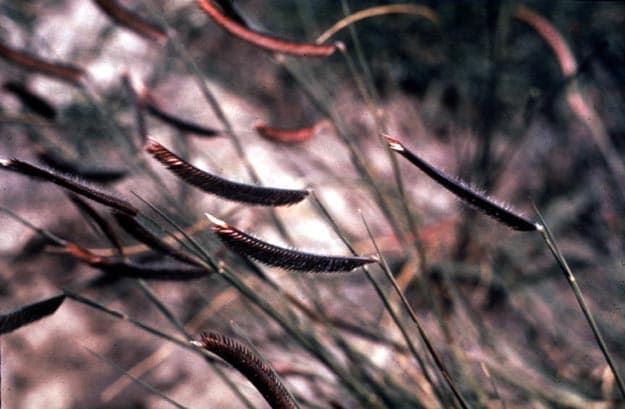
Blue grama is a warm-season, C4 perennial grass native to the North American shortgrass and mixed-grass prairie. It is among the most drought-tolerant native grasses available and functions well as a low-maintenance lawn substitute, dry meadow component, or erosion-control planting on slopes. Its seed heads, shaped like small horizontal combs or eyelashes, provide distinctive late-season interest and persist into winter.
Growth resumes in late spring when soil temperatures exceed 60°F and goes dormant in cold weather. Blue grama spreads slowly by seed and short rhizomes, forming a fine-textured, dense turf over time. It tolerates poor, alkaline, and sandy soils and rarely benefits from fertilization; excess nitrogen promotes weeds and weakens the stand. Weed competition during the slow establishment phase is the primary challenge.
The deep fibrous root system - sometimes exceeding four feet - stabilizes soil and builds organic matter over time. The plant is a documented larval host for several skipper butterfly species and its seeds are consumed by grassland birds. Great Plains indigenous peoples historically harvested and ate the seeds as a grain.
Ecoregions:Northwestern Forested MountainsEastern Temperate ForestsGreat PlainsNorth American DesertsSouthern Semi-Arid HighlandsTemperate Sierras
Helminthosporium Leaf Spot
Small oval to elongated tan or brown lesions with reddish-purple borders appear on leaf blades and sheaths. In severe cases, blades yellow and die back from the tip downward.
Remove and dispose of heavily infected foliage. Avoid overhead irrigation and improve air circulation by thinning dense plantings. Fungicide applications are rarely warranted on established native grasses; correcting site conditions - spacing, drainage, and fertility - is the primary control.
Rust
Orange to brown raised pustules on the undersides of leaves, with yellow spotting on the upper surface. Heavy infections cause leaves to yellow and drop.
Remove and destroy infected leaves. Avoid overhead watering and improve air circulation. Apply a sulfur or copper-based fungicide if it spreads. Clear plant debris in fall.