
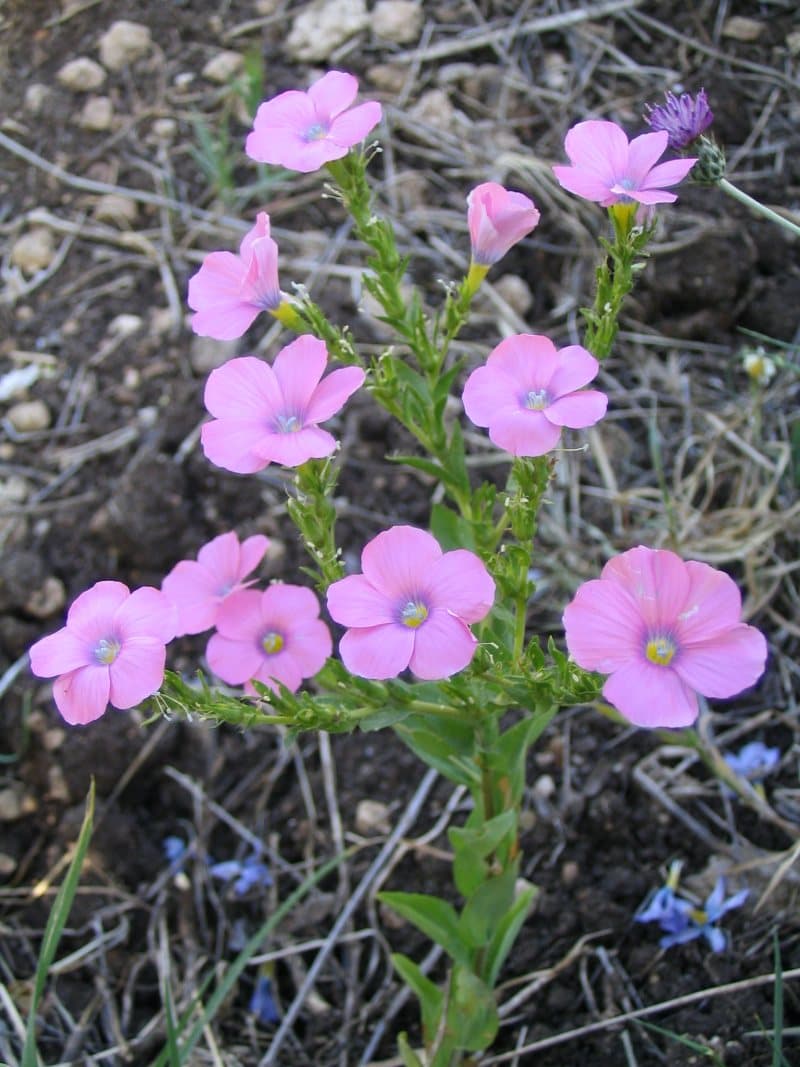
Linum lewisii is a native North American wildflower named after Meriwether Lewis, who collected specimens during the 1804–1806 Corps of Discovery expedition. It produces clear sky-blue, five-petaled flowers that open each morning and drop by midday; each plant carries new buds daily for a long season. Compact and drought-tolerant, it works well in native plant gardens, prairie meadows, and xeriscape beds.
Blue flax is short-lived as a perennial but self-seeds reliably, sustaining colonies once established. It grows wild across western North America from Alaska to Mexico, colonizing dry slopes, roadsides, and disturbed ground. Sharp drainage is essential; plants decline rapidly in heavy or persistently wet soil. Established plants need little supplemental water and perform better in sandy or gravelly soil with low fertility than in amended garden beds. A light mulch layer aids establishment on dry sites but should not be piled against stems.
The plant is a valued nectar source for native bees and small butterflies. Native peoples of western North America used stem fibers from related Linum species to make cordage and nets. The seeds contain oils and omega-3 fatty acids comparable to those in common flax (Linum usitatissimum) and were eaten by some tribes, though L. lewisii is not a commercial food or fiber crop.
Ecoregions:Northwestern Forested MountainsGreat PlainsNorth American DesertsMediterranean CaliforniaSouthern Semi-Arid HighlandsTemperate Sierras
Rust
Orange to brown raised pustules on the undersides of leaves, with yellow spotting on the upper surface. Heavy infections cause leaves to yellow and drop.
Remove and destroy infected leaves. Avoid overhead watering and improve air circulation. Apply a sulfur or copper-based fungicide if it spreads. Clear plant debris in fall.
Damping Off
Seedlings collapse at the soil line with thin, water-soaked stems; seeds may fail to emerge or rot before sprouting.
Sow in well-draining mix, avoid overwatering, and ensure good airflow. Remove affected seedlings and let the surface dry between waterings.
Powdery mildew
White or grey powdery coating on leaves - usually starting on older growth in humid conditions or when nights cool.
Improve air circulation by thinning plants. Apply neem oil or potassium bicarbonate spray at first sign. Avoid overhead watering.