
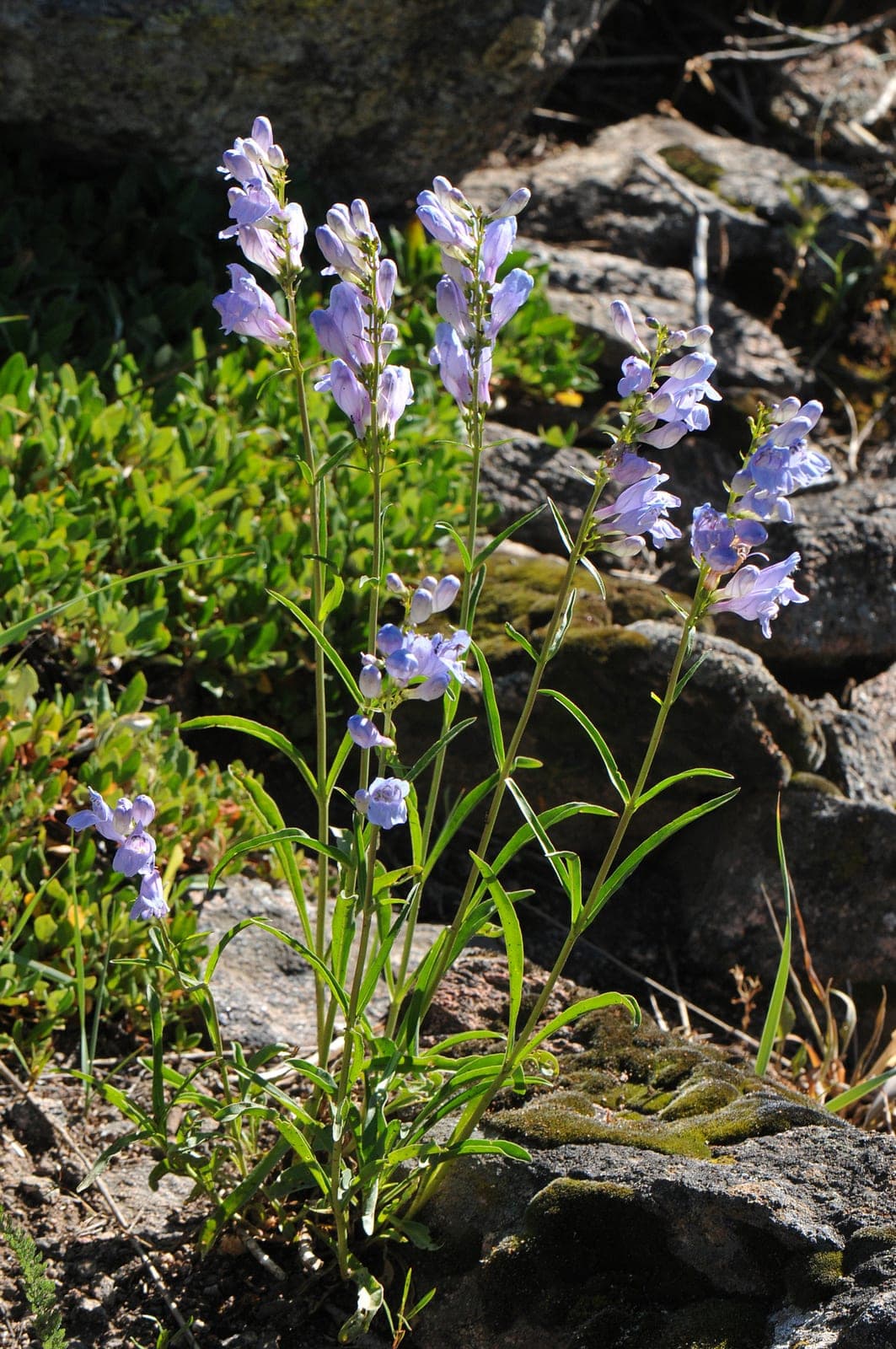
Penstemon strictus is a native perennial of the central and southern Rocky Mountains, producing dense stems of deep blue-violet tubular flowers from late spring through midsummer. It tolerates poor, rocky soils and extended drought, making it a dependable choice for waterwise and xeriscape plantings across the intermountain West and adapted regions beyond.
This plant is short-lived, typically persisting 3–5 years, but it self-seeds reliably in well-drained soil. It grows naturally between 5,000 and 10,000 feet elevation on open meadows, sagebrush slopes, and pine woodland edges. Sharp drainage is the single most critical requirement; plants grown in clay or consistently moist soil decline quickly from crown rot. Cold stratification of seed for 4–6 weeks at 35–40°F improves germination, or seed can be sown directly in fall to stratify naturally over winter. Avoid fertilizing - rich soil promotes lush, floppy growth and shortens plant life.
The tubular flowers are shaped for bumblebee and hummingbird pollination. Penstemon strictus is an important early-summer nectar source in its native range and supports several specialist native bee species. Leaving stems standing through winter provides seed for birds and allows natural self-renewal.
Ecoregions:Northwestern Forested MountainsGreat PlainsNorth American DesertsTemperate Sierras
Powdery mildew
White or grey powdery coating on leaves - usually starting on older growth in humid conditions or when nights cool.
Improve air circulation by thinning plants. Apply neem oil or potassium bicarbonate spray at first sign. Avoid overhead watering.
Fungal leaf spot
Brown or purplish spots on the leaves, often ringed with a yellow halo, that spread and merge in warm, humid, or wet weather; heavily spotted leaves yellow and drop early.
Pick off spotted leaves and clear fallen debris to remove overwintering spores. Improve air circulation by thinning, and water at the base so foliage dries quickly. If it persists, apply a copper- or sulfur-based fungicide at the first sign.
Crown Rot
Lower leaves yellow and wilt; the base of the rosette turns brown and soft, sometimes with white fungal threads at the soil line. Plants collapse in wet conditions.
Remove and destroy affected plants. Improve drainage and avoid overhead watering. Do not mulch directly against the crown. Space plants for airflow and avoid replanting in the same wet spot.