
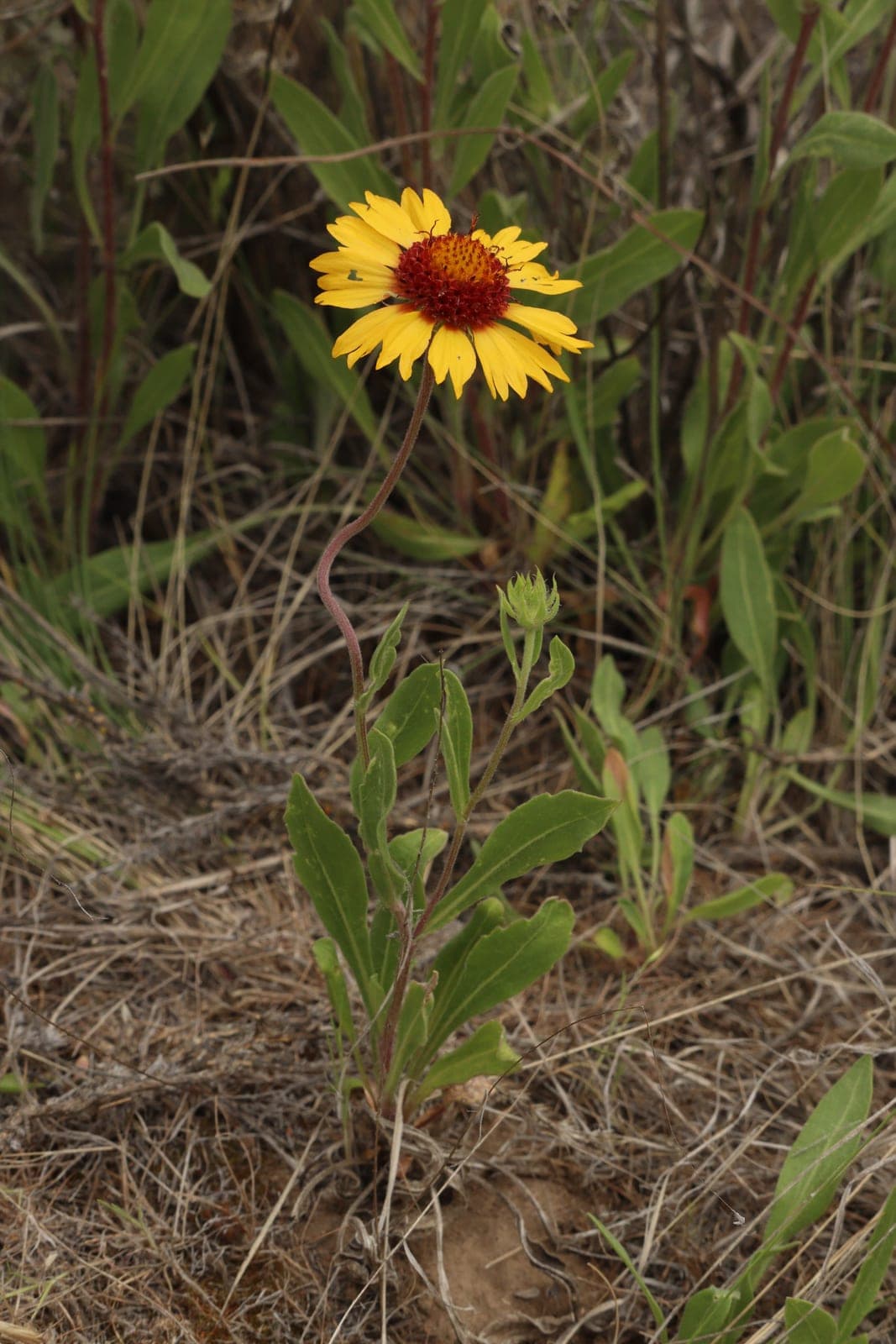
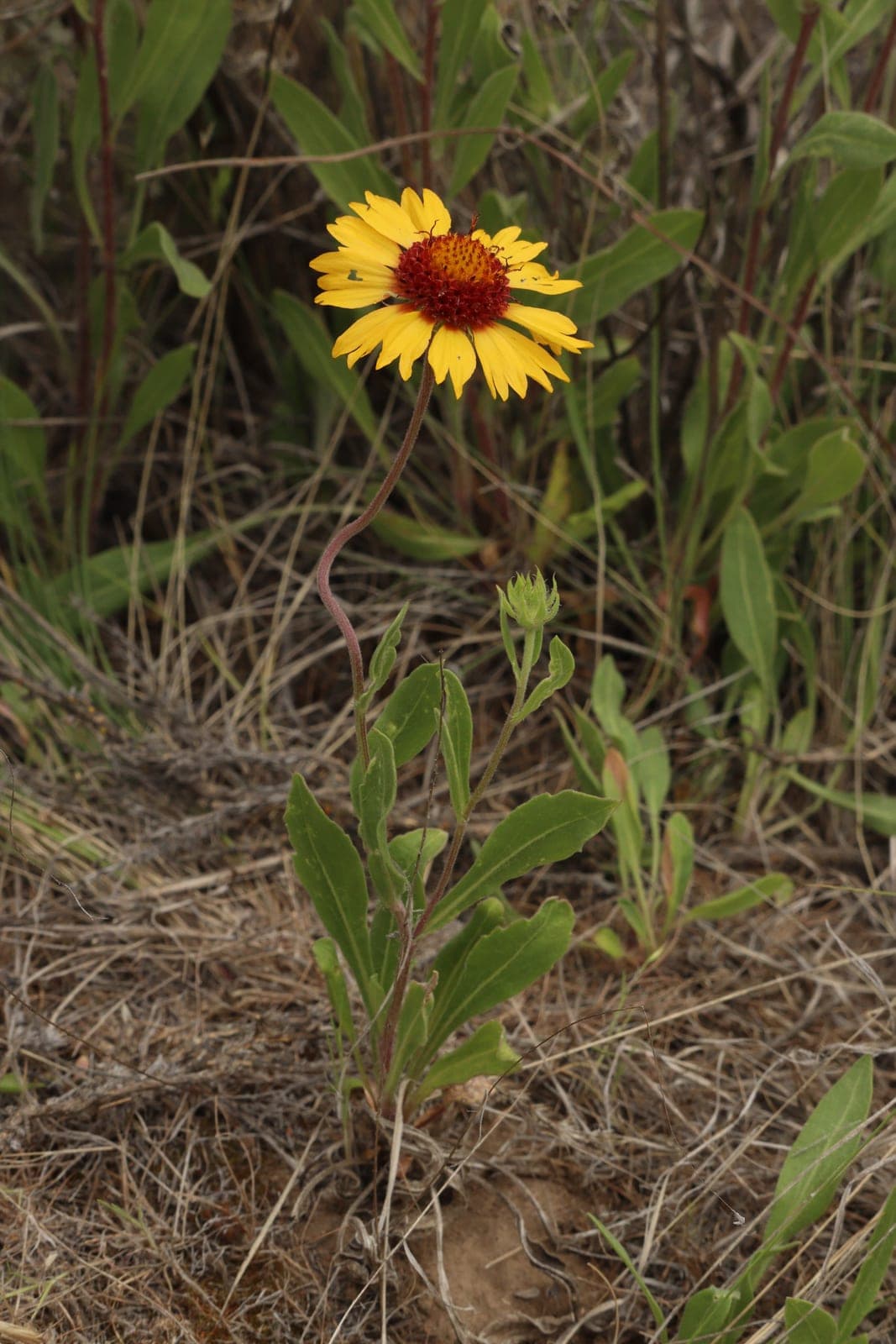
Gaillardia aristata is a native perennial wildflower of the Great Plains and Rocky Mountains, valued for its long season of warm-toned composite heads and exceptional drought tolerance. It blooms continuously from early summer through hard frost with minimal inputs, making it a strong candidate for low-maintenance and pollinator-focused plantings. Bees and beetles are its primary pollinators, and it serves as a larval host for the moth Schinia masoni.
Blanketflower performs best in lean, well-drained soils; rich or consistently moist soils shorten its lifespan and increase disease pressure. It behaves as a short-lived perennial and tends toward biennial behavior in humid climates, but self-seeds reliably when a few heads are left to ripen. Plants occupy early-to-mid successional niches and naturalize well alongside native grasses, sagebrush, and open-canopy conifers. Division every two to three years helps maintain stand vigor.
Multiple Indigenous peoples of the Pacific Northwest and northern plains used blanketflower medicinally, with documented applications for heatstroke, headaches, and tuberculosis. The species was first collected during the Lewis and Clark Expedition in 1806 and formally described by Frederick Pursh in 1814.
Ecoregions:Northern ForestsNorthwestern Forested MountainsGreat PlainsNorth American Deserts
Powdery mildew
White or grey powdery coating on leaves - usually starting on older growth in humid conditions or when nights cool.
Improve air circulation by thinning plants. Apply neem oil or potassium bicarbonate spray at first sign. Avoid overhead watering.
Aster Yellows
Deformed, greenish flowers, stunted growth, and yellowed foliage. Flower centers may produce tufts of leafy growth instead of normal petals.
No cure. Remove and destroy infected plants immediately to stop spread. Control leafhoppers, which transmit the disease, and remove nearby weed hosts.
Crown Rot
Lower leaves yellow and wilt; the base of the rosette turns brown and soft, sometimes with white fungal threads at the soil line. Plants collapse in wet conditions.
Remove and destroy affected plants. Improve drainage and avoid overhead watering. Do not mulch directly against the crown. Space plants for airflow and avoid replanting in the same wet spot.
Fungal leaf spot
Brown or purplish spots on the leaves, often ringed with a yellow halo, that spread and merge in warm, humid, or wet weather; heavily spotted leaves yellow and drop early.
Pick off spotted leaves and clear fallen debris to remove overwintering spores. Improve air circulation by thinning, and water at the base so foliage dries quickly. If it persists, apply a copper- or sulfur-based fungicide at the first sign.