
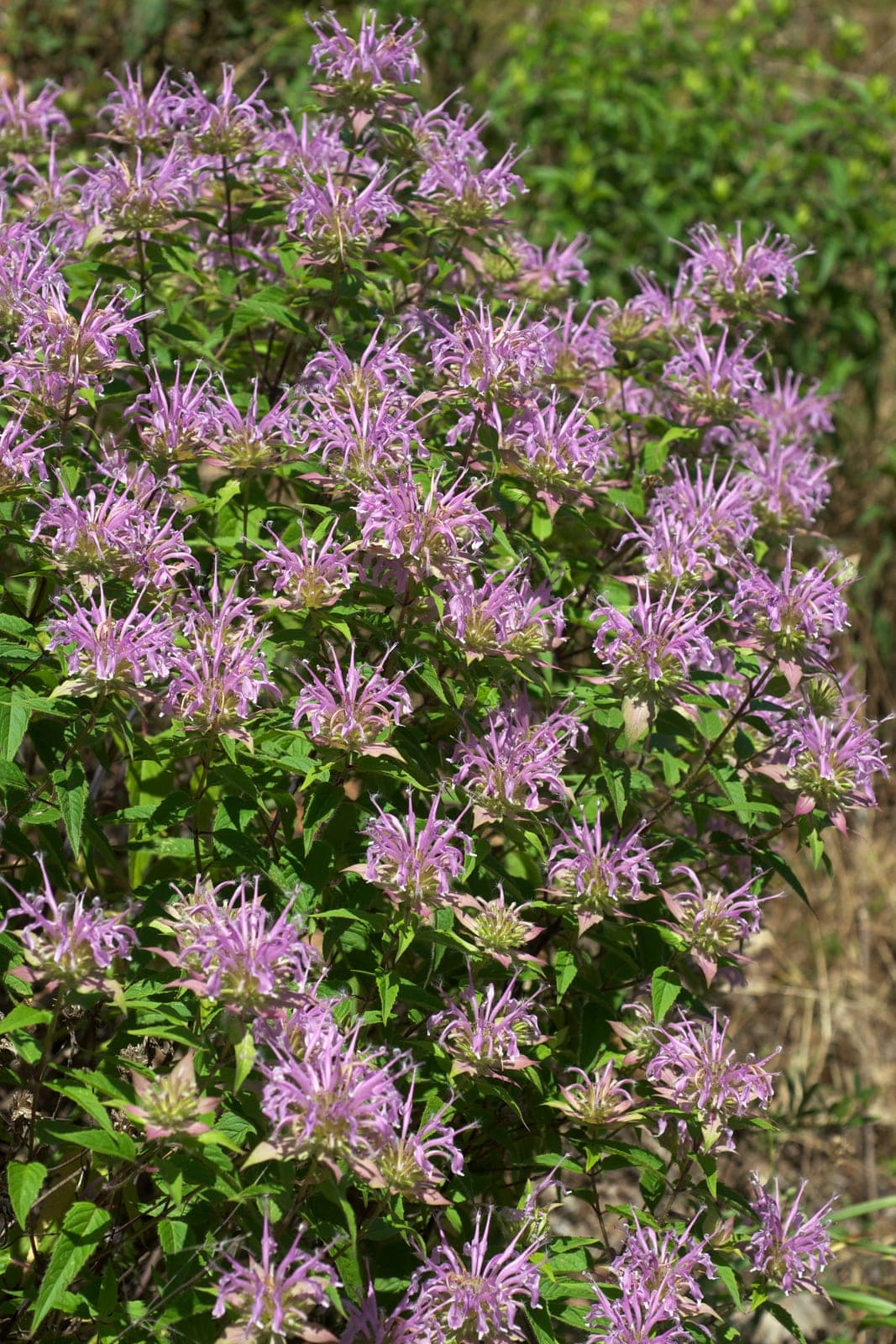
Monarda fistulosa is a native North American wildflower in the mint family, found across most of the continent from Quebec to the Gulf Coast. It produces dense rounded heads of tubular pink to lavender flowers through midsummer and is one of the most reliable native plants for attracting native bees, bumblebees, hummingbirds, and butterflies. More drought-tolerant than its close relative Monarda didyma, it suits dry or average garden soils better than most ornamental mints.
The plant spreads by both seed and rhizome, forming clumps that expand gradually and can crowd smaller neighbors. Dividing every two to three years maintains vigor and controls spread. Established plants perform well in poor to average soils; overly rich soil produces lush, mildew-prone growth. Good air circulation dramatically reduces powdery mildew pressure. Preferred pH is 6.0–7.0. Cold-hardy across most of temperate North America without mulching in zones 5 and above.
Leaves contain thymol and carvacrol, the same antiseptic compounds found in thyme and oregano. Indigenous peoples across North America used the plant to treat colds, fevers, respiratory infections, and digestive complaints. Fresh or dried leaves brew into a strongly aromatic tea and can substitute for oregano in cooking.
Ecoregions:Northern ForestsNorthwestern Forested MountainsEastern Temperate ForestsGreat PlainsTemperate Sierras
Powdery mildew
White or grey powdery coating on leaves - usually starting on older growth in humid conditions or when nights cool.
Improve air circulation by thinning plants. Apply neem oil or potassium bicarbonate spray at first sign. Avoid overhead watering.
Rust
Orange to brown raised pustules on the undersides of leaves, with yellow spotting on the upper surface. Heavy infections cause leaves to yellow and drop.
Remove and destroy infected leaves. Avoid overhead watering and improve air circulation. Apply a sulfur or copper-based fungicide if it spreads. Clear plant debris in fall.
Septoria Leaf Spot
Small tan to brown spots with dark borders on leaves, often with tiny black specks at the center. Spots merge and lower leaves yellow and die.
Remove infected leaves and avoid overhead watering. Space plants for airflow and rotate planting location each year. Apply a copper-based fungicide if spread continues.