
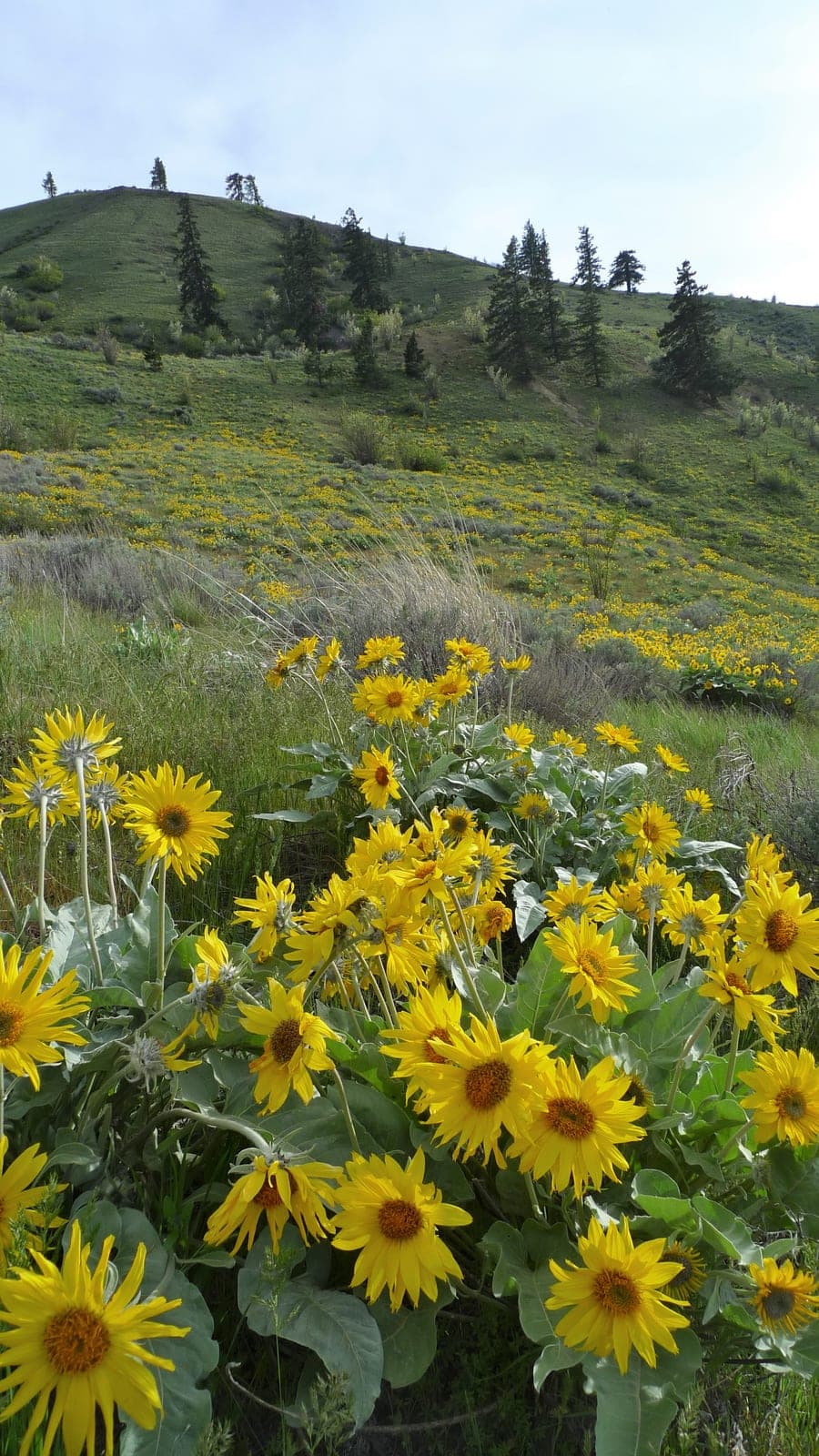
Arrowleaf balsamroot is a long-lived native perennial found on dry open slopes, grasslands, and sagebrush steppe from British Columbia to California and east through the Rocky Mountains. It forms large rosettes of arrow-shaped, silver-gray leaves and produces yellow composite flowers on stems 1–3 feet tall in spring. Established plants are among the most drought-tolerant herbaceous perennials available for western gardens and provide significant early-season pollen and nectar to native bees, including bumble bees and mining bees.
The plant develops a deep taproot that can extend several feet into the soil, enabling extreme drought tolerance but making transplanting nearly impossible after the first growing season. Cold stratification is required for germination; fall direct-seeding into lean, well-drained soil is the most reliable method. First-year plants produce only a basal rosette - flowering begins once the taproot is well established, typically in year two or three. Amended, irrigated, or heavy clay soils cause root rot and shorten plant lifespan. Mulch should not be piled against the crown, and plants in their native range tolerate alkaline soils typical of sagebrush habitat.
Indigenous peoples of the Great Basin and Columbia Plateau used all major parts. Seeds were roasted and ground into meal or eaten whole. Young shoots and peeled roots were cooked as vegetables. Root resin was applied topically to wounds and used in preparations for colds, respiratory complaints, and infection. The genus name Balsamorhiza refers to the balsam-scented resin concentrated in the taproot.
Ecoregions:Northwestern Forested MountainsGreat PlainsNorth American Deserts
Powdery mildew
White or grey powdery coating on leaves - usually starting on older growth in humid conditions or when nights cool.
Improve air circulation by thinning plants. Apply neem oil or potassium bicarbonate spray at first sign. Avoid overhead watering.
Phytophthora Root Rot
Wilting despite moist soil, yellowing leaves, stunted growth, and dark, decayed roots and crown tissue. Vines may collapse during hot weather.
Plant in well-draining soil and avoid waterlogging. Remove and destroy affected vines. Improve drainage with raised beds or amended soil and avoid overwatering.
Crown Rot
Lower leaves yellow and wilt; the base of the rosette turns brown and soft, sometimes with white fungal threads at the soil line. Plants collapse in wet conditions.
Remove and destroy affected plants. Improve drainage and avoid overhead watering. Do not mulch directly against the crown. Space plants for airflow and avoid replanting in the same wet spot.