
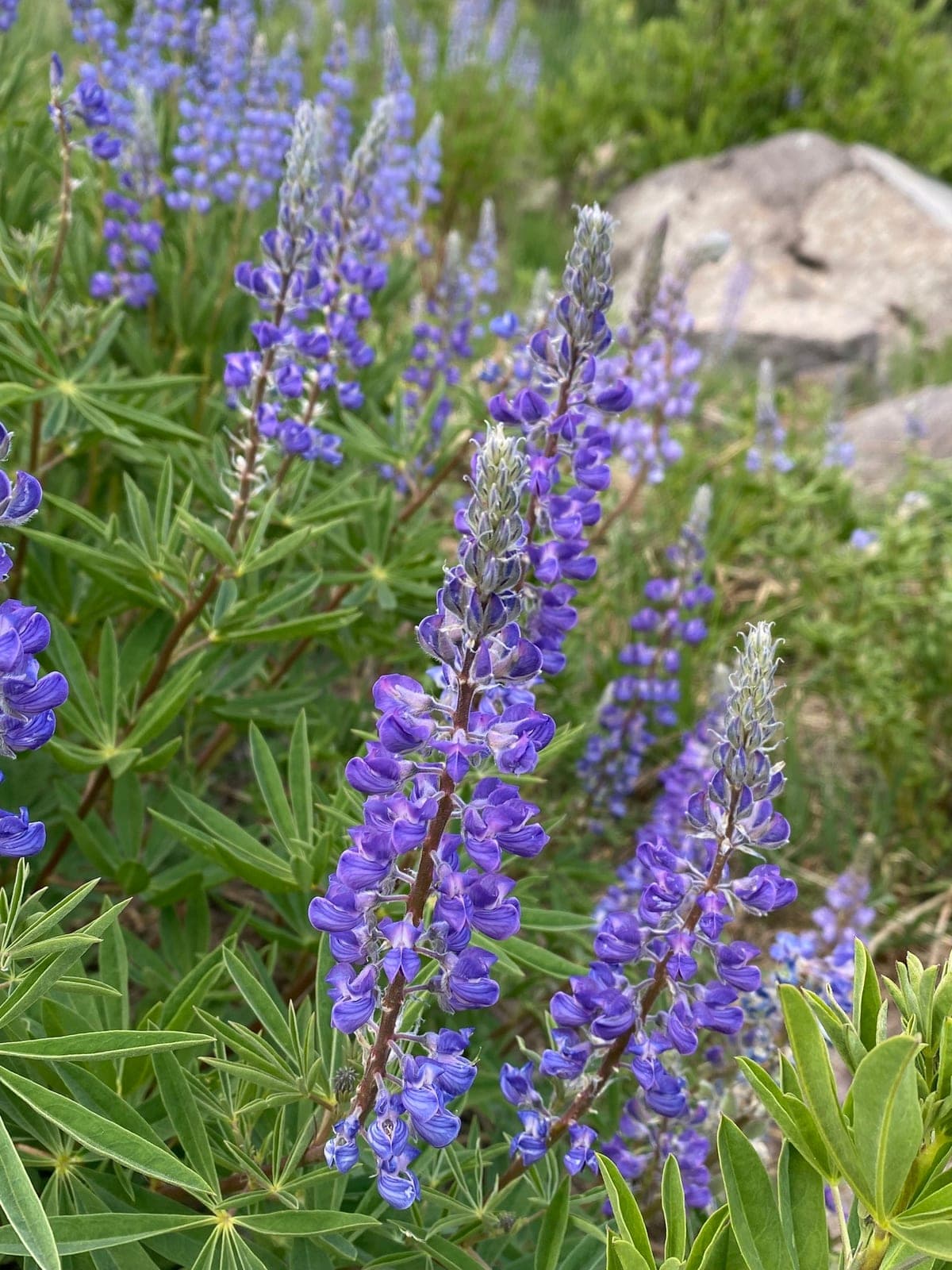
Silvery lupine is a native perennial wildflower widespread across western North America, from the Canadian prairies south through the Rocky Mountains to northern Mexico. Its foliage is densely covered in silver hairs that give it a distinctive sheen, and it produces upright racemes of blue-violet flowers in late spring and early summer. It fixes atmospheric nitrogen through root-associated bacteria, gradually improving soil fertility in poor or degraded sites.
This species is adapted to arid and semi-arid conditions - sagebrush steppe, dry mountain meadows, open conifer forests, and rocky slopes. It demands sharp drainage and tolerates infertile, sandy, or gravelly soils with low organic matter. Overwatering and heavy clay soils promote crown and root rot. Plants develop deep taproots quickly and do not transplant well once established; direct sowing is strongly preferred. Cold stratification improves germination rates - fall sowing is the simplest approach. Soil pH around 5.5–7.0 suits most populations. A light mulch of gravel helps retain soil moisture without holding excess water at the crown.
Silvery lupine is an important larval host plant for the Melissa blue, Lupine blue, and related native butterflies. Native bumblebees are its primary pollinators and are essential for effective seed set. All plant parts contain quinolizidine alkaloids toxic to livestock and humans if ingested; seeds are particularly concentrated.
Ecoregions:Northwestern Forested MountainsGreat PlainsNorth American DesertsTemperate Sierras
Powdery mildew
White or grey powdery coating on leaves - usually starting on older growth in humid conditions or when nights cool.
Improve air circulation by thinning plants. Apply neem oil or potassium bicarbonate spray at first sign. Avoid overhead watering.
Lupin Anthracnose
Twisted, bending stems with sunken brown lesions; leaves develop dark spots and may collapse. Pink spore masses can appear on infected tissue in wet weather.
Remove and destroy infected plants. Use clean, treated seed and avoid overhead watering. Space plants for airflow and rotate planting sites to reduce spore buildup.
Fungal leaf spot
Brown or purplish spots on the leaves, often ringed with a yellow halo, that spread and merge in warm, humid, or wet weather; heavily spotted leaves yellow and drop early.
Pick off spotted leaves and clear fallen debris to remove overwintering spores. Improve air circulation by thinning, and water at the base so foliage dries quickly. If it persists, apply a copper- or sulfur-based fungicide at the first sign.
Damping Off
Seedlings collapse at the soil line with thin, water-soaked stems; seeds may fail to emerge or rot before sprouting.
Sow in well-draining mix, avoid overwatering, and ensure good airflow. Remove affected seedlings and let the surface dry between waterings.
Phytophthora Root Rot
Wilting despite moist soil, yellowing leaves, stunted growth, and dark, decayed roots and crown tissue. Vines may collapse during hot weather.
Plant in well-draining soil and avoid waterlogging. Remove and destroy affected vines. Improve drainage with raised beds or amended soil and avoid overwatering.
Fusarium wilt
Sudden wilting, brown streaks in stems, yellowing leaves. Affects sweet basil varieties most.
No cure. Remove and destroy plants. Do not replant in the same spot for 3+ years. Choose resistant varieties.