
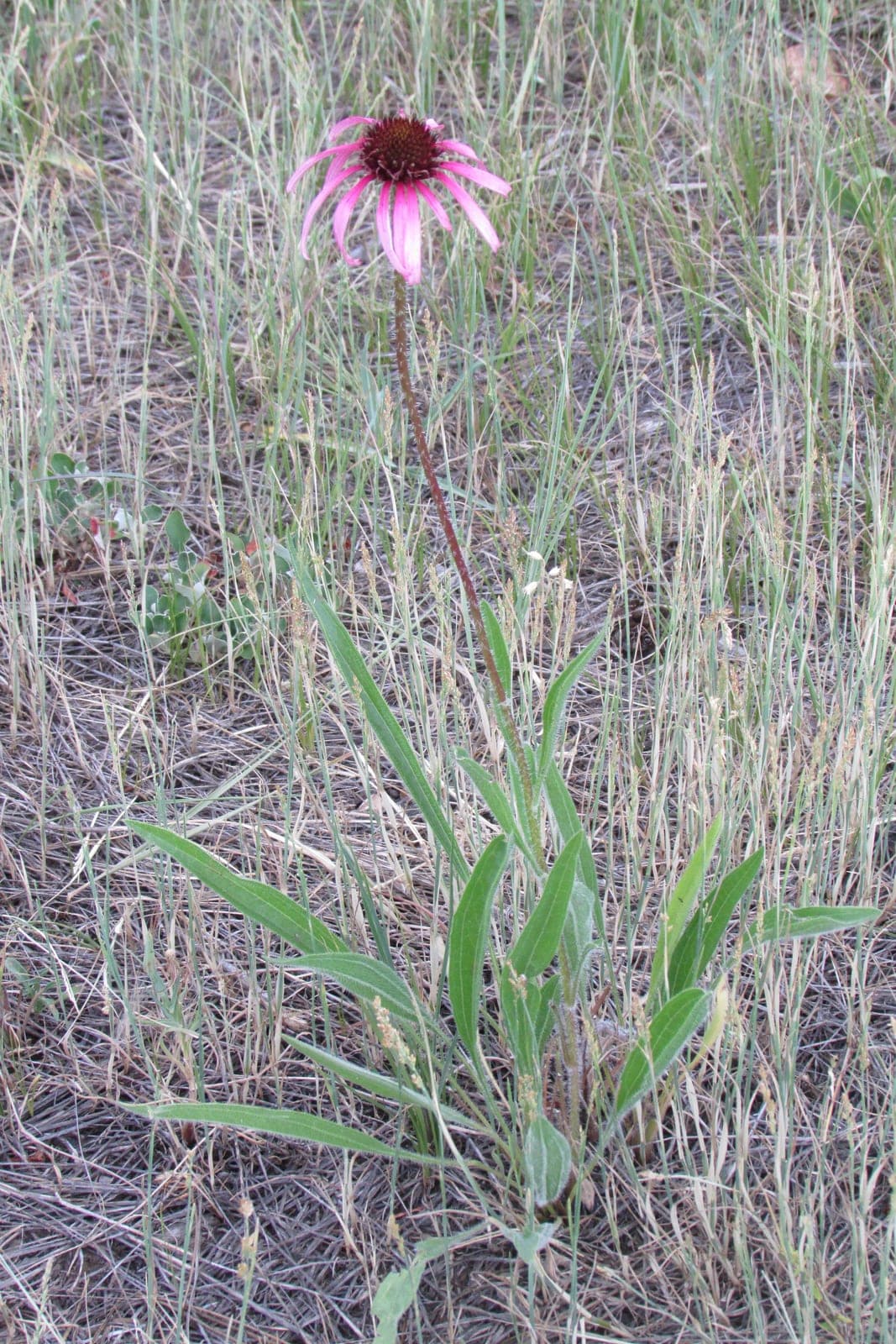
Echinacea angustifolia is a native perennial of the North American Great Plains, distributed from southern Canada through the central United States in dry prairies, open hillsides, and rocky slopes. It produces purple-pink ray petals surrounding a bristly orange-brown central cone in midsummer and develops a deep, woody taproot that makes established plants highly drought tolerant. Of the three commercially important Echinacea species, E. angustifolia was the most widely used by Plains peoples and carries higher alkylamide concentrations in its root than E. purpurea, which drives demand for this species specifically.
This species demands excellent drainage and performs best in lean, dry to moderately dry soils; fertile or moisture-retentive soils produce floppy growth and increase root rot risk. Seeds require cold stratification of 8–12 weeks for reliable germination, making fall direct sowing the most practical approach. The deep taproot means plants resent disturbance and should be sited permanently from the start. Self-seeding is modest; plants typically reach flowering size in their second or third year. Cold-hardiness is exceptional, surviving well into zone 3.
At least 11 Plains tribes used E. angustifolia root for pain, infection, toothache, and respiratory illness. Clinical investigations have examined root extracts for effects on upper respiratory infections; results generally indicate modest reduction in cold duration with short-term use. The root's alkylamide and polysaccharide profile differs substantially from E. purpurea, and this distinction is reflected in both traditional preference and the commercial herbal supplement market.
Ecoregions:Northwestern Forested MountainsEastern Temperate ForestsGreat Plains
Aster Yellows
Deformed, greenish flowers, stunted growth, and yellowed foliage. Flower centers may produce tufts of leafy growth instead of normal petals.
No cure. Remove and destroy infected plants immediately to stop spread. Control leafhoppers, which transmit the disease, and remove nearby weed hosts.
Powdery mildew
White or grey powdery coating on leaves - usually starting on older growth in humid conditions or when nights cool.
Improve air circulation by thinning plants. Apply neem oil or potassium bicarbonate spray at first sign. Avoid overhead watering.
Botrytis (grey mould)
Grey fuzzy mould on petals and stems, worst in cool wet conditions.
Remove affected parts immediately. Improve air circulation. Avoid overhead watering. Apply copper fungicide if severe.
Phytophthora Root Rot
Wilting despite moist soil, yellowing leaves, stunted growth, and dark, decayed roots and crown tissue. Vines may collapse during hot weather.
Plant in well-draining soil and avoid waterlogging. Remove and destroy affected vines. Improve drainage with raised beds or amended soil and avoid overwatering.