
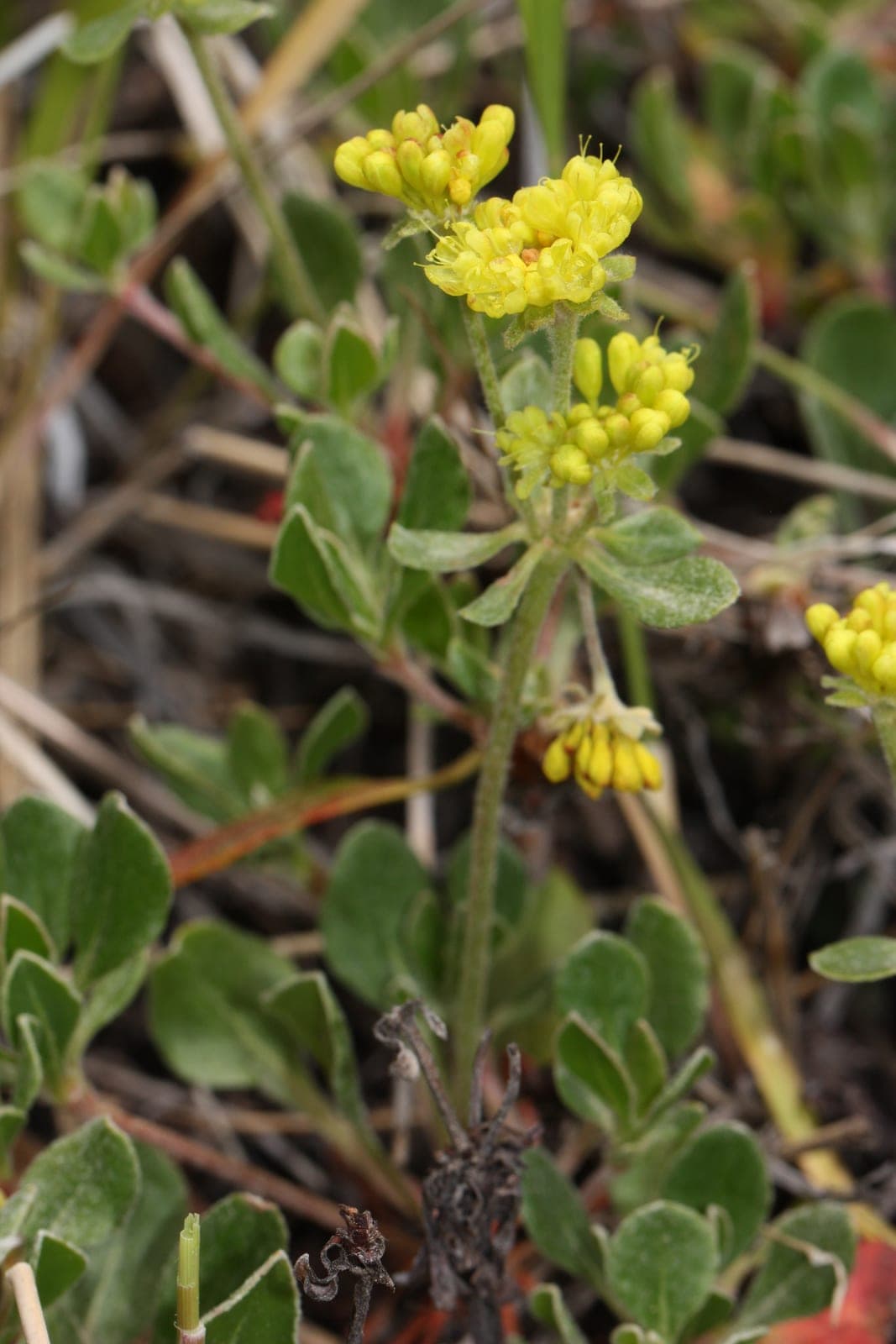
Sulphur buckwheat is a native perennial subshrub found across western North America from the Sierra Nevada and Cascade ranges east through the Rocky Mountains. It forms low, spreading mats of woody stems with small spoon-shaped leaves and produces dense, umbrella-like clusters of sulphur-yellow flowers on upright stems in late spring and early summer. It is widely used in xeriscape and native plant gardens for its drought tolerance, long season of interest, and low maintenance once established.
This plant is native to open, rocky slopes, sagebrush flats, and montane meadows, and it performs best when those conditions are replicated in the garden. It requires lean, sharply drained soil and declines quickly in clay or consistently wet conditions. Avoid organic mulch against the crown; a gravel or decomposed granite top-dressing keeps moisture away from the woody base and discourages rot. Established plants spread slowly by woody crowns and are long-lived with essentially no supplemental irrigation.
Sulphur buckwheat is an important larval host plant for several native Lycaenidae butterflies, including the lupine blue. It is also a significant nectar source for native bees, beetles, and wasps. Various Great Basin and Intermountain tribes used Eriogonum species, including this one, to treat headaches and stomach complaints.
Ecoregions:Northwestern Forested MountainsGreat PlainsNorth American DesertsMediterranean California
Crown Rot
Lower leaves yellow and wilt; the base of the rosette turns brown and soft, sometimes with white fungal threads at the soil line. Plants collapse in wet conditions.
Remove and destroy affected plants. Improve drainage and avoid overhead watering. Do not mulch directly against the crown. Space plants for airflow and avoid replanting in the same wet spot.
Phytophthora Root Rot
Wilting despite moist soil, yellowing leaves, stunted growth, and dark, decayed roots and crown tissue. Vines may collapse during hot weather.
Plant in well-draining soil and avoid waterlogging. Remove and destroy affected vines. Improve drainage with raised beds or amended soil and avoid overwatering.
Powdery mildew
White or grey powdery coating on leaves - usually starting on older growth in humid conditions or when nights cool.
Improve air circulation by thinning plants. Apply neem oil or potassium bicarbonate spray at first sign. Avoid overhead watering.