
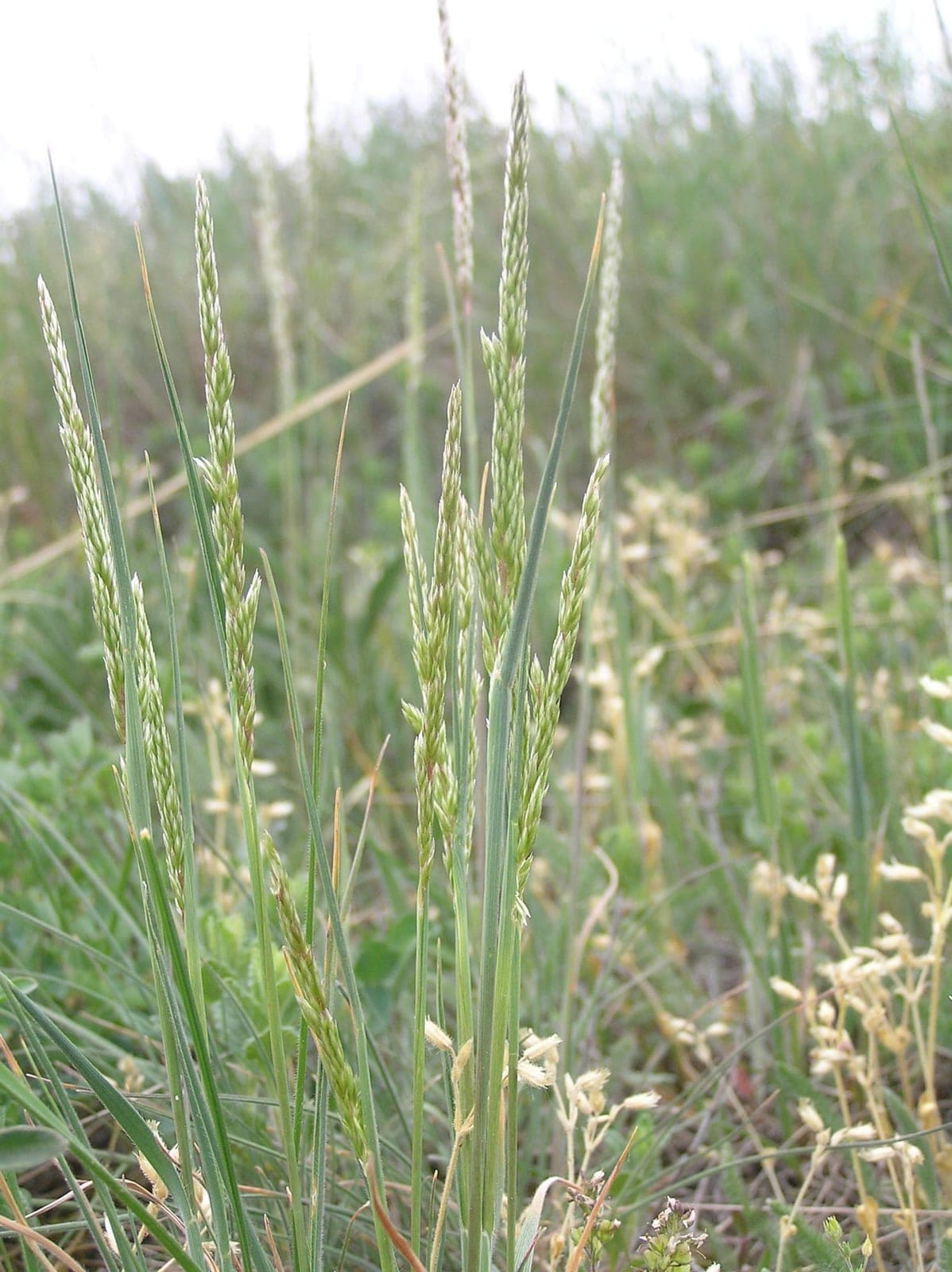
Prairie Junegrass is a native cool-season bunchgrass found across prairies, meadows, rocky slopes, and open woodlands throughout North America and Eurasia. Its fine texture and compact tufted habit make it a practical choice for native meadow plantings, dry slopes, and low-maintenance borders in challenging sites.
It grows vigorously in spring, producing dense, upright seed heads in late May through June - the source of its common name. Growth slows during peak summer heat and resumes in fall. Plants tolerate poor, sandy, or rocky soils and become reliably drought-tolerant once established, performing well on sites where more demanding grasses thin out. Cold-hardiness is excellent across most of the temperate US. Avoid heavy clay or consistently wet soils, which promote crown rot. It is a standard component of native prairie restoration seed mixes across the Great Plains and intermountain West.
Prairie Junegrass is a documented larval host plant for several native skipper butterflies, including Hesperia species. Its seed heads ripen early in the season, providing timely food for small birds and small mammals in native and naturalistic plantings.
Ecoregions:Northern ForestsNorthwestern Forested MountainsMarine West Coast ForestEastern Temperate ForestsGreat PlainsNorth American DesertsMediterranean CaliforniaTemperate Sierras
Rust
Orange to brown raised pustules on the undersides of leaves, with yellow spotting on the upper surface. Heavy infections cause leaves to yellow and drop.
Remove and destroy infected leaves. Avoid overhead watering and improve air circulation. Apply a sulfur or copper-based fungicide if it spreads. Clear plant debris in fall.
Crown Rot
Lower leaves yellow and wilt; the base of the rosette turns brown and soft, sometimes with white fungal threads at the soil line. Plants collapse in wet conditions.
Remove and destroy affected plants. Improve drainage and avoid overhead watering. Do not mulch directly against the crown. Space plants for airflow and avoid replanting in the same wet spot.
Red Thread
Pink to red thread-like mycelial strands extend from leaf tips; affected blades turn tan or bleached and patches of grass appear water-soaked before drying to a straw color.
Improve drainage and air circulation around clumps. Avoid overhead irrigation, especially in the evening. Remove and dispose of heavily infected foliage. Apply a fungicide containing thiophanate-methyl or chlorothalonil if infection spreads; do not apply excess nitrogen, which favors the pathogen.