
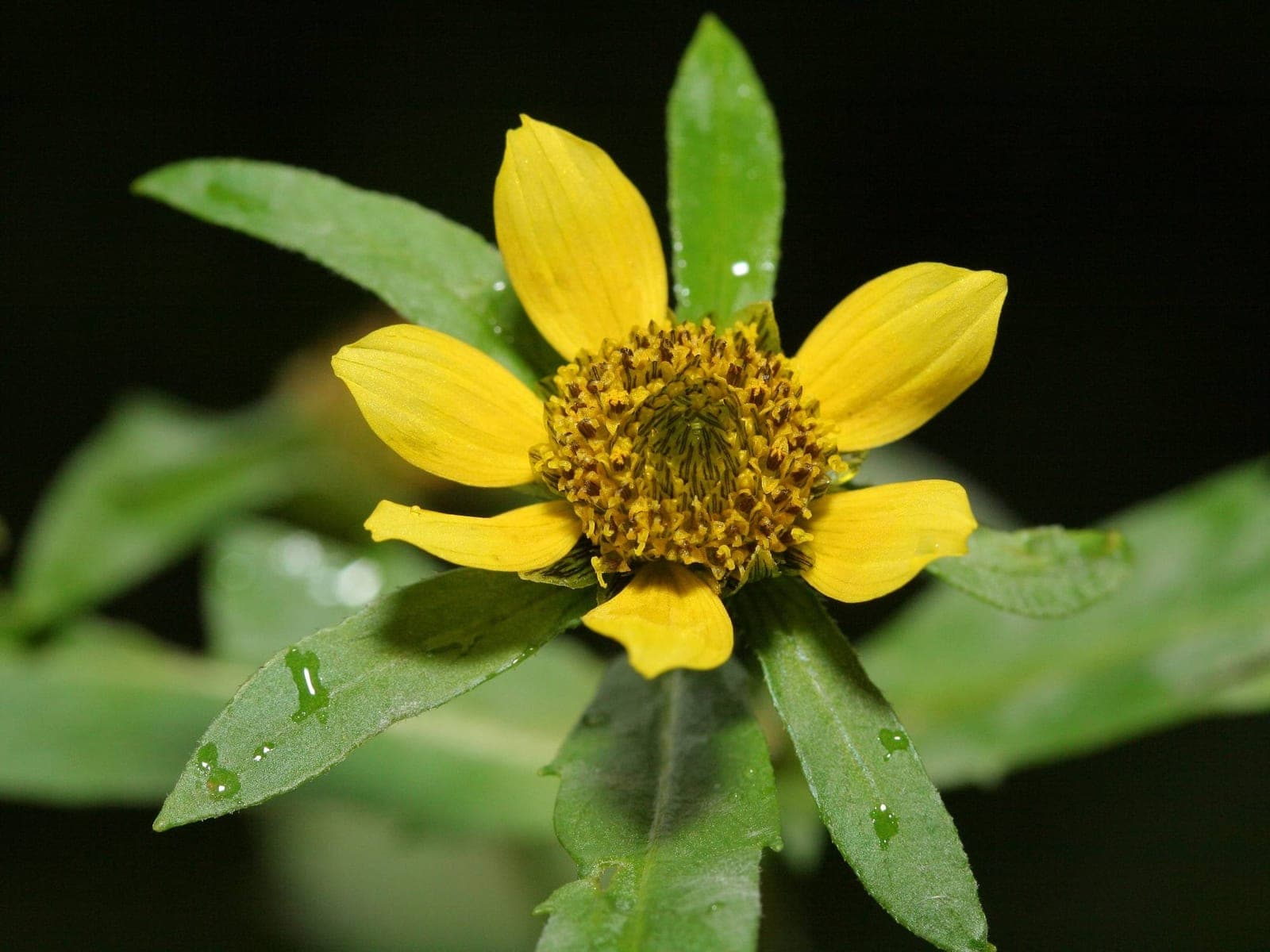
Bidens cernua is a native annual wildflower of wetland margins - pond edges, stream banks, wet meadows, and roadside ditches - distributed across much of North America and Eurasia. It tolerates consistently saturated or seasonally flooded soil that excludes most ornamentals. The yellow composite heads nod downward as seed sets and appear from late summer into fall, drawing bees and hover flies in a season when many other annuals are finishing.
A reliable self-seeder once established, B. cernua colonizes wet margins steadily without aggressive spread into drier ground. Seeds carry stiff barbed awns that cling to feathers, fur, and clothing - the mechanism behind its wide natural range and common names. Plants germinate quickly as soils warm in spring and reach flowering size within a single season; no supplemental irrigation is needed if sited in consistently moist to wet, neutral to slightly acidic soil.
The seed crop is a documented food source for dabbling ducks, teal, and a variety of wetland songbirds, making it a functional addition to wildlife rain gardens and constructed wetland plantings. It appears regularly in native wetland restoration seeding mixes for this reason.
Ecoregions:TaigaNorthern ForestsNorthwestern Forested MountainsMarine West Coast ForestEastern Temperate ForestsGreat PlainsNorth American Deserts
Aster Yellows
Deformed, greenish flowers, stunted growth, and yellowed foliage. Flower centers may produce tufts of leafy growth instead of normal petals.
No cure. Remove and destroy infected plants immediately to stop spread. Control leafhoppers, which transmit the disease, and remove nearby weed hosts.
Fungal leaf spot
Brown or purplish spots on the leaves, often ringed with a yellow halo, that spread and merge in warm, humid, or wet weather; heavily spotted leaves yellow and drop early.
Pick off spotted leaves and clear fallen debris to remove overwintering spores. Improve air circulation by thinning, and water at the base so foliage dries quickly. If it persists, apply a copper- or sulfur-based fungicide at the first sign.
Rust
Orange to brown raised pustules on the undersides of leaves, with yellow spotting on the upper surface. Heavy infections cause leaves to yellow and drop.
Remove and destroy infected leaves. Avoid overhead watering and improve air circulation. Apply a sulfur or copper-based fungicide if it spreads. Clear plant debris in fall.
Root rot
Plants wilt, yellow, and stunt even in moist soil; lower stems and roots turn brown, soft, and mushy and the plant may collapse. Most common in heavy, wet, or poorly drained ground.
Improve drainage and stop overwatering, and never plant too deep. Lift and destroy badly affected plants along with the soil around the roots. Grow in raised or free-draining beds to prevent it returning.