
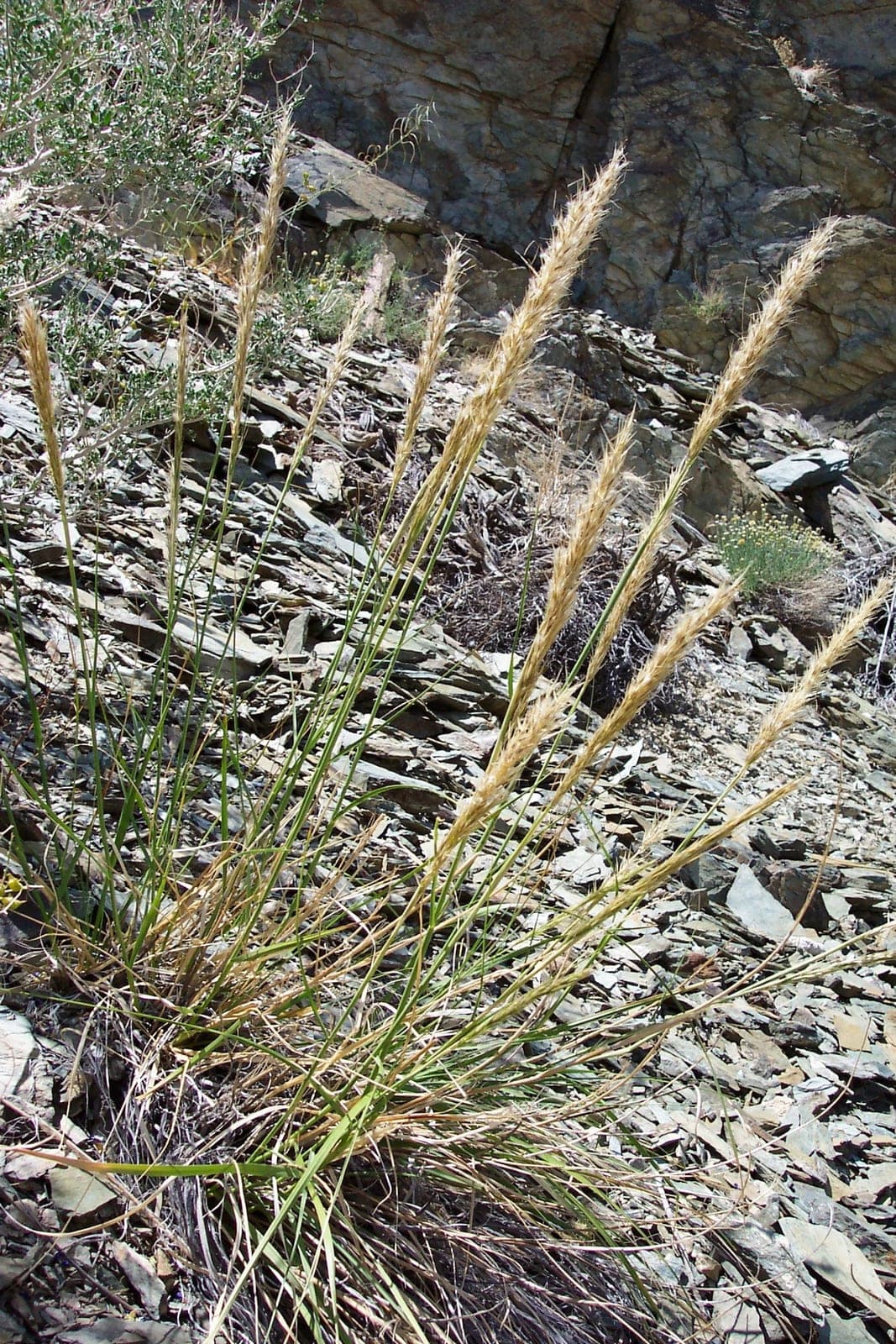
Indian Ricegrass is a native North American bunchgrass found across the Great Basin, Colorado Plateau, and western High Plains, long classified under Oryzopsis and then Stipa before molecular studies placed it in Achnatherum. It forms dense clumps of thread-fine leaves and produces loose, open seed heads from late spring through midsummer. Gardeners in arid and semi-arid regions value it for extreme drought tolerance, structural interest across three seasons, and its value to seed-eating birds and small mammals.
The species follows a cool-season growth pattern, most active in spring and early summer, going semi-dormant during peak summer heat, and resuming growth in fall. It thrives on sandy, rocky, or gravelly soils with minimal organic matter and tolerates alkaline pH that excludes most ornamental grasses. Fall direct seeding is the most reliable establishment method; natural cold stratification over winter significantly improves germination. Once established, plants require no supplemental water across most of the western United States and perform well in revegetation and erosion control projects on disturbed or compacted sites.
Native peoples across the Great Basin and Southwest harvested Indian Ricegrass seeds as a primary food source, grinding them into flour or cooking them as porridge. The seeds carry higher protein and fat content than most native grasses, making this species one of the most nutritionally significant wild grains in the pre-contact western diet.
Ecoregions:Northwestern Forested MountainsGreat PlainsNorth American DesertsMediterranean CaliforniaTemperate Sierras
Helminthosporium Leaf Spot
Small oval to elongated tan or brown lesions with reddish-purple borders appear on leaf blades and sheaths. In severe cases, blades yellow and die back from the tip downward.
Remove and dispose of heavily infected foliage. Avoid overhead irrigation and improve air circulation by thinning dense plantings. Fungicide applications are rarely warranted on established native grasses; correcting site conditions - spacing, drainage, and fertility - is the primary control.
Rust
Orange to brown raised pustules on the undersides of leaves, with yellow spotting on the upper surface. Heavy infections cause leaves to yellow and drop.
Remove and destroy infected leaves. Avoid overhead watering and improve air circulation. Apply a sulfur or copper-based fungicide if it spreads. Clear plant debris in fall.