
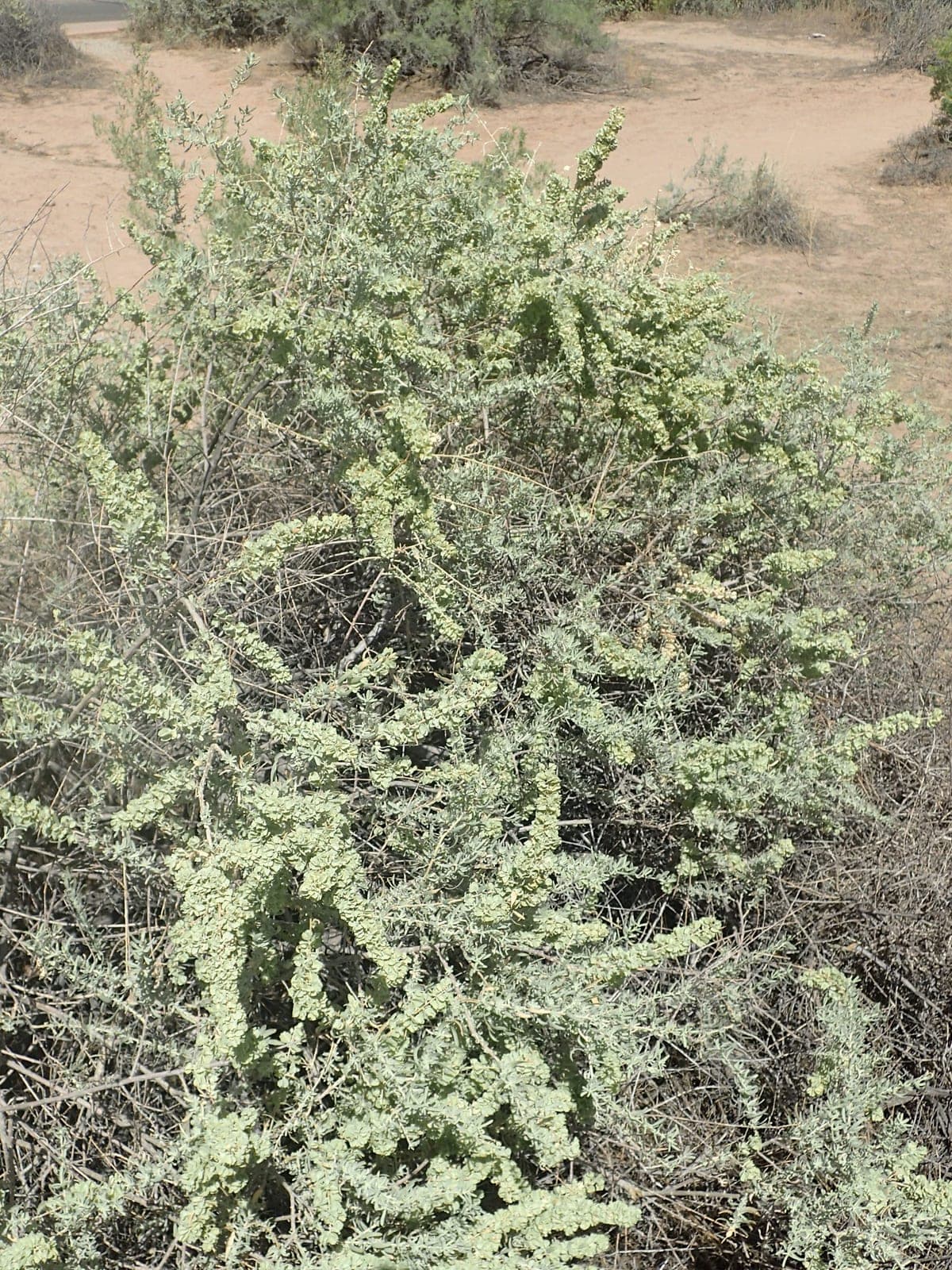
Fourwing saltbush is a native evergreen shrub of the western plains and intermountain West, typically reaching 3–8 feet tall. Female plants produce dense clusters of papery four-winged fruits that persist through fall and winter, providing structure, ornamental interest, and food for birds and small mammals. It ranks among the most drought- and salt-tolerant native shrubs available for western landscapes.
The plant is dioecious; both male and female plants are needed for fruit production. It performs best in full sun with excellent drainage, and tolerates alkaline, saline, sandy, and clay soils. Prefers a soil pH above 7. Established plants require virtually no supplemental irrigation across most of the arid West. It spreads by seed and produces suckers; space plants generously and trim to manage spread. Widely deployed in revegetation, windbreak, and erosion control projects. Foliage is heavily browsed by deer, pronghorn, and livestock, making it an important rangeland forage plant.
Native peoples of the Southwest ground the seeds into flour and burned stems to produce ash used as a salt substitute and leavening agent. The Navajo rubbed ash onto the scalp to treat dandruff, and several tribes applied plant preparations to minor skin irritations.
Ecoregions:Northwestern Forested MountainsGreat PlainsNorth American DesertsMediterranean CaliforniaSouthern Semi-Arid HighlandsTemperate Sierras
Root rot
Plants wilt, yellow, and stunt even in moist soil; lower stems and roots turn brown, soft, and mushy and the plant may collapse. Most common in heavy, wet, or poorly drained ground.
Improve drainage and stop overwatering, and never plant too deep. Lift and destroy badly affected plants along with the soil around the roots. Grow in raised or free-draining beds to prevent it returning.