
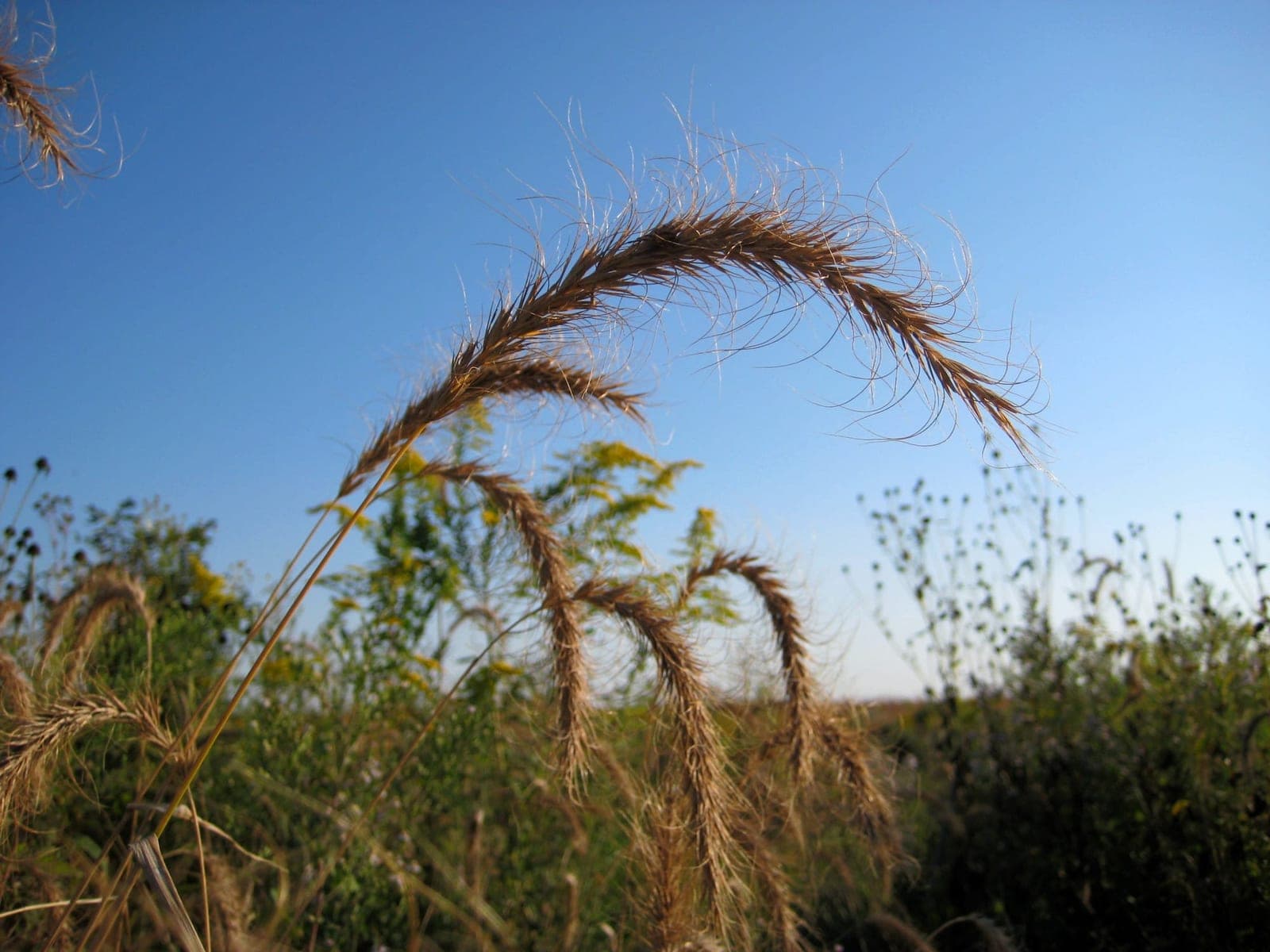
Canada wild rye is a cool-season, clump-forming native grass widespread across North America, most abundant in the central and Great Plains. It produces arching stems topped with nodding seed heads that closely resemble cultivated rye, ripening from green to straw-tan by midsummer. Its tolerance of varied conditions makes it a reliable choice for prairie restorations, meadow plantings, and naturalized areas.
Individual plants are relatively short-lived, typically persisting 3–5 years, but the grass self-sows readily and sustains populations without intervention. It adapts to dry sandy soils, heavier loam, and pH between 5.5 and 7.5. Notably, it performs well in partial shade, a condition where few native grasses compete effectively. In dense plantings, leave open patches to allow self-seeding. Deer browse the foliage but rarely cause stand-level damage.
The seeds were gathered and ground into flour by several Great Plains Indigenous peoples. In the landscape, standing seed heads supply food through fall and early winter for sparrows, juncos, and finches, and dense clumps provide cover for ground-nesting wildlife.
Ecoregions:Northern ForestsNorthwestern Forested MountainsEastern Temperate ForestsGreat PlainsNorth American DesertsTemperate Sierras
Rust
Orange to brown raised pustules on the undersides of leaves, with yellow spotting on the upper surface. Heavy infections cause leaves to yellow and drop.
Remove and destroy infected leaves. Avoid overhead watering and improve air circulation. Apply a sulfur or copper-based fungicide if it spreads. Clear plant debris in fall.
Fungal leaf spot
Brown or purplish spots on the leaves, often ringed with a yellow halo, that spread and merge in warm, humid, or wet weather; heavily spotted leaves yellow and drop early.
Pick off spotted leaves and clear fallen debris to remove overwintering spores. Improve air circulation by thinning, and water at the base so foliage dries quickly. If it persists, apply a copper- or sulfur-based fungicide at the first sign.
Ergot
Dark purple-black, hard, elongated sclerotia replace individual seeds within the seed head. Affected heads carry a mix of normal seeds and conspicuous ergots roughly two to three times the size of healthy kernels.
Remove and bag infected seed heads before sclerotia fall to the soil. Do not collect or save seed from infected plants. Avoid siting Canada wild rye in persistently wet or poorly ventilated areas where infection pressure increases. No fungicide treatment is practical in landscape settings.