
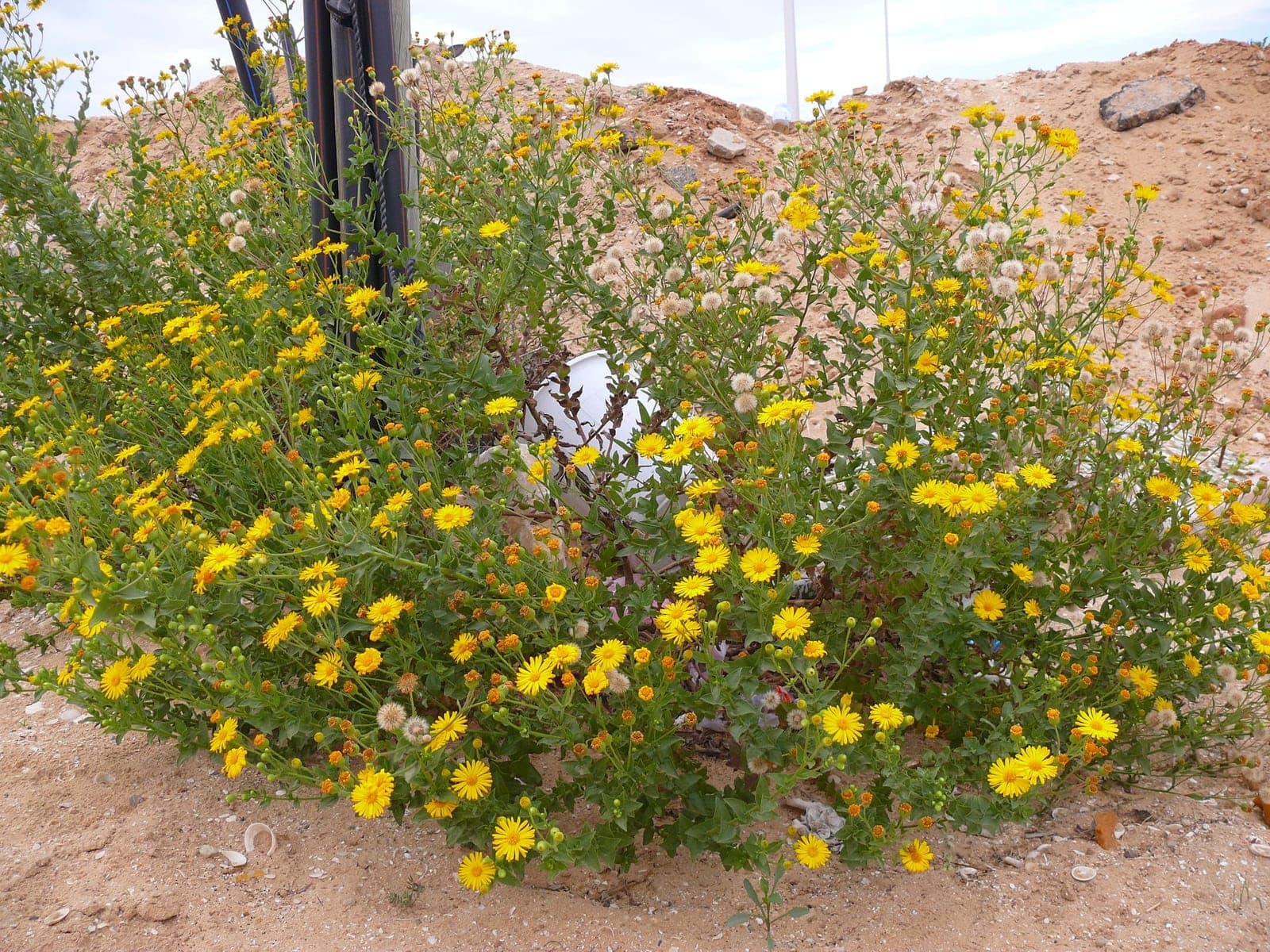
Heterotheca subaxillaris is a native North American annual or biennial in the Asteraceae family. It produces yellow daisy-like heads from mid-summer through fall and carries a strong camphor-like scent from volatile oils throughout its stems and foliage. It grows naturally in disturbed soils, roadsides, old fields, and sandy coastal and inland areas from the eastern United States through the Great Plains and into the Southwest.
Camphorweed is a pioneer species that colonizes poor, dry, sandy ground quickly. It self-sows prolifically and can naturalize across open areas in a single season. In managed plantings, thin volunteers regularly to prevent crowding. Its late-season nectar is heavily used by bees, small butterflies, and other pollinators when few other plants are producing.
Some Native American groups used the aromatic foliage topically for bruises and skin irritation. Laboratory studies on related Heterotheca species have documented antimicrobial activity from the volatile oil fraction. The strong scent is also reported to deter certain insect pests in the immediate vicinity.
In the West and northern plains, plant hairy false goldenaster instead.
Ecoregions:Eastern Temperate ForestsGreat PlainsNorth American DesertsSouthern Semi-Arid HighlandsTemperate SierrasTropical Wet Forests
Fungal leaf spot
Brown or purplish spots on the leaves, often ringed with a yellow halo, that spread and merge in warm, humid, or wet weather; heavily spotted leaves yellow and drop early.
Pick off spotted leaves and clear fallen debris to remove overwintering spores. Improve air circulation by thinning, and water at the base so foliage dries quickly. If it persists, apply a copper- or sulfur-based fungicide at the first sign.
Root rot
Plants wilt, yellow, and stunt even in moist soil; lower stems and roots turn brown, soft, and mushy and the plant may collapse. Most common in heavy, wet, or poorly drained ground.
Improve drainage and stop overwatering, and never plant too deep. Lift and destroy badly affected plants along with the soil around the roots. Grow in raised or free-draining beds to prevent it returning.
Powdery mildew
White or grey powdery coating on leaves - usually starting on older growth in humid conditions or when nights cool.
Improve air circulation by thinning plants. Apply neem oil or potassium bicarbonate spray at first sign. Avoid overhead watering.