
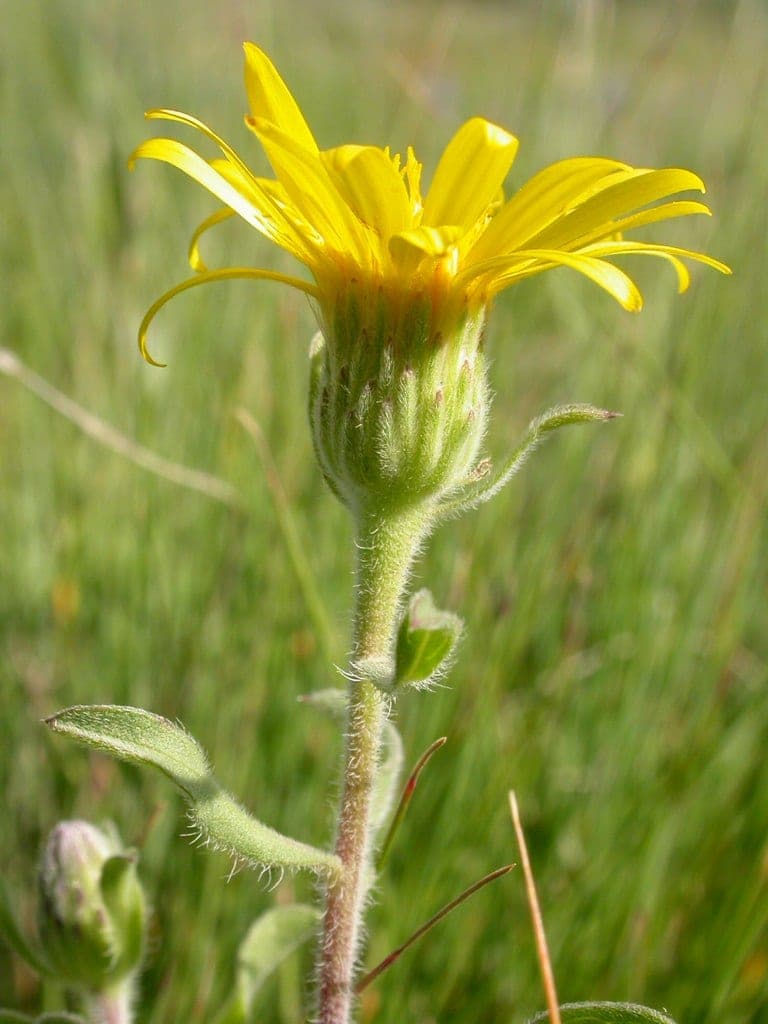
Heterotheca villosa is a perennial wildflower native to central and western North America, found on dry rocky slopes, sandy plains, and open prairies. It produces bright yellow, daisy-like heads from midsummer through fall, offering reliable late-season color with minimal input.
This plant demands full sun and sharply drained, low-fertility soil. Rich or consistently moist conditions promote floppy stems and root problems. Plants self-sow modestly and can form loose colonies over time; they are often short-lived but self-perpetuate readily where drainage is adequate. Established plants rarely need supplemental water and perform well without amendment or fertilization.
Hairy false goldenaster is a valuable late-season resource for native bees and butterflies. It is well suited to dry meadow restorations, xeric beds, and rocky slopes where few other perennials thrive.
On the sandy soils of the Southeast and Gulf Coast, camphorweed fills the same role.
Ecoregions:Northern ForestsNorthwestern Forested MountainsEastern Temperate ForestsGreat PlainsNorth American DesertsTemperate Sierras
Aster Yellows
Deformed, greenish flowers, stunted growth, and yellowed foliage. Flower centers may produce tufts of leafy growth instead of normal petals.
No cure. Remove and destroy infected plants immediately to stop spread. Control leafhoppers, which transmit the disease, and remove nearby weed hosts.
Root rot
Plants wilt, yellow, and stunt even in moist soil; lower stems and roots turn brown, soft, and mushy and the plant may collapse. Most common in heavy, wet, or poorly drained ground.
Improve drainage and stop overwatering, and never plant too deep. Lift and destroy badly affected plants along with the soil around the roots. Grow in raised or free-draining beds to prevent it returning.
Fungal leaf spot
Brown or purplish spots on the leaves, often ringed with a yellow halo, that spread and merge in warm, humid, or wet weather; heavily spotted leaves yellow and drop early.
Pick off spotted leaves and clear fallen debris to remove overwintering spores. Improve air circulation by thinning, and water at the base so foliage dries quickly. If it persists, apply a copper- or sulfur-based fungicide at the first sign.