
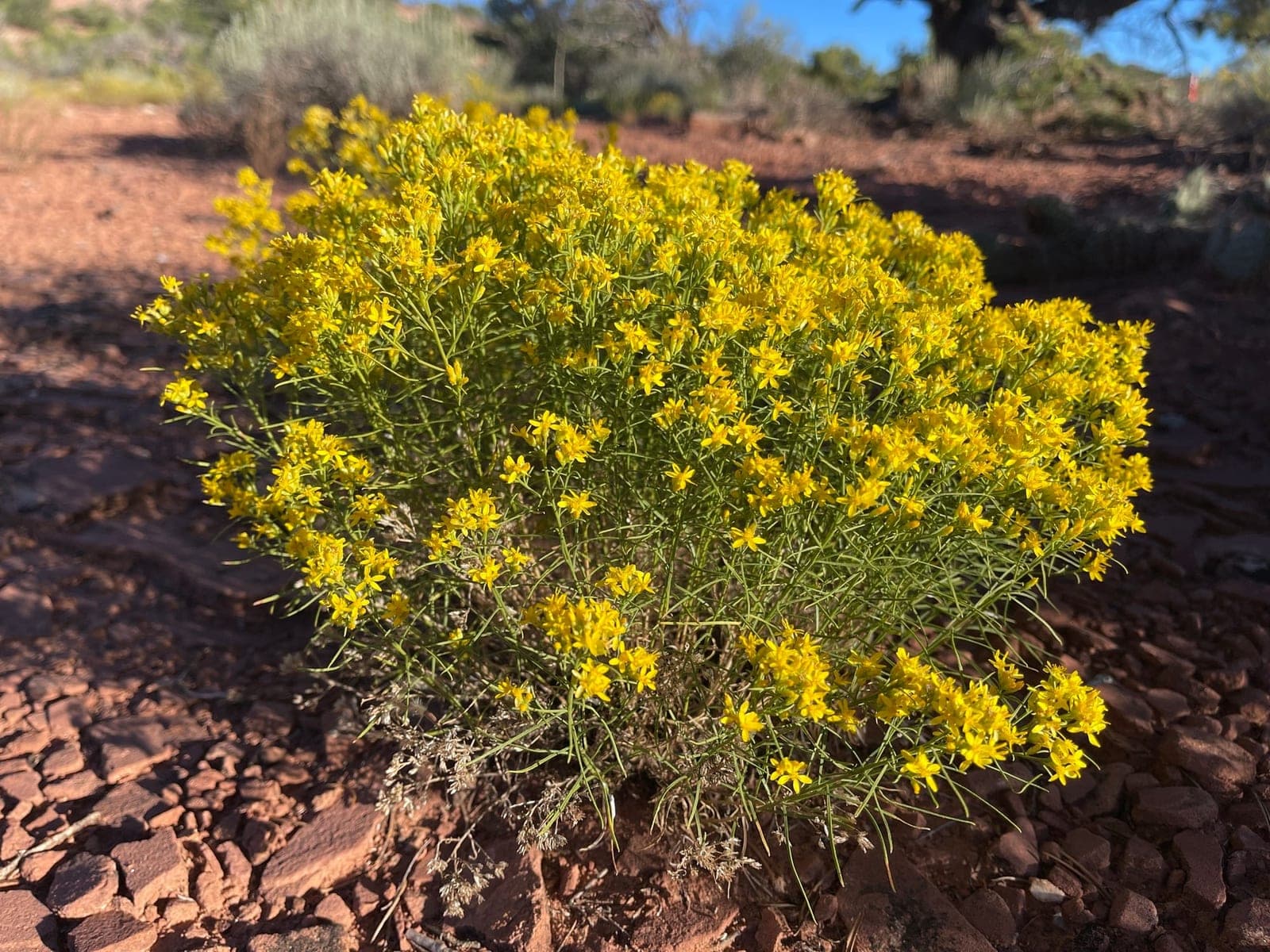
Broom Snakeweed is a native western North American subshrub with fine resinous stems and clusters of small yellow composite flowers in late summer and fall. It handles extreme drought, poor soils, and wide temperature swings that defeat most ornamentals, making it a reliable choice for xeriscape, dry meadow, and native habitat plantings.
It grows naturally in shortgrass prairie, Great Basin shrubland, and high desert grassland from southern Canada to northern Mexico. The plant is recognized as an indicator of overgrazing - it expands aggressively when perennial grasses are depleted by livestock pressure, outcompeting weakened natives. In managed gardens away from grazing pressure it self-seeds modestly without becoming invasive. Sharp drainage is essential; it does not tolerate clay or standing moisture. Established plants are woody at the base and recover well from hard cutting in early spring.
Several Native American peoples used the plant topically and internally for snakebite, headache, and fever - the common name reflects this tradition. It contains saponins at concentrations toxic to livestock, particularly pregnant sheep and cattle, at large intake volumes.
Ecoregions:Northwestern Forested MountainsGreat PlainsNorth American DesertsMediterranean CaliforniaSouthern Semi-Arid HighlandsTemperate Sierras
Root rot
Plants wilt, yellow, and stunt even in moist soil; lower stems and roots turn brown, soft, and mushy and the plant may collapse. Most common in heavy, wet, or poorly drained ground.
Improve drainage and stop overwatering, and never plant too deep. Lift and destroy badly affected plants along with the soil around the roots. Grow in raised or free-draining beds to prevent it returning.
Crown Rot
Lower leaves yellow and wilt; the base of the rosette turns brown and soft, sometimes with white fungal threads at the soil line. Plants collapse in wet conditions.
Remove and destroy affected plants. Improve drainage and avoid overhead watering. Do not mulch directly against the crown. Space plants for airflow and avoid replanting in the same wet spot.