

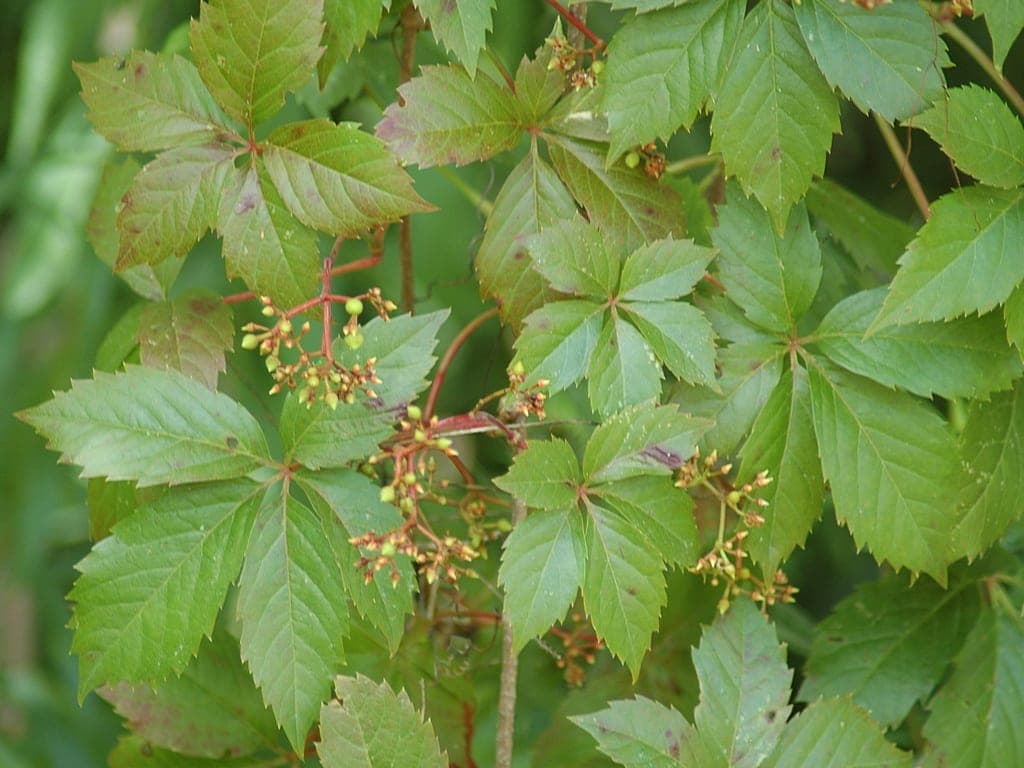
Virginia creeper is a woody native vine in the grape family that climbs by tendrils tipped with adhesive discs, so it grips bark, mortar and siding without any support and runs 30 to 50 feet given the chance. The five-leaflet leaves turn scarlet in fall, which is the one good thing about it. The rest is trouble: it roots wherever a stem touches the ground, smothers shrubs and small trees, pulls paint and mortar off walls when you tear it down, and the dark-blue berries are toxic to people and pets. Birds spread those berries, so it turns up uninvited in every hedge and fence line.
It is often confused with poison ivy, which has three leaflets; Virginia creeper has five. Handling it is still unpleasant for some people, since the sap carries calcium oxalate crystals that irritate skin.
Removal takes persistence. Cut every stem at the base and pull or dig the roots, including the runners along the ground; stems left on a wall will die and can be peeled off once dry. Expect regrowth from missed roots for a season or two and pull it while it is small. Where it is holding a bank together, cut it back hard each year rather than letting it climb.
Ecoregions:Northern ForestsEastern Temperate ForestsGreat PlainsTropical Wet Forests