
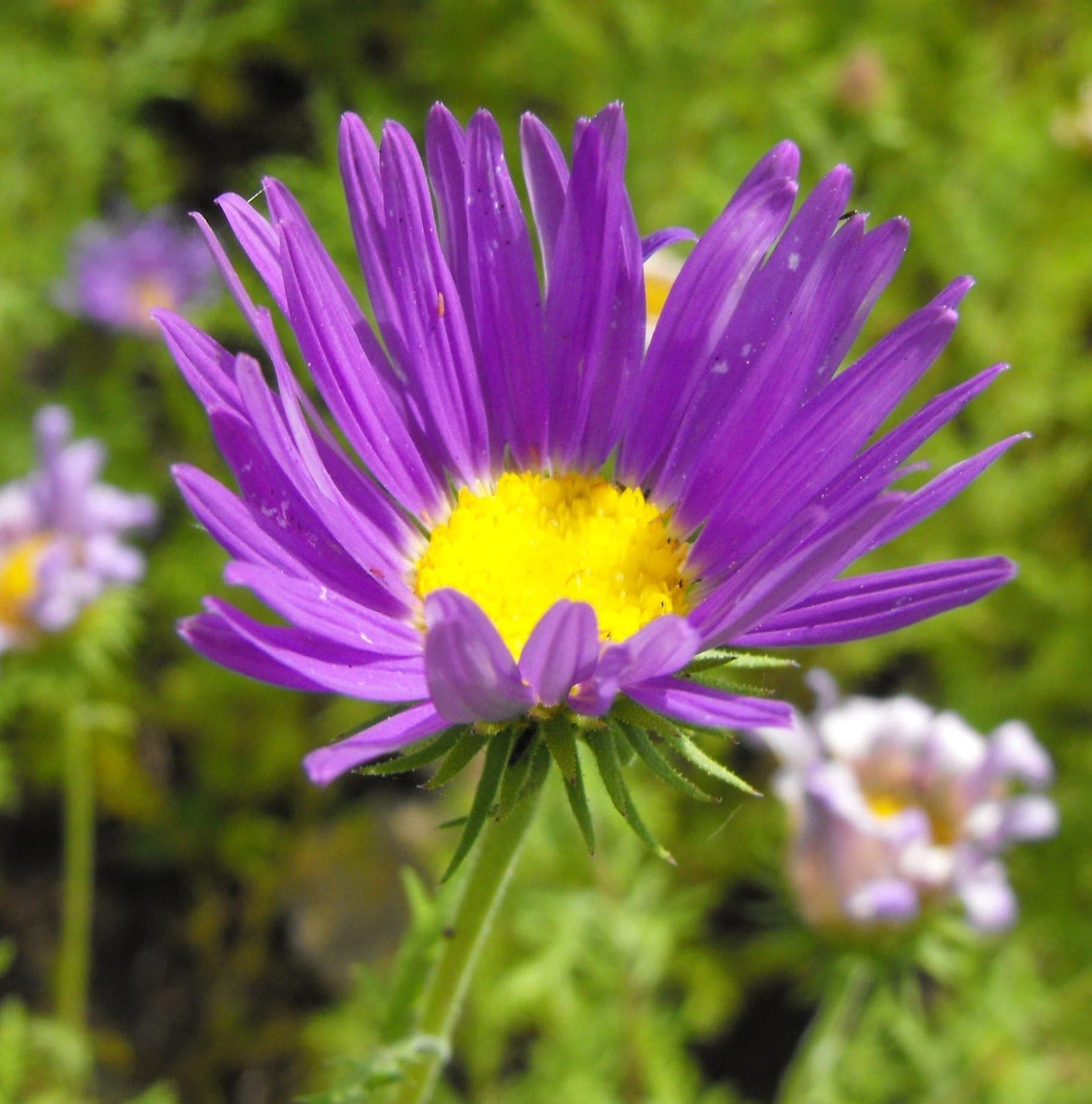
Tahoka Daisy is a native annual or short-lived biennial wildflower of the Great Plains and southwestern North America, named for Tahoka, Texas. It produces lavender-purple ray flowers around bright yellow centers on branching stems from late spring through fall, and is a reliable nectar source for bees and butterflies in dry, open landscapes.
It performs best in poor, sandy, or rocky well-drained soils and tolerates significant heat and drought once established. Rich or consistently moist soils encourage leggy stems at the expense of flowering. Seeds benefit from cool-soil germination; fall sowing or very early spring direct sowing consistently outperforms later plantings. In favorable conditions it self-seeds and naturalizes without becoming aggressive.
Ecoregions:Northwestern Forested MountainsGreat PlainsNorth American DesertsSouthern Semi-Arid HighlandsTemperate Sierras
Aster Yellows
Deformed, greenish flowers, stunted growth, and yellowed foliage. Flower centers may produce tufts of leafy growth instead of normal petals.
No cure. Remove and destroy infected plants immediately to stop spread. Control leafhoppers, which transmit the disease, and remove nearby weed hosts.
Powdery mildew
White or grey powdery coating on leaves - usually starting on older growth in humid conditions or when nights cool.
Improve air circulation by thinning plants. Apply neem oil or potassium bicarbonate spray at first sign. Avoid overhead watering.
Damping Off
Seedlings collapse at the soil line with thin, water-soaked stems; seeds may fail to emerge or rot before sprouting.
Sow in well-draining mix, avoid overwatering, and ensure good airflow. Remove affected seedlings and let the surface dry between waterings.
Root rot
Plants wilt, yellow, and stunt even in moist soil; lower stems and roots turn brown, soft, and mushy and the plant may collapse. Most common in heavy, wet, or poorly drained ground.
Improve drainage and stop overwatering, and never plant too deep. Lift and destroy badly affected plants along with the soil around the roots. Grow in raised or free-draining beds to prevent it returning.