
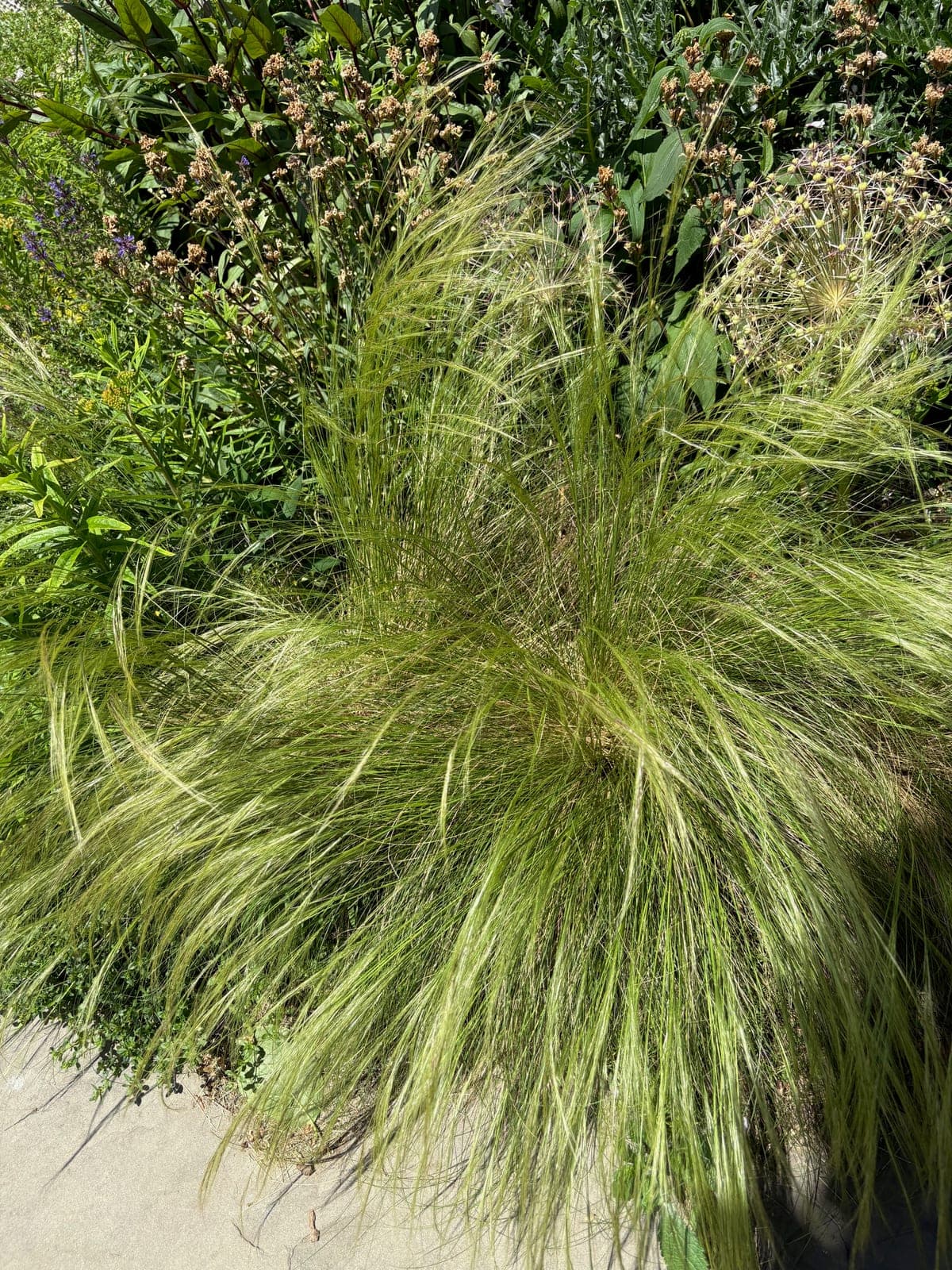
Nassella tenuissima is a fine-textured, clump-forming grass native to the southwestern United States, northern Mexico, and Argentina. Its thread-like, hair-fine foliage ripples in the slightest breeze, making it a strong textural contrast plant in dry borders, rock gardens, and gravel plantings. It was long classified as Stipa tenuissima, and older references still use that name.
It thrives in poor, sharply drained soil and tolerates drought, heat, and lean conditions once established. Established clumps can be cut back by one-third to one-half in late winter to remove tatty foliage before new growth flushes. It self-seeds prolifically; unwanted seedlings are easiest to remove when small. It is classified as invasive or noxious in parts of Australia, New Zealand, South Africa, and California - confirm local status before planting. Divide congested clumps every three to four years to maintain vigor.
Ecoregions:Great PlainsNorth American DesertsTemperate Sierras
Rust
Orange to brown raised pustules on the undersides of leaves, with yellow spotting on the upper surface. Heavy infections cause leaves to yellow and drop.
Remove and destroy infected leaves. Avoid overhead watering and improve air circulation. Apply a sulfur or copper-based fungicide if it spreads. Clear plant debris in fall.
Crown Rot
Lower leaves yellow and wilt; the base of the rosette turns brown and soft, sometimes with white fungal threads at the soil line. Plants collapse in wet conditions.
Remove and destroy affected plants. Improve drainage and avoid overhead watering. Do not mulch directly against the crown. Space plants for airflow and avoid replanting in the same wet spot.
Root rot
Plants wilt, yellow, and stunt even in moist soil; lower stems and roots turn brown, soft, and mushy and the plant may collapse. Most common in heavy, wet, or poorly drained ground.
Improve drainage and stop overwatering, and never plant too deep. Lift and destroy badly affected plants along with the soil around the roots. Grow in raised or free-draining beds to prevent it returning.