
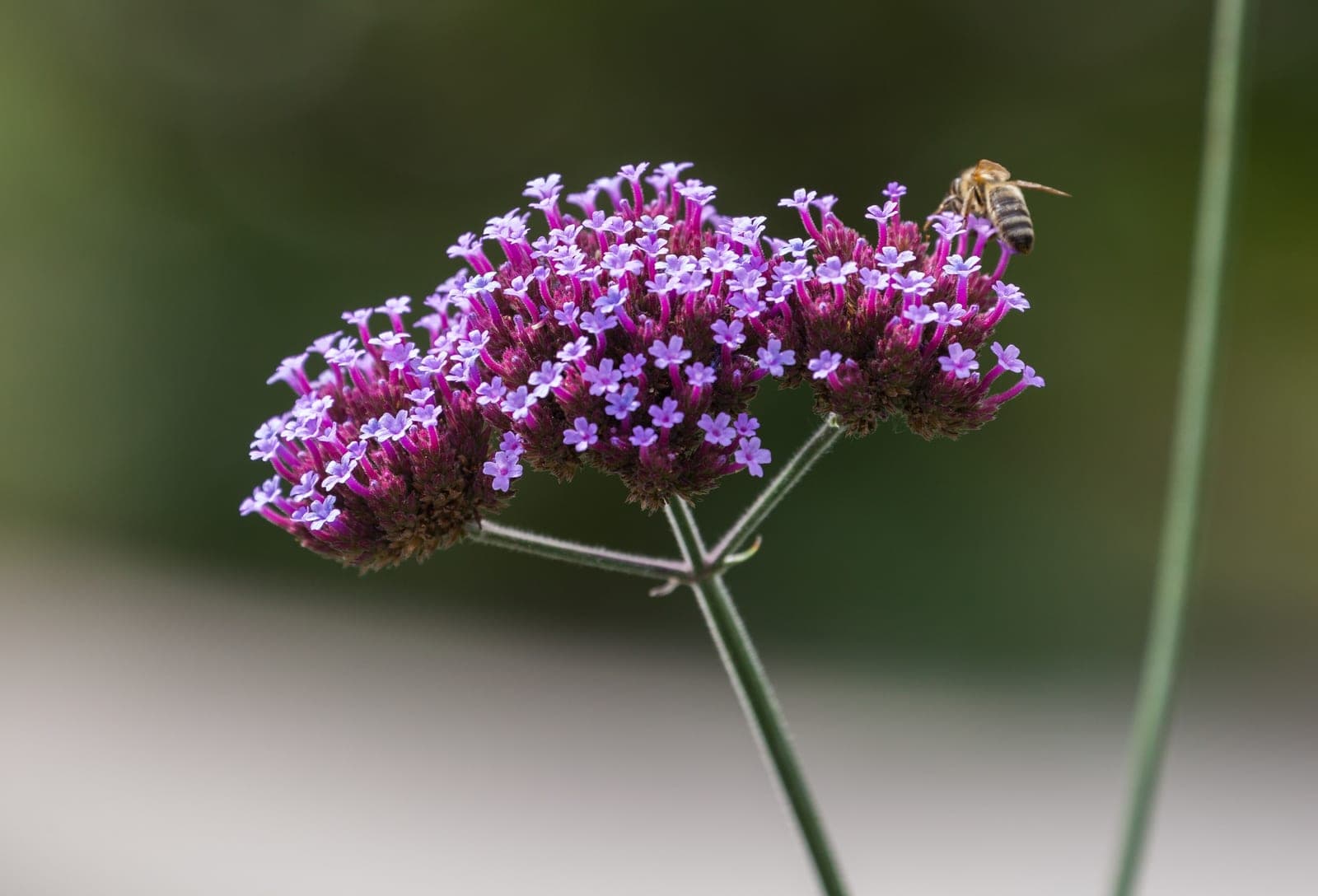
Verbena bonariensis is a tall, airy perennial, 3 to 4 feet, grown almost everywhere as an annual: clusters of small purple flowers on long, branching, nearly leafless stems from midsummer until frost. Its see-through structure lets it stand among and in front of other plants without blocking them, which is why it threads through so many modern borders. Butterflies and bees cover it.
Start seed indoors eight to ten weeks before last frost; germination is slow and the seed needs light, so press it onto the surface. Set plants 18 to 24 inches apart in full sun and ordinary soil that drains, and water until they are rooted; after that they tolerate heat and dry spells. No staking is needed despite the height, and no deadheading, though cutting the first flush brings a bushier plant.
North of zone 7 it rarely survives winter, so grow it as an annual or let it self-sow, which it does freely once established; the seedlings are easy to recognise and move in spring. In the mild Southeast and West it can seed itself into a nuisance, so deadhead there. Deer leave it alone, and powdery mildew in late summer is cosmetic. It is native to South America.
Powdery mildew
White or grey powdery coating on leaves - usually starting on older growth in humid conditions or when nights cool.
Improve air circulation by thinning plants. Apply neem oil or potassium bicarbonate spray at first sign. Avoid overhead watering.